Get Full Government Meeting Transcripts, Videos, & Alerts Forever!
Get email alerts on the Public Employee Benefits topic
No spam. Unsubscribe anytime.
JFAC hears benefits briefing: health insurance, PERSI and the cost of benefits shape personnel budgets
Summary
Legislative analysts told the committee that employee benefits account for roughly 26.6% of personnel costs, health insurance is the largest component and the governor recommends appropriating $14,300 per FTP for FY2026—about $56.6 million more than a lower actuarial target.
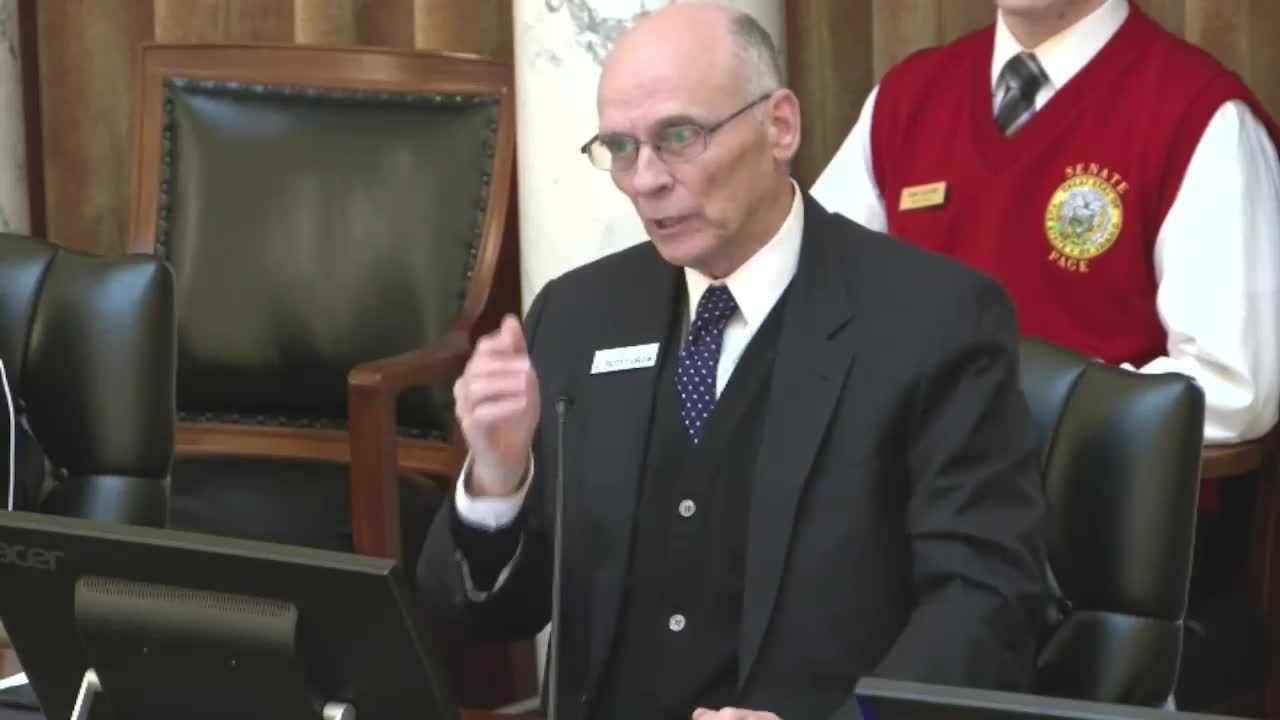
Frances Lippitt, a budget and policy analyst with the Legislative Services Office, presented the committee with a summary of state employee benefits and how those costs are budgeted.
"Benefits generally account for about a quarter of the state's overall personal cost expenditures," Lippitt said, noting that benefits represented 26.6% of personnel‑cost expenditures in fiscal year 2024.
Lippitt said health insurance makes up nearly half of all benefits spending and is budgeted as an appropriation per full‑time position (FTP). Variable benefits — which include the Public Employee Retirement System of Idaho (PERSI), Social Security and Medicare, life insurance and workers’ compensation — are budgeted as a percentage of salary and currently total about 23% for FY2025.
Details and numbers
- Health insurance: Using the plan’s reserve target and actuarial guidance, the Legislative Services Office calculated a per‑FTP appropriation of $13,960 for FY2026 based on a reserve target equal to the required minimum (10% of expected premiums). The governor’s recommendation increases that per‑FTP appropriation to $14,300 to cover a higher actuarial confidence level; Lippitt said that change would cost about $56.6 million statewide.
- PERSI and other variable benefits: Employer contribution rates cited in the presentation were 11.96% for general members, 14.65% for public safety employees and 13.47% for teachers. Employer PERSI contributions totaled about $141.5 million in FY2024, Lippitt said.
- Benefits share of total compensation: Lippitt provided examples showing that benefits as a share of total personnel costs vary by pay rate; for example, an employee earning $20 per hour may require a benefits budget equal to about 58% of the employee’s salary, while an employee earning $27 per hour may require benefits equal to about 49% of salary when health insurance and variable benefits are factored in.
Context and process
Lippitt noted the Joint Change in Employee Compensation (CEC) Committee evaluates human‑resource recommendations and then presents compensation and benefits recommendations to JFAC as part of program maintenance. The committee must consider those recommendations when setting the budget for employee compensation and benefits.
Ending
Lippitt said health insurance is the largest single driver of benefits costs and that the committee will see specific compensation and benefits recommendations from the CEC committee in upcoming JFAC work.