Get Full Government Meeting Transcripts, Videos, & Alerts Forever!
Get email alerts on the Appropriations Law topic
No spam. Unsubscribe anytime.
Legislative counsel briefs JFAC on the legislature’s appropriation power and limits
Summary
Legislative legal counsel Elizabeth Bowen reviewed constitutional and statutory limits on appropriations, explained that appropriation conditions are legally binding and cannot be removed by the governor’s veto, and walked members through key code sections that govern budget procedure.
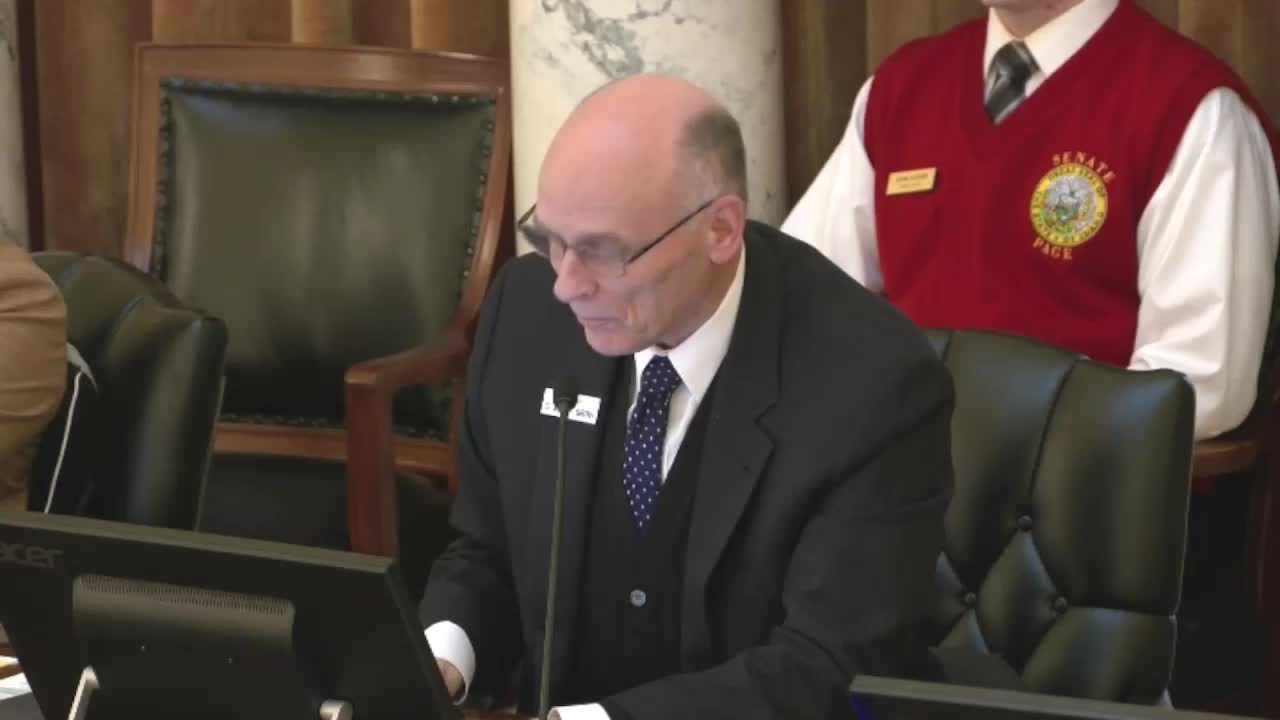
Elizabeth Bowen, legislative legal counsel in the Legislative Services Office, told the Joint Finance‑Appropriations Committee the legislature’s power to appropriate arises from the state constitution and is subject to specific constitutional and statutory limits.
"Money can be withdrawn from the state treasury only pursuant to an appropriation made by law," Bowen said, citing Article 7, Section 13 of the Idaho Constitution, and later summarized the principle that "the legislature has absolute control over the finances of the state."
Bowen told members that appropriation bills are statutes of equal standing with other laws, that appropriations must follow constitutional rules such as unity of subject and title, and that the legislature may attach conditions, limitations and restrictions to appropriated funds. She warned that those conditions are legally binding: when a condition is attached to an appropriation it "must be observed," Bowen said, referencing case law that rejected a governor’s attempt to veto a condition attached to an appropriation.
Key legal points presented
- The legislature’s appropriation power is plenary (broad) under the Idaho Constitution but is limited by constitutional provisions such as the requirement that appropriations not exceed tax revenue (balanced budget provision) and the prohibition on religious appropriations.
- Appropriation statutes must meet standard bill requirements (enacting clause, single‑subject and plain language where required) and may be subject to the governor’s item veto only on dollar amounts, not on conditions attached to an appropriation.
- Bowen discussed Idaho code chapters that govern the budget and JFAC duties (title 67, chapters cited in the presentation) and explained that JFAC is authorized to review executive budgets, hold hearings and prepare appropriation measures.
- Bowen cited a state Supreme Court decision (Santa Rosa v. Andress) that held that a governor may not veto a condition attached to an appropriation; a condition directing how appropriated money shall be spent must be observed by the executive branch.
Why it matters: Bowen’s presentation clarified the legal framework JFAC will operate under when it sets appropriation bills. She emphasized that appropriation language and any attached conditions carry the force of law and that the legislature retains primary authority over the state purse.
Ending
Bowen closed by noting that appropriation bills frequently include related provisions—conditions, limitations and statutory language—so members should consider both dollar amounts and attached legal directions when evaluating budget measures.