Get Full Government Meeting Transcripts, Videos, & Alerts Forever!
Get email alerts on the Health And Welfare Rule Package topic
No spam. Unsubscribe anytime.
Senate Health and Welfare approves package of Department of Health and Welfare rule dockets, including SUDS and Medicaid streamlining
Summary
The Senate Health and Welfare Committee on Jan. 8 approved a package of Department of Health and Welfare rule dockets that repeal or revise multiple administrative chapters, reflecting in part a July 1, 2024 contract with Magellan and a broader departmental effort to remove duplicative federal or statutory language.
The Senate Health and Welfare Committee on Jan. 8 approved a package of Department of Health and Welfare (DHW) rule dockets that repeal or revise multiple administrative chapters, clarify departmental information-sharing, raise certain laboratory certification fees and streamline Medicaid rules, the department told the committee.
The package included rule dockets that (1) consolidate and repeal obsolete EMS chapters, (2) revise newborn screening rules, (3) update Idaho Drinking Water Laboratory certification fees, (4) revise DHW records use/disclosure language for child-welfare contexts, (5) repeal or align children's foster care and children's-agency licensing rules with rules the committee adopted previously, (6) repeal State Hospital fee rules, (7) transition substance use disorder (SUDS), adult mental health and children's mental health rule language to reflect that services are provided under contract with Magellan (effective July 1, 2024), (8) adopt an additional acceptable credentialing body for SUDS providers, (9) update consumer-directed services language, and (10) substantially consolidate Medicaid Basic Plan rules (reducing pages and clarifying the department’s role).
Why it matters: the package formalizes adjustments linked to a July 1, 2024 statewide behavioral-health contract with Magellan and removes duplicative language that the department said is already required by federal law. Committee members and public testifiers pressed DHW staff on how the changes will affect access, who makes medical-necessity determinations for children's mental-health services, and how claims and post-death billing will be handled under the updated Medicaid chapter.
Key details
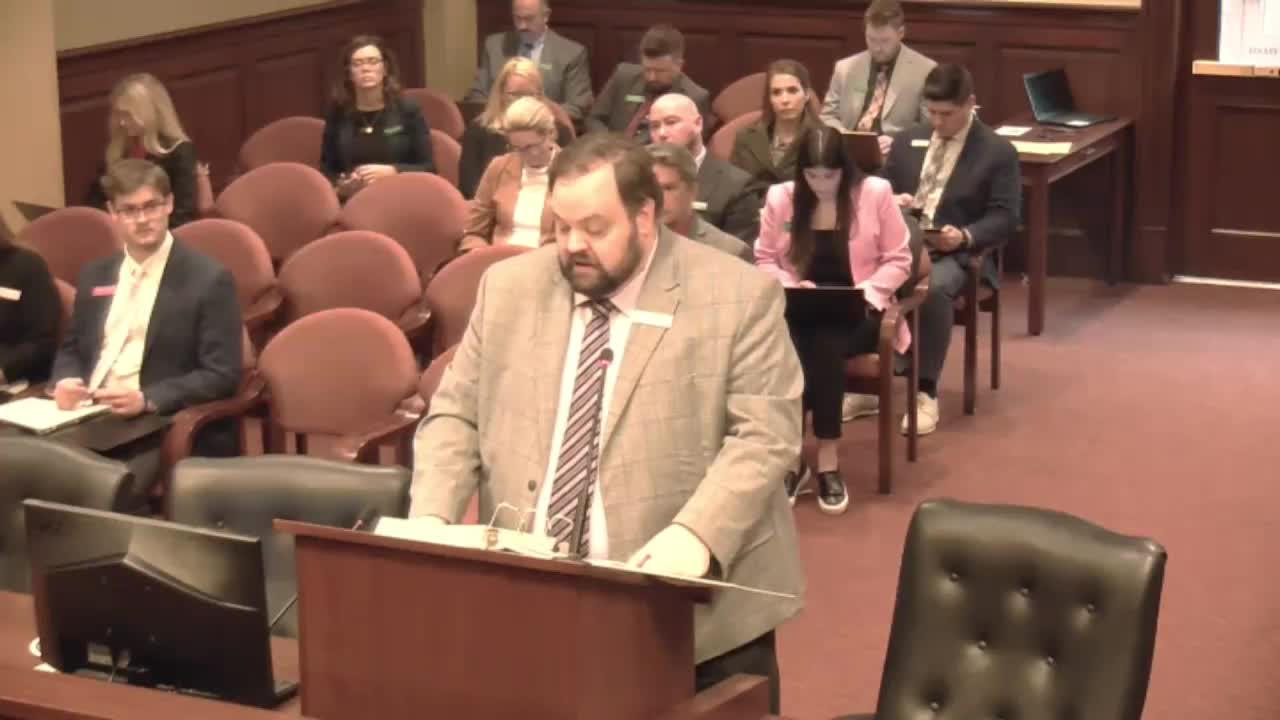
Newborn screening: Jared Larson, Legislative and Regulatory Affairs Chief for the Department of Health and Welfare, told the committee the newborn-screening docket is a ZBR (zero-based review) that removes outdated or duplicative language and rearranges sections for clarity. Larson said internal laboratory obligations in the draft change several phrases from “must” to “should,” but that the department considers those edits non-substantive and internal to laboratory operations. Larson also told the committee that Idaho has required newborn screening in statute since 1921 and that Idaho law provides a religious exemption; he said he was “not certain” whether a separate informed-consent process exists beyond that statutory posture.
Drinking-water laboratory fees: The committee approved a rule that incorporates by reference the EPA Manual (Supplement 2 to the drinking-water certification manual), adds certification requirements for giardia and cryptosporidium testing and raises several certification fees. Dr. Christopher Ball, chief of the Bureau of Laboratories, said there are currently no in-state labs certified for the two parasite tests and the fee changes (for in-state chemistry labs, microbiology flat fee, and out-of-state labs) are expected to increase department receipts by about $8,300 annually. Larson said the rule is the only fee rule this year and that the fee schedule dated from 2011.
Records use and child-welfare disclosures: Docket 16-0501-2401 revises the department’s posture on release of records, changing the default toward disclosure "to the maximum extent possible without violating law or rule," particularly in foster placements. Larson said the change is intended to ensure foster parents and others who care for children receive information they need. Committee members asked whether schools or health providers would get information; Larson said the revision grants department discretion to release information where lawful and appropriate.
SUDS and behavioral-health contracting: Larson told the committee the SUDS (substance-use disorder services) rule docket removes language that treats DHW as a direct service provider; services are now provided under the Idaho Behavioral Health Plan contract with Magellan that began July 1, 2024. The docket also allows the department to accept certification from an additional credentialing body judged "substantially similar" to the department’s prior certifier (the transcript referenced IBADCC and NCCAP). Peyton Darst of the Idaho Behavioral Health Association testified in support, citing workforce shortages and the need for reciprocity to help bolster provider numbers. Larson said the department received one negative comment from the original certifier unhappy with the addition but defended the change as a workforce access measure.
Children's mental-health medical necessity concerns: The committee received public testimony from Brittany Shipley (testifying on her own behalf) raising concerns about the children's mental-health docket (16-0737-2401). Shipley said the rules' addition of "medical necessity" language left unclear who determines necessity and how that standard would interact with judicial orders used by families to secure care. Juliette Sharon, DHW deputy director, told the committee the medical-necessity language simply clarifies existing practice: Medicaid and state funds require clinically determined medical necessity and clinicians with expertise in children’s behavioral health make those determinations. Sharon said clinicians assessing medical necessity are generally child psychiatrists or clinicians experienced with serious emotional disturbance and that nothing in the rule is intended to override court orders but to ensure payment aligns with clinical determinations.
Medicaid Basic Plan consolidation: The committee approved a broad ZBR consolidation for the Medicaid Basic Plan (docket 16-0309-2401). Larson said the chapter will be shortened from about 150 pages to roughly 80 pages by removing duplicative federal- or state-mandated language so the remaining rules reflect the state policy levers subject to legislative oversight. One stated substantive change is the definition of “provider,” which the department said is intended to follow scope-of-practice determinations made by licensing boards and the legislature rather than have the department function as a second-level policy gatekeeper. Deputy Director Sharon and Larson both told the committee there are no policy changes in the consolidation other than those the department highlighted on the record.
Other items: the committee also approved full-chapter repeals and alignments affecting foster care licensing, children’s agencies, consumer-directed services, and State Hospital North/South fee chapters that the department said duplicated CMS, federal Medicaid or state waiver rules.
Votes at a glance
- Docket 601-032-4001 / 16-0103-2401 (EMS chapter repeal, combined with other dockets): Approved on voice vote (motion by Senator Harris; second by Senator Ziderfeld). Outcome: approved (voice vote). - Docket 16-0212-2401 (Newborn screening ZBR): Approved on voice vote (motion by Senator Blalock; second not specified in transcript). Outcome: approved (voice vote). - Docket 16-0213-2401 (Drinking Water Lab certification and fee changes): Approved on voice vote; one member recorded opposition but docket carried (motion by Senator Harris; second by Senator Wintrow). Outcome: approved (voice vote; one recorded opposition). - Docket 16-0501-2401 (Use and disclosure of department records, child-welfare): Approved on voice vote (motion by Senator Wintrow; second by Senator Blalock). Outcome: approved (voice vote). - Docket 16-0605-2401 (Full chapter repeal related to child welfare material already adopted): Approved on voice vote (motion by Senator Harris; second by Senator Wintrow). Outcome: approved (voice vote). - Docket 16-0418-2401 (Foster care licensing alignment / children’s agencies): Approved on voice vote (motion by Senator Harris; second by Senator Wintrow). Outcome: approved (voice vote). - Docket 16-0407-2401 (State Hospital North/South fee chapter repeal): Approved on voice vote (motion by Senator Blalock; second by Senator Van Orden). Outcome: approved (voice vote). - Docket 16-0717-2401 (SUDS rules; credential reciprocity): Approved on voice vote (motion by Senator Wintrow; second by Senator Ziderfeld). Outcome: approved (voice vote). - Docket 16-0733-2401 (Adult mental-health rules moved to contract): Approved on voice vote (motion by Senator Harris; second by Senator Ziderfeld). Outcome: approved (voice vote). - Docket 16-0737-2401 (Children's mental-health rules moved to contract): Approved on voice vote (motion by Senator Ziderfeld; second by Senator Harris). Outcome: approved (voice vote). - Docket 16-0313-2401 (Consumer-directed services ZBR): Approved on voice vote (motion by Senator Shippey; second by Senator Ziderfeld). Outcome: approved (voice vote). - Docket 16-0309-2401 (Medicaid Basic Plan consolidation): Approved on voice vote (motion by Senator Harris; second by Senator Wintrow). Outcome: approved (voice vote).
Discussion vs. decisions
Committee decisions: For each docket above the committee officially approved the rule actions listed; approvals were overwhelmingly by voice vote. Several dockets were described by the department as non-substantive ZBR actions or as technical alignments reflecting the July 1, 2024 Magellan contract. Public testimony and committee questioning did not result in any votes to amend or table the dockets.
Discussion points and directions: Committee members repeatedly asked the department to clarify (1) whether newborn screening changes affect parental informed consent (Larson: statutory screening exists since 1921; religious exemption in code), (2) how incorporation-by-reference to EPA manuals affects labs (Dr. Ball explained the 2012 supplement and lack of in-state labs for those tests), (3) who decides medical necessity for children's mental-health services and how that interacts with court orders (Deputy Director Juliette Sharon said clinicians with child expertise make medical-necessity determinations and that the language confirms current practice), and (4) processes for reporting/handling claims that arrive after a participant's date of death (Sharon said program-integrity units recover improper claims).
Public testimony
- Peyton Darst, Idaho Behavioral Health Association, testified in support of adding a second acceptable credentialing body for SUDS providers to improve workforce capacity. - Brittany Shipley (testifying on her own behalf) urged clearer definition and protections around medical-necessity determinations in children’s mental-health rules, warned against potential conflict with judicial orders, and asked that clinicians with structured expertise in the children’s mental-health system make those determinations.
What the department said
- Jared Larson repeatedly framed many dockets as ZBR reviews intended to remove duplicative or outdated regulatory language and to reflect that DHW now acts through contractual management rather than direct provision where Magellan provides services. - Juliette Sharon, deputy director, said the medical-necessity language codifies clinical practice tied to Medicaid payment flows and that clinicians with child expertise make determinations; she also "pinky swore" there are no additional policy changes in the Medicaid consolidation beyond what the department disclosed on the record.
Next steps
The committee approved all dockets the department presented at this meeting. The department and affected stakeholders will proceed under the revised rules and the Magellan contractual framework already in place since July 1, 2024. Members asked DHW to follow up with specific clarifications for stakeholders about claims after date of death and whether emergency Medicaid recipients receive department-issued ID cards.
Ending
Committee members closed the session after a brief scheduling announcement; the department staff present said they would follow up on several technical questions raised by members and testifiers.