Get Full Government Meeting Transcripts, Videos, & Alerts Forever!
Get email alerts on the Human Trafficking Prevention topic
No spam. Unsubscribe anytime.
Seattle Council proclaims January 2025 Human Trafficking Prevention Month; survivor groups accept proclamation
Summary
The Seattle City Council presented a proclamation recognizing January 2025 as Human Trafficking Prevention Month and suspended the rules to allow survivors and service providers to accept the proclamation and offer brief remarks.
The Seattle City Council proclaimed January 2025 Human Trafficking Prevention Month and suspended council rules so community partners could accept the proclamation and make brief remarks.
Council Member Teresa Moore (identified in the meeting as presenting the proclamation) thanked the mayor's office and the Human Services Department for their partnership and for advocates who “provided tireless efforts to support our Seattle neighbors in healing.” Moore called commercial sexual exploitation “abhorrent” and expressed gratitude to advocates helping survivors.
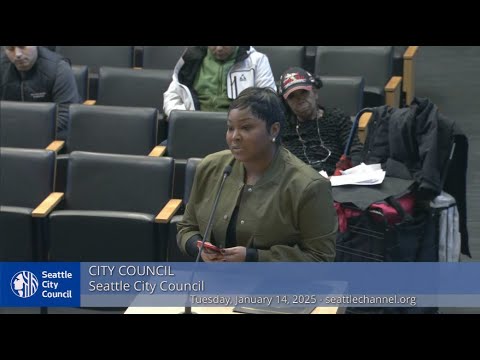
The council suspended its rules “to present the proclamation and allow our guests to accept it and provide remarks,” and several survivor‑serving organizations spoke. Yasmina Dorril, introduced as director of survivor services at REST (an organization named in the transcript), thanked the council “on behalf of REST and local organizations” and urged the city to continue “prioritizing, mobilizing and targeting efforts, of criminalizing traffickers and providing adequate services for our survivors.”
A representative identified in the transcript as Sarah — director of survivor services for the organization The More We Love and a survivor herself — said the organization has served 42 survivors since July and described the council acknowledgment as important. “The More We Love is a survivor ran, survivor led organization,” she said, and thanked the council for “listening to the voices of survivors and showing up daily for the most marginalized and vulnerable people.”
Ending: The proclamation is a ceremonial recognition and does not itself change policy or funding; council members said they expect continued partnership with survivor‑serving agencies and city departments on prevention and services.