Get Full Government Meeting Transcripts, Videos, & Alerts Forever!
Get email alerts on the State Budget Process topic
No spam. Unsubscribe anytime.
Committee briefed on statewide revenue options, benefits and change‑in‑employee compensation choices ahead of votes
Summary
Legislative staff presented options for FY2026 general fund revenue projections, personnel benefit cost adjustments, contract inflation, statewide cost allocation and competing change‑in‑employee compensation (CEC) proposals for committee consideration before scheduled votes.
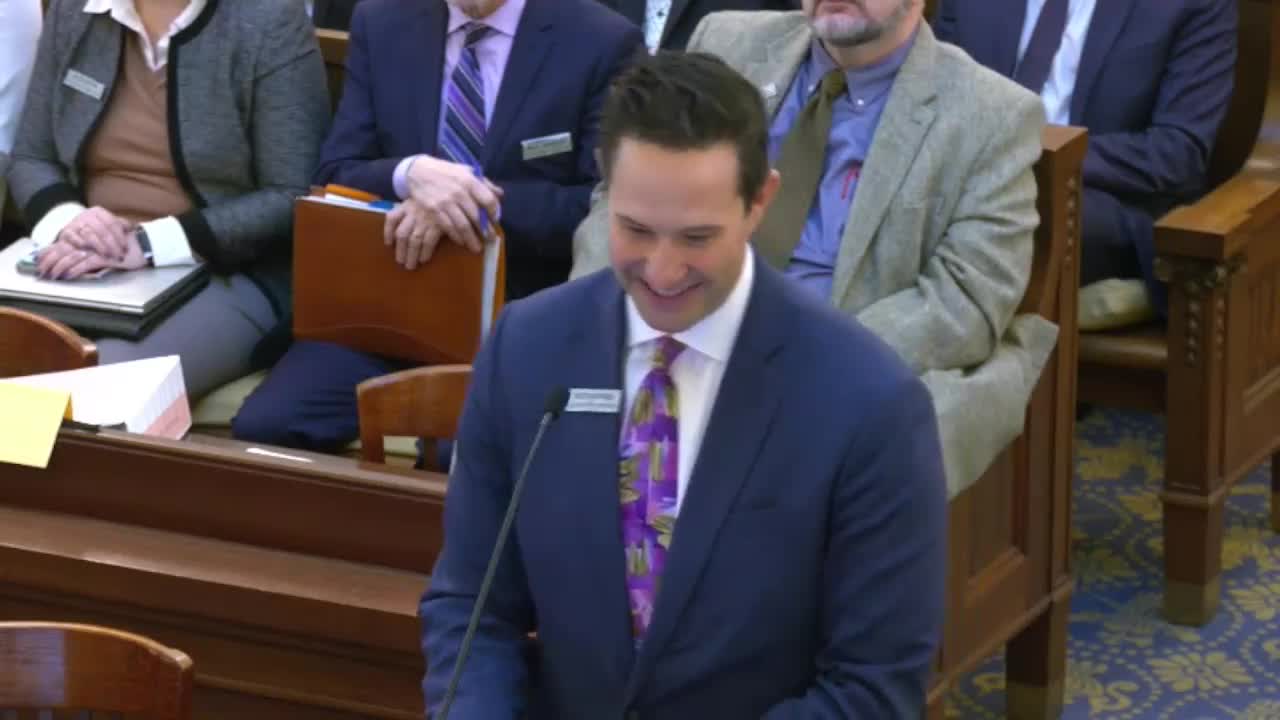
Keith Bybee, division manager for Budget Policy Analysis at the Legislative Services Office, and staff walked the Joint Finance Corporation Committee through the packet of statewide decision units members will vote on during the current work week.
The nut graf: the briefing presented two revenue forecast options, alternate approaches to funding health insurance and other benefit cost adjustments, contract inflation and statewide cost allocation updates, and two competing recommendations for change‑in‑employee compensation (CEC): the governor's higher package and the CEC committee's lower dollar‑per‑hour proposal.
Bybee told the committee the packet includes the governor's FY2026 general fund revenue recommendation of $6.26 billion and the Economic Outlook and Revenue Assessment Committee's option of $6.40 billion. He described the governor's personnel benefit cost adjustment (which funds an average increase of approximately $1,300 per eligible employee) and the CEC committee's smaller health insurance recommendation ($960 per eligible employee). The statewide contract inflation motion totals roughly $3.3 million all funds; statewide cost allocation net change was about $5.5 million with a $3.6 million general fund impact, driven largely by state controller and Office of Information Technology Services allocations.
On change‑in‑employee compensation, the governor proposed a 5% or equivalent $1.55 per hour merit pool plus salary schedule shifts (estimated statewide at about $179.7 million). The CEC committee proposed a slightly smaller total CEC package (about $174.7 million) using a $1.55 hourly equivalency and different schedule adjustments. Bybee noted the committee had worked to reconcile reporting and that small adjustments — particularly on salary schedule lines — were still possible before formal votes later in the week. He outlined the procedural timeline: committee votes on statewide decisions Thursday, program maintenance budgets Friday, and agency budget work groups soon after.
Division of Financial Management administrator Lori Wolf clarified that actuarial reports drive health insurance recommendations and that moving to a lower funding level would reduce reserves and could require a larger catch‑up increase next year. She said the actuaries' updated report arrives in October and that the administration typically funds to an actuarial percentile to maintain reserve levels.
Ending: Committee members asked for additional materials — including agency‑level impacts of the CEC proposals, contractor rate explanations tied to the state controller catch‑up, and detailed actuary/reserve figures — and staff committed to circulate follow‑up analyses before Thursday's votes.