Get Full Government Meeting Transcripts, Videos, & Alerts Forever!
Get email alerts on the Child Welfare topic
No spam. Unsubscribe anytime.
New Health and Social Services Ombudsman briefs Joint Finance on staffing, scope
Summary
Committee heard the new Office of Health and Social Services Ombudsman is staffed with three positions, received an initial general‑fund appropriation and the governor supports a supplemental personnel request to raise hiring salaries; the ombudsman described investigative scope and plans to use citizen review panels.
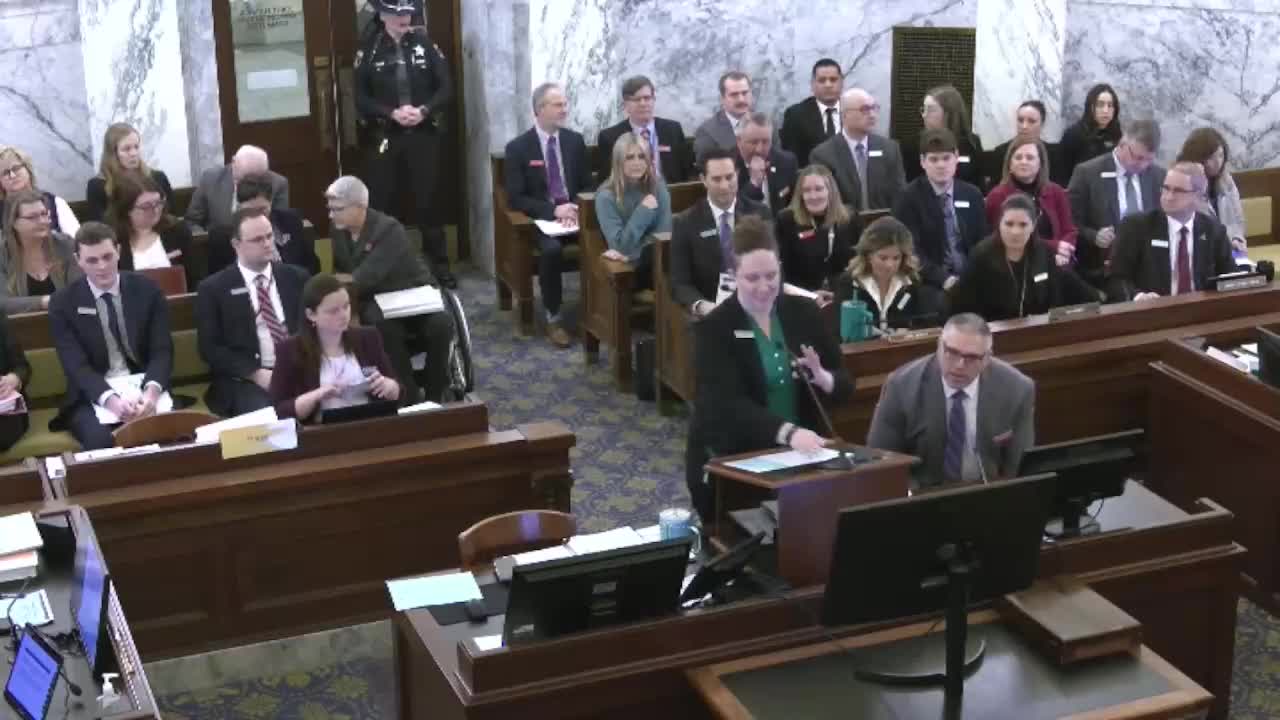
The Joint Finance and Appropriations Committee on Jan. 15 received an introduction to the newly created Office of Health and Social Services Ombudsman and its FY2026 budget request to increase personnel dollars for recruitment and retention.
Alex Williamson, a budget and policy analyst with the Legislative Services Office, explained the office was established by Senate Bill 1380 and is charged with monitoring and evaluating compliance by public and private agencies providing health and social services to children in state custody (the foster care system). The office is organized with three full‑time positions and was appropriated $470,000 in FY2025, largely from the general fund; $450,000 of that amount is ongoing and $20,000 was a one‑time capital outlay allocation to establish the office.
Treasury and personnel recommendations from the Department of Human Resources prompted a governor‑supported request to increase personnel dollars so the office can recruit candidates at above 80% of the relevant pay policy, Williamson said. The analyst noted the recommendation would be ongoing and paid from the general fund.
Trevor Sparrow, the ombudsman appointed by the governor on Nov. 27, introduced himself and described the office’s role: taking complaints from parents, foster parents and others with a vested interest in children in state custody, investigating those complaints, conducting non‑complaint investigations into agency practices when appropriate, and making recommendations to agencies and the legislature. He said the office has adopted the United States Ombudsman Association standards and expects to assemble a multidisciplinary team that could include legal, nursing and social‑work expertise.
Sparrow told the committee he had already discussed collaboration with Department of Health and Welfare staff, including deputy leadership, and he said citizen review panels — volunteer groups that review problematic cases in the aggregate — could be a useful resource for research and policy recommendations, particularly on cross‑cutting issues such as parental incarceration and the downstream impact on foster care.
Committee members asked about the office’s jurisdiction, whether juvenile corrections and other residential programs fall within scope, and the status of congregate care placements; Sparrow answered the office can investigate complaints involving residential settings for children, including juvenile corrections, and said recent department briefings indicated children had been moved out of congregate placements and short‑term rental arrangements were ended.
No formal action was taken; Sparrow concluded by reiterating the office’s adoption of ombudsman standards and the multidisciplinary staffing rationale for the personnel request.