Get Full Government Meeting Transcripts, Videos, & Alerts Forever!
Get email alerts on the Revenue Projections topic
No spam. Unsubscribe anytime.
Joint committee adopts higher FY2025 revenue projection; FY2026 projection left open after split votes
Summary
The Joint Finance and Appropriations Committee adopted the Economic Outlook and Revenue Assessment Committee’s revenue projection for fiscal 2025 but failed to agree on a FY2026 revenue number, leaving that decision for a later time.
The Joint Finance and Appropriations Committee voted to adopt the Economic Outlook and Revenue Assessment Committee’s recommended general fund revenue projection of $5,990,000,000 for fiscal year 2025.
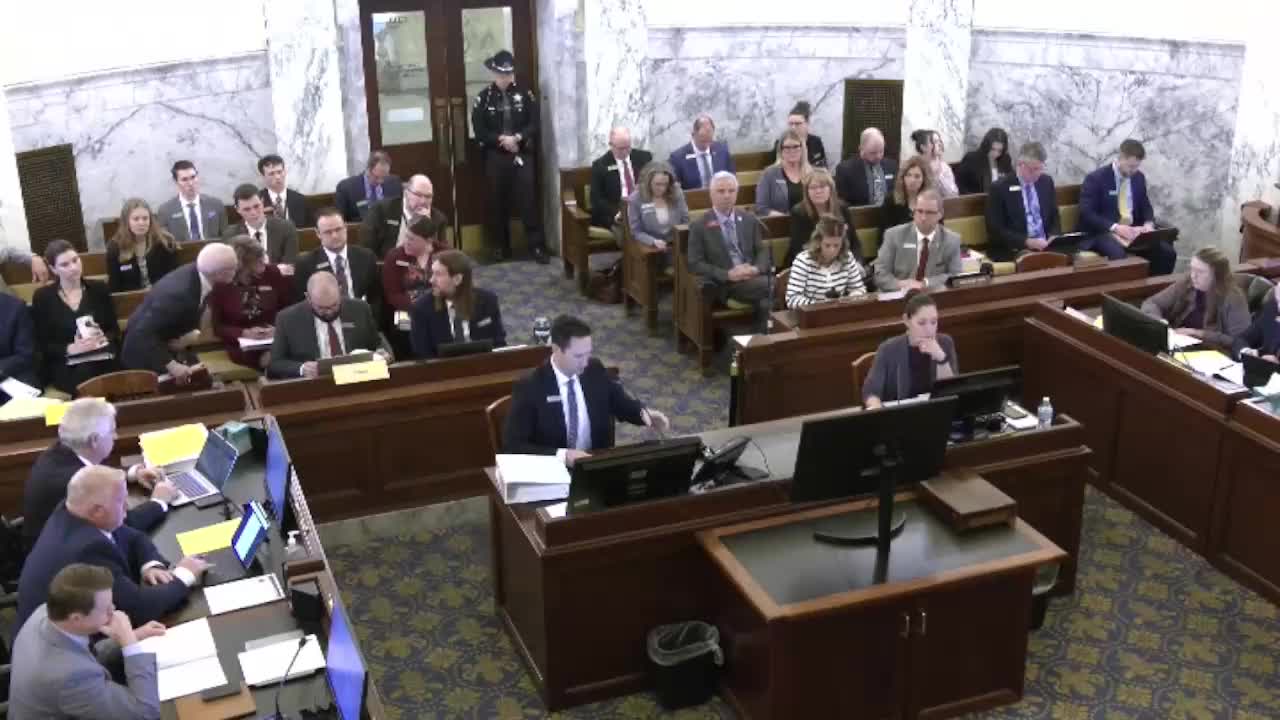
Keith Bybee, Division Manager of the Budget Policy Analysis Division, reviewed the packet and explained that the Economic Outlook and Revenue Assessment Committee’s projection differed from the governor’s recommendation. Senator Lori Woodward moved adoption of the higher ERAC number for FY2025 and Co-Chair Horman seconded the motion. Chairman Groh called the roll and the combined committee vote was recorded as 20 ayes, 0 nays; the chair declared the motion passed.
The committee then considered a revenue projection for fiscal year 2026. Representative Penske moved that JFAC adopt the Economic Outlook and Revenue Assessment Committee’s FY2026 projection of $6,400,000,000. Senator Woodward offered a substitute motion for a $6,330,000,000 projection. Members debated the merits of the higher ERAC recommendation, the governor’s lower forecast and a middle-ground substitute; senators and representatives expressed concern about conservatism and compromise in differing ways.
The committee first voted on Senator Woodward’s substitute motion; the outcome did not command a majority in both chambers so it failed to carry the committee as required by the standing voting arrangement. The subsequent vote on the original FY2026 motion likewise failed to secure the required majority from both the Senate and the House. Because neither motion received the requisite majority in both houses, the committee postponed the FY2026 revenue number to a later meeting.