Get Full Government Meeting Transcripts, Videos, & Alerts Forever!
Get email alerts on the Health And Human Services topic
No spam. Unsubscribe anytime.
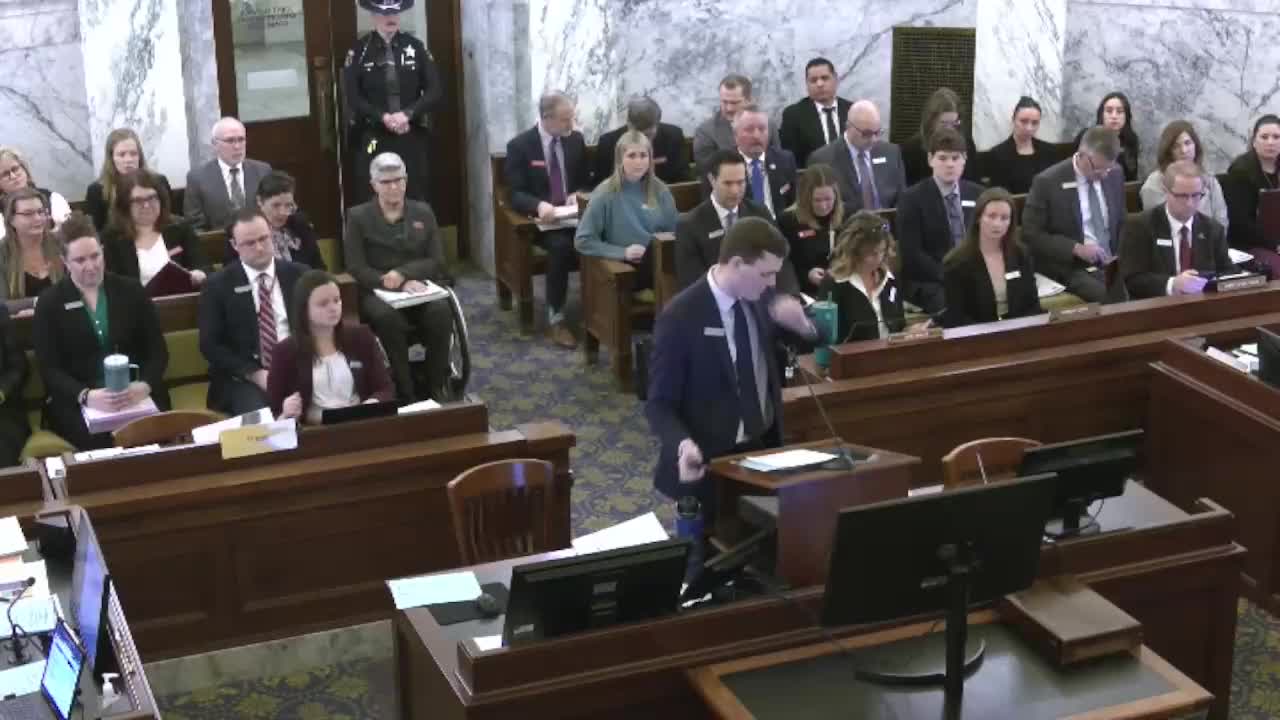
Joint Finance hears State Independent Living Council budget, dedicated-fund shift proposed
Summary
The Joint Finance and Appropriations Committee on Jan. 15 heard a presentation on the Idaho State Independent Living Council’s (SILC) budget and dedicated‑fund balance, including a governor’s recommendation to shift $11,700 in personnel appropriation from SILC’s dedicated fund to the general fund.
The Joint Finance and Appropriations Committee on Jan. 15 heard a presentation on the Idaho State Independent Living Council’s (SILC) budget and dedicated‑fund balance, including a governor’s recommendation to shift $11,700 in personnel appropriation from SILC’s dedicated fund to the general fund.
LSO budget and policy analyst Kellan McGurkin told the committee SILC is established under Title 56, Chapter 12, Idaho Code and has four full‑time positions, and that the council “essentially spends all of its available revenue each year,” typically maintaining an ending balance near $280,000 — about six and a half months of expenses — to cover timing differences in federal grant periods.
McGurkin said the council’s dedicated fund receives federal grants under Title I of the Rehabilitation Act and Title VII of the Workforce Investment Act that pass through the Idaho Division of Vocational Rehabilitation. He explained apparent year‑to‑year “overspend” in some state fiscal years is an artifact of mismatched federal grant periods, not routine deficit spending. He also noted SILC’s Title I funding rose by about $30,000 in FY2023 — the first increase in roughly a decade.
SILC’s spending profile is dominated by personnel: McGurkin said personnel costs comprised about 69% of the agency’s expenditures in FY2024, with the remaining 30% in operating costs; roughly 60% of the operating expenditures are for rent and travel tied to statewide trainings and outreach.
The governor’s recommendation for FY2026 would shift $11,700 of appropriation from SILC’s dedicated fund to the general fund, McGurkin said, so the general fund would pick up roughly half of statewide health benefits and change‑in‑employee‑compensation (CEC) increases that otherwise would be charged to SILC’s dedicated fund. The analyst stood for questions; Senator Cook asked for clarification about the “overspend” language and McGurkin reiterated the timing mismatch explanation.
Mel Levitan, SILC’s executive director, thanked the committee and highlighted that the council is majority‑governed by volunteers with disabilities from across Idaho. Levitan said the council used a $10,000 line item in the previous year to resolve prior audit delays and that, with that funding, the council completed audits for fiscal years 2022, 2023 and 2024 “with no findings,” and he specifically credited the agency’s financial specialist for completing the work.
Committee members did not take formal action on the item during the hearing; the presentation closed without a vote and the committee moved on to other agency hearings.