Get Full Government Meeting Transcripts, Videos, & Alerts Forever!
Get email alerts on the Budget Process topic
No spam. Unsubscribe anytime.
JFAC staff outlines 10 program‑maintenance bills, schedule and what counts as maintenance
Summary
Budget staff explained why program maintenance is organized into 10 bills, which items are included (benefit cost adjustments, contract inflation, SWICAP, CEC) and which will be handled as enhancements (replacement items, population forecast adjustments). Committee set hearings and decision dates next week.
Budget staff told the Joint Finance Appropriations Committee how program maintenance will be packaged and scheduled for committee action, and clarified what counts as "program maintenance" versus enhancements.
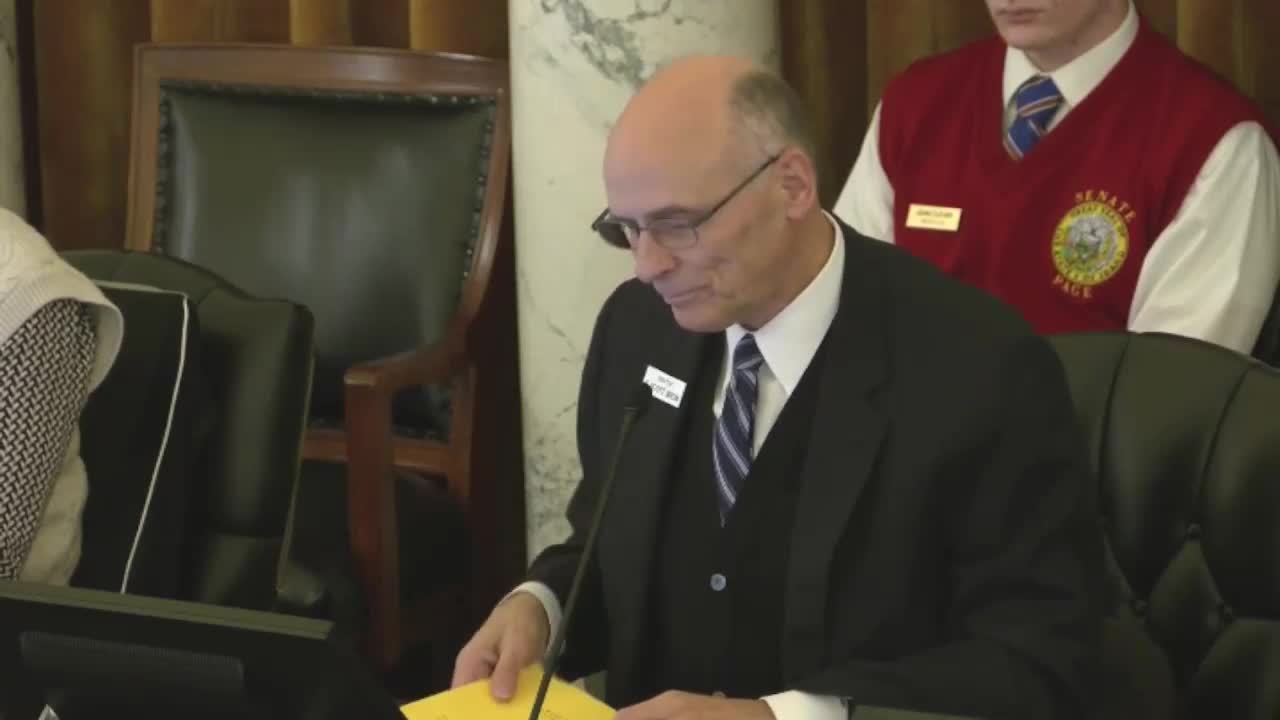
Keith Bybee, Division Manager of Budget Policy Analysis, described the rationale for organizing program maintenance into 10 functional appropriations bills (examples: general government, public safety, health and human services, natural resources, education). He explained that the maintenance bills will start with the base budget and incorporate the building blocks between benchmark 4 and benchmark 5: personnel and benefit cost adjustments (including CEC), contract inflation (ongoing contracts and leases), statewide cost allocation (SWICAP) and other similar ongoing adjustments.
Bybee said, "This year, the intent is to include all of the CEC in the program maintenance bills, rather than have that broke out into 2 separate bills." He added that enhancement bills will contain replacement items (with IT replacement requests broken out separately), population forecast adjustments (formerly called nondiscretionary), annualizations and new program requests. He said the separation gives the committee more visibility into growth versus ongoing maintenance.
Schedule and process: Bybee walked members through the upcoming hearing schedule: an initial hearing on adjustments and statewide impacts is scheduled the week of the presentation (members were told a hearing would be held Wednesday and decision making on program maintenance would take place on the committee day Friday, January 17). Members were advised they would receive bill packets and language in advance to review.
Examples and totals: Bybee showed comparative examples at the agency level (natural resources was used as an example) and a hypothetical statewide program maintenance total if the governor's recommendations were followed; he noted that if the governor's plan were adopted the 10 appropriations bills could total roughly $12.8 billion for 2026 program maintenance (presentation used this as an illustrative "shock factor"). He emphasized that the committee may add or subtract items from maintenance bills during deliberations.
Members asked procedural and substantive questions: Senator Ward Engelking asked where replacement items and population forecast adjustments would appear; Bybee confirmed those will be in enhancement bills. Members raised cybersecurity and IT replacement concerns; Bybee confirmed IT replacement items are broken out as a separate decision unit for visibility. Senator Woodward offered to help new members review materials before next week's votes.
This organizational framework will guide JFAC's hearings and decisions on maintenance budgets next week; the committee can still alter bases, split programs or add sections during deliberations.