Get Full Government Meeting Transcripts, Videos, & Alerts Forever!
Get email alerts on the State Board Reappointment topic
No spam. Unsubscribe anytime.
Senate education committee hears Kurt Liebeck’s reappointment remarks; vote deferred
Summary
Kurt Liebeck, a current member of the State Board of Education, introduced himself to the Senate education committee and described priorities including K–3 literacy and degree completion. The committee did not vote on the gubernatorial reappointment at this meeting and is expected to consider it at a later date.
Kurt Liebeck, a Boise resident and current member of the Idaho State Board of Education, appeared before the Idaho Senate Education Committee for consideration of a gubernatorial reappointment to a term the committee recorded as commencing July 1, 2024 and expiring July 1, 2029.
Liebeck described his prior term and said the first portion of his service coincided with the COVID-19 pandemic, when "all we spent time on was how to keep kids in school and get through the pandemic." He told the committee that, despite pandemic-related setbacks, he believes Idaho is well positioned to make "meaningful improvements in student achievement" because of recent legislative investments and alignment around priorities.
The nut graf: Liebeck identified K–3 literacy, middle-school math, and increasing the share of students on defined postsecondary or career pathways as his top K–12 priorities; for higher education he emphasized timely degree completion and aligning degrees to in-demand fields. He said programs such as direct admission and the state's K–12 charter innovations are examples of reforms he supports.
During his remarks Liebeck said the state must produce a return on recent K–12 investments and noted the importance of career-aligned credentials such as health care and technical trades. He suggested maintaining close attention to federal education policy and assessment regimes, saying federal structures dating to No Child Left Behind have constrained innovation and that the state should "stay close to Washington" to preserve flexibility.
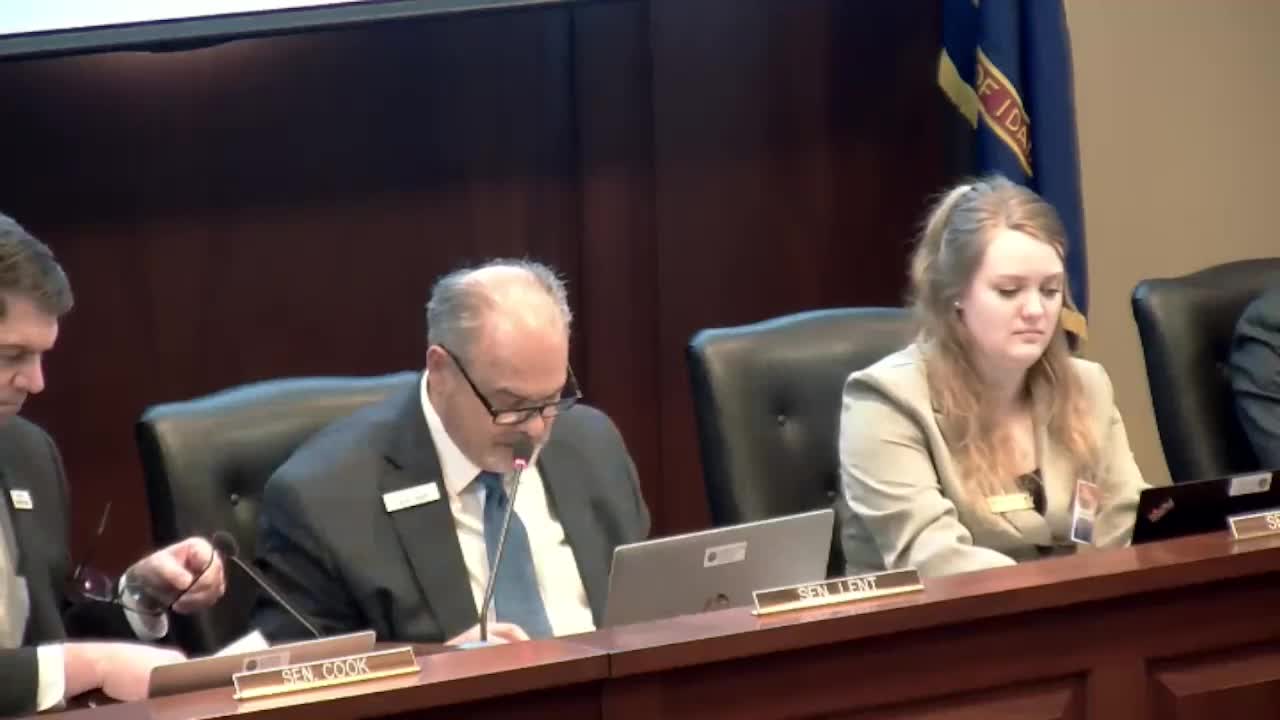
Senators asked questions. Senator Kevin Cook asked Liebeck to name his top three priorities for the next five years; Liebeck reiterated K–3 literacy, middle-school math, and helping more students identify and complete postsecondary pathways. Senator Tammy Nichols asked how Liebeck would work to limit perceived federal overreach; Liebeck reiterated the need to monitor federal policy and to rely on state-level relationships, including with the superintendent's office.
Committee Chair Senator Dave Lent said the committee would not vote on the reappointment at this meeting; the committee anticipates taking a vote at a subsequent meeting this week, date to be determined. Liebeck offered to meet one-on-one with committee members who want to follow up.
Ending: The committee adjourned after brief remarks and a reminder that no vote was taken on the reappointment at this session.