Get Full Government Meeting Transcripts, Videos, & Alerts Forever!
Get email alerts on the Energy Development topic
No spam. Unsubscribe anytime.
LaSalle County tourism committee raises concerns about solar and wind farms near state parks; keeps issue on agenda
Summary
Committee members discussed visual and visitation impacts of solar and wind facilities near state parks, cited limits on county authority under 55 ILCS 5/5-12020, and agreed to continue engagement with county zoning staff and state representatives; no formal vote was taken.
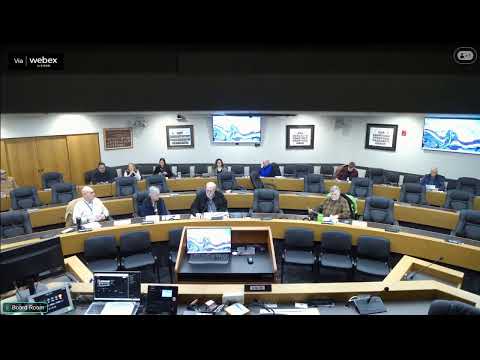
Members of the LaSalle County Tourism Committee on Jan. 17 devoted a substantial portion of the meeting to concerns about proposed solar and wind energy facilities near the county’s state parks. The committee discussed potential effects on scenic views, visitor perception and overnight stays, and directed staff to continue outreach to state legislators, zoning officials and tourism stakeholders. No formal resolution was adopted; the committee agreed to keep the topic on future agendas and to prepare materials for broader stakeholder engagement.
Sandy, chair of the LaSalle County Zoning Board, told the committee that the county’s hands are constrained by state law. “The state has an ordinance that we all must follow, not may follow,” she said, reading a citation the committee requested: 55 ILCS 5/5-12020. Committee members said that statutory change or greater state-level guidance would be required to restore local flexibility on setbacks and conditions for large commercial renewable-energy projects sited near state parks.
Why it matters: committee members said state parks (including Starved Rock, Matthiessen, and Buffalo Rock) are a primary tourism asset for LaSalle County, generating overnight stays, sales taxes and spending at local businesses. Members argued that visual impacts and large-scale utility development near park gateways could harm the county’s long-term visitation and economic returns.
Discussion highlights
- Statutory limits: Sandy (zoning board chair) encouraged members to read the cited statute and said counties were required to align their ordinances to state rules; she emphasized that local conditional authority had been reduced. - State-level action: Several members urged the committee to involve state representatives and tourism associations, and to consider organized lobbying or coalition-building with other counties and parks to seek legislative changes. - Local levers: Committee members also asked about county-level zoning enforcement, property-maintenance standards, and whether more stringent local standards (for visual buffering, road-impact mitigation or specialized permits near parks) could be adopted within current law. - IDNR and state park leases: A committee member said a recent state law permits the Department of Natural Resources to place solar on IDNR property under long-term leases; members noted that would limit local control over projects on state-owned land.
Outcome and next steps
The committee agreed to continue the conversation and to invite additional stakeholders — including county zoning staff, state representatives, and statewide tourism or parks associations — to future meetings. Members asked staff to assemble the relevant county zoning language, the cited state statute (55 ILCS 5/5-12020), and maps showing existing or proposed renewables projects relative to park boundaries so the committee could consider options, including a possible formal stance at a future meeting.
No formal vote was taken on a policy statement at the Jan. 17 meeting.