Get Full Government Meeting Transcripts, Videos, & Alerts Forever!
Get email alerts on the Drug Policy topic
No spam. Unsubscribe anytime.
After contested hearing, committee approves minimum $300 fine for possession of up to 3 ounces of marijuana
Summary
The committee voted 10-4 to send House Bill 7 to the House floor with a due-pass recommendation; the bill would set a mandatory $300 minimum fine for adults possessing three ounces or less of marijuana.
The Judiciary, Rules and Administration Committee voted 10-4 to send House Bill 7 to the House floor with a due-pass recommendation after more than two hours of public testimony and debate.
Sponsor Representative Jordan Redmond (District 3) told the committee HB 7 "sets a minimum fine of $300 for adults in possession of 3 ounces or less of marijuana" and said the bill is intended to create a uniform penalty across counties and act as a deterrent. The bill expressly excludes children under 18.
The hearing drew a mix of law-enforcement, business, veterans, medical-advocacy and criminal-justice testimony. Supporters included Sheriff Chris Getz, speaking for the Idaho Sheriffs Association, and Rex Ingram, Chief of Police in Caldwell and president of the Idaho Chiefs of Police Association; both described the minimum as a deterrent and said they have seen increased local impacts after neighboring states legalized recreational marijuana. "By having a mandatory minimum for marijuana... that sets the tone," Chief Ingram said.
Supporters from the business community and construction sector said predictable penalties help deter workers from using marijuana on the job and ease hiring for safety-sensitive occupations. Brian Baumann, an insurance agent representing contractors, told the committee that workforce readiness is harmed when marijuana use becomes normalized in neighboring states.
Opponents included multiple veterans and health‑care petitioners and criminal-justice practitioners. Monica Gray, managing attorney for the Ada County Office of the Idaho State Public Defender, said the mandatory minimum would disproportionately affect indigent defendants who make up the majority of those prosecuted for low-level possession. "A mandatory minimum fine not only will not be able to be paid by our clients but will lead to probation violations, incarceration from those violations, contempt proceedings and their simple inability to adhere to their court-ordered rehabilitative sentence," Gray testified.
Veterans and patient-advocacy witnesses described using cannabis for serious medical conditions and urged judicial discretion for medically vulnerable people. Jeremy Kitschaber, a disabled veteran undergoing cancer treatment, said he relied on opioids that created other risks and that cannabis was sometimes the only effective symptom relief. "I would ask that this not be the only law in Idaho where a minimum fine would be imposed," he said.
Legal advocates warned that mandatory minimums do not reduce crime and erode judicial discretion. Paul Riggins, a criminal-defense attorney and vice president of the Idaho Association of Criminal Defense Lawyers, said mandatory minimum penalties have not been shown to deter behavior and argued they undermine separation of powers by restricting judicial sentencing discretion.
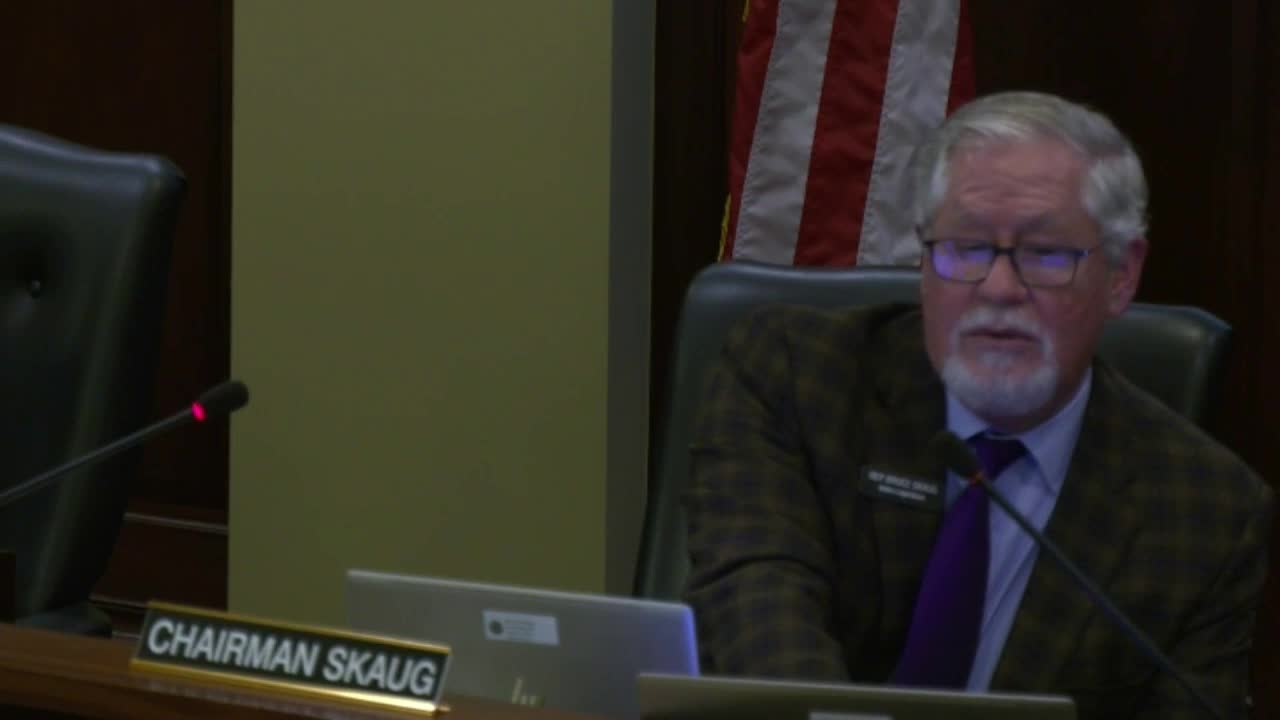
The committee debated two procedural motions. Representative Garner moved to hold HB 7 in committee; that substitute motion failed on a 6-8 vote. Representative Hill then moved to send HB 7 to the floor with a due-pass recommendation; a roll-call on the main motion showed the committee approved the bill 10-4 (the chair announced "Motion carries 10 to 4").
What HB 7 would do: it would create a mandatory minimum $300 fine for adults possessing three ounces or less of marijuana; current statute already classifies possession under certain amounts as a misdemeanor with a statutory maximum fine (previous testimony referenced a current maximum fine of up to $1,000 and the three-ounce felony threshold). The bill does not address legalization or medical‑marijuana policy; proponents said it creates uniformity and deterrence, while opponents argued it is regressive in practice and would disproportionately harm low‑income and medically vulnerable people.
Next steps: HB 7 was reported out of committee to the House floor with a due-pass recommendation for further debate and amendment at the full-chamber stage.