
Panel approves broad child-welfare rule changes to expand foster care capacity and streamline licensing
Get AI-powered insights, summaries, and transcripts
Subscribe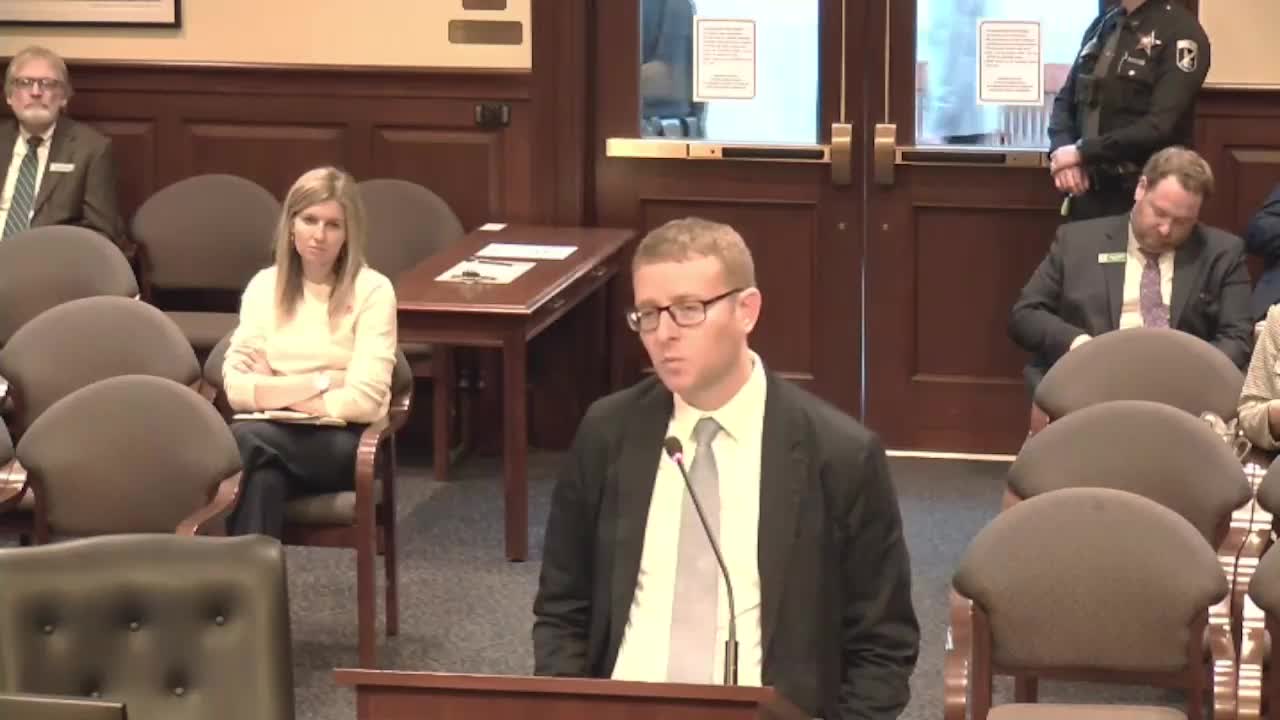
Summary
The House Health and Welfare Committee approved a package of temporary and pending rule dockets from the Department of Health and Welfare intended to reduce red tape, expand foster-family capacity and clarify appeals and visitation rules for substantiated abuse cases.
Alex Adams, Director of the Department of Health and Welfare, told the House Health and Welfare Committee that his agency will push to pare back rules and return more decisions to elected lawmakers while proposing dozens of rule changes that affect foster care, adoptions and child-protection procedures.
The committee approved multiple dockets consolidating temporary and pending rules for child and family services, including measures to expand foster placement flexibility, create short-term crisis payments for difficult placements, clarify appeals for the Child Protection Central Registry and ease adoption-related requirements.
Adams said the department aims “to get rid of any of the red tape that's not in the National Model Act” and to move some rules into statute so elected officials, not agency rule writers, make the decisions. “We have a goal of doubling the ratio of foster families relative to the number of foster kids in the state,” Adams said.
Jared Larson, Legislative and Regulatory Affairs chief for the Department of Health and Welfare, summarized a set of related dockets the committee considered together. He described temporary changes (docket 160601-2402 and related dockets) that authorize a crisis-level payment when insufficient foster homes exist for children who require special placement — for example, large sibling groups or children with high needs. The department said crisis payments would be time-limited and could be funded within current budget allocations. Andy Blackwood, Bureau Chief with the Department of Health and Welfare, told the committee the department had previously used supplemental daily payments in single cases and discussed a figure that had been considered in the past "about 150 a day," which she said was per child and was discussed as a potential amount but not codified as a fixed rate.
The committee also approved temporary language clarifying the administrative review and appeal process for persons substantiated for abuse, neglect or abandonment and placed on the Child Protection Central Registry. Andy Blackwood said the rule requires the department to provide the individual with information that led to the substantiation within 14 days; the person, she added, retains 28 days from the substantiation letter to request an administrative review. "That 14 day requirement is for us," Blackwood said, describing it as a department obligation to share evidence promptly so the person can prepare a defense. She also said the central registry is a closed registry; information is released only when a third party (for example, an employer) obtains a signed release and that release indicates only that the person is on the registry, not the underlying allegations.
Other approved items included temporary changes to foster-care licensing that adopt the "reasonable and prudent parent" model drawn from the national model licensing standards and lower the minimum age for foster parents from 21 to 18 in some circumstances so an older sibling could be licensed when appropriate (dockets 160602-2401 and 160602-2402). The rule package also included a temporary reactivation pathway for previous foster parents so they need not repeat the full pre-service training if they attest no significant household changes (docket 160602-2403) and a chapter rewrite (docket 160601-2405) that consolidates and modernizes language across child and family services.
Committee members asked about specific safeguards. Representative Kaler questioned the shortened timing for background checks and notification when a new adult moves into a foster home; Jared Larson said the department is willing to work with members but noted practical situations that can arise for foster families and emphasized a desire not to create new barriers to families who foster. Representative Rabel and others raised due-process concerns about the registry timeline; Blackwood and other staff described certified mail, forms, and the 28-day window to initiate an appeal. On supervision and safety questions, Julie Sepchak, a program manager with Child Welfare, said the rewrite follows the National Model Licensing Standards and includes requirements such as locked firearms and separate storage of ammunition to reduce access by children.
The committee moved each rule by separate motion. Representative Edmond moved approval of docket 160601-2402 (temporary rule addressing crisis payments and registry appeals) and the motion carried. Representative Reardon and other committee members moved and carried adoption of related dockets 160601-2403 (adoption-fee waivers and kinship definitions), 160601-2404 (visitation supervision protections), 160601-2405 (chapter rewrite incorporating temporary rules) and the foster-licensing replacement dockets 160602-2401, 160602-2402 and 160602-2403.
The department said several of these temporary rules had already been used in practice and that the changes are intended to expand capacity while preserving child safety metrics (repeat maltreatment and placement stability) that the department monitors. Adams said the department’s strategy is “quality over quantity” and emphasized monitoring placement stability and maltreatment rates as they recruit more foster families.
Committee members and department staff agreed to continue working on technical clarifications and to share supporting materials — for example, Blackwood said the department could provide results from its annual foster parent survey on support, training and communication.
The committee approved the package of child- and family-services rules without recorded roll-call tallies in the transcript; each docket was approved by voice vote with no opposed votes announced.
Looking ahead, Adams told members they will see bills this session to pare back statutory sections and to move some program rules into statute. He framed the work as returning decisions to elected lawmakers and reducing the department’s 1,200 pages of rules over time.