Get Full Government Meeting Transcripts, Videos, & Alerts Forever!
Get email alerts on the Levine Act topic
No spam. Unsubscribe anytime.
FPPC opens pre-notice for wide revisions to Levine Act rules, seeks public comment
Summary
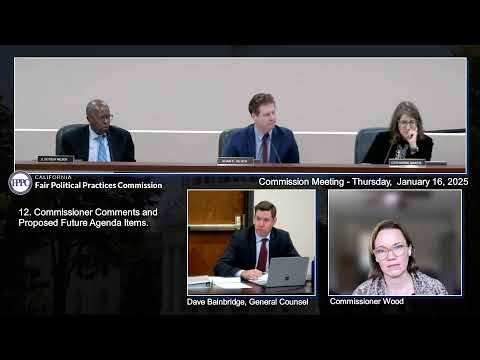
The Fair Political Practices Commission on Jan. 15 opened pre‑notice proceedings to amend its rules implementing the Levine Act, proposing changes on contribution thresholds, agent aggregation and disclosure timing and asking for broad stakeholder feedback.
The Fair Political Practices Commission on Jan. 15 opened a pre‑notice discussion of proposed regulatory amendments implementing recent legislative changes to Section 84308 of the Political Reform Act, commonly known as the Levine Act.
The Levine Act restricts political contributions and requires disqualification and on‑the‑record disclosure in certain proceedings to avoid pay‑to‑play conflicts. Staff said the new regulations respond to statutory changes that raise the contribution threshold from $250 to $500, define when a matter is “pending,” and clarify who counts as an agent and what constitutes a license, permit or other entitlement for use.
Staff counsel said many changes are technical—moving definitions into statute where the Legislature has already acted—but also proposed discretionary clarifications. Proposed regulatory edits would: point regulated parties to the conflict‑of‑interest materiality standards the commission uses to decide when a business or nonprofit has a financial interest; stop aggregating contributions from agents with those from parties; and set a 30‑day disclosure window before an agency decision for parties in entitlement proceedings.
Commissioners pressed staff for outreach and asked how the rules would apply to labor unions, central committees and members of such organizations who appear at hearings. Senior counsel said labor contracts remain excluded under the statute but warned that unions or members could still qualify as parties or participants in other scenarios where a proceeding directly affects their financial interests. Commissioners asked staff to highlight which regulatory choices were statutorily required and which were discretionary when the package goes out for public comment.
Los Angeles County and other local officials called for further clarification of key terms such as “competitive process,” “development agreement,” and how amendments apply to proceedings started before the statutory change but decided afterward. Staff agreed to outreach and to schedule additional sessions and materials for jurisdictions likely to be affected.
The commission did not vote on the package at this meeting; members directed staff to run an extensive interested‑persons outreach period before returning with a formal rulemaking package.