Get Full Government Meeting Transcripts, Videos, & Alerts Forever!
Lake County supervisors hear update on cannabis ordinance task force; dispute centers on farmland protection zone expansion
Summary
Mireya Turner, Lake County's community development director, briefed the Board of Supervisors on Monday about remaining recommendations from the cannabis ordinance task force, including procedures for inactive permit applications, records retention, setbacks for odor, farm-labor contractor registration and a disputed proposal to expand the county's Farmland Protection Zone.
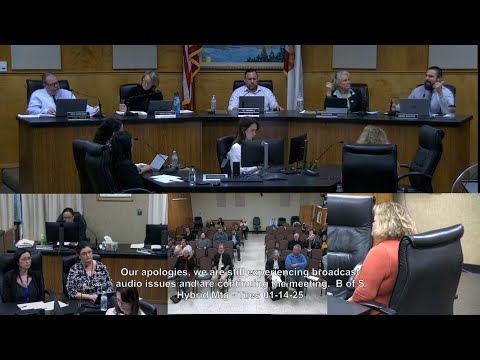
Mireya Turner, Lake County's community development director, told the Board of Supervisors on Monday that the county's cannabis ordinance task force is still finalizing a set of recommendations meant to update local rules and align county practice with state regulations.
The update, presented by Turner and senior planner Mary Clabaugh, covered dozens of topics the task force has discussed since December 2024 and highlighted a handful of remaining items for further work. Key outstanding topics include: procedures for closing out incomplete or abandoned permit applications, aligning inactive-application timelines with the California Department of Cannabis Control (DCC), records-retention methods, operational hours and noise, odors and setbacks from residences, onsite use of RVs, farm labor contractor registration, the county's October 31, 2020 notice-of-applicability cutoff, the county's 2019 cap of 12 cannabis-related permit submissions per month, methods for calculating canopy, and the potential for site reclamation bonds.
Why it matters: the recommendations would change how the county accepts and manages cannabis cultivation, processing and retail sites and could affect dozens of existing projects and pending applications. Staff emphasized the item was informational; no ordinance language is in effect and any change would require a formal ordinance process with additional public hearings.
Turner and Clabaugh said staff would like to adopt several state-aligned practices. They recommended adding a local process to deem applications inactive if there has been no applicant correspondence for 180 days, matching a DCC threshold described in the meeting. Clabaugh said the county…
Already have an account? Log in
Subscribe to keep reading
Unlock the rest of this article — and every article on Citizen Portal.
- Unlimited articles
- AI-powered breakdowns of topics, speakers, decisions, and budgets
- Instant alerts when your location has a new meeting
- Follow topics and more locations
- 1,000 AI Insights / month, plus AI Chat