Get Full Government Meeting Transcripts, Videos, & Alerts Forever!
Get email alerts on the Planning Process topic
No spam. Unsubscribe anytime.
Sammamish Planning Commission to test annual training, pre‑meeting Q&A and clearer packet materials
Summary
City staff outlined a series of procedural changes — annual training with the city clerk, brief pre‑meeting prep sessions, a Q&A JotForm, exhibit labeling and font-size improvements — intended to help commissioners manage meeting time, comply with the Open Public Meetings Act and respond to public comment.
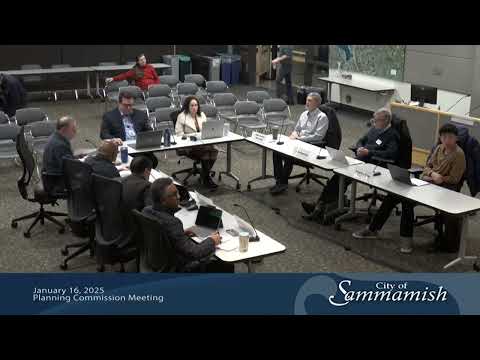
The Sammamish Planning Commission on Jan. 16 reviewed staff proposals to improve meeting efficiency, public‑comment follow‑up and materials distribution, including an annual training, short pre‑meeting prep sessions and a new Q&A process for packet questions.
City planning manager Miriam Laettner told commissioners the city clerk will join a proposed annual training to cover the Open Public Meetings Act and public records best practices, and staff plans to pair the session with a casual potluck so commissioners can get to know one another. "Our city clerk has agreed to join the training to talk about the Open Public Meeting Act and public records and share best practices for public meetings," Laettner said.
Laettner said staff will pilot two items before full rollout: 15–30 minute pre‑meeting prep sessions offered the Tuesday before a meeting, and a JotForm Q&A process for commissioners to submit questions with answers posted by Wednesday night. The goal, she said, is to reduce the number of procedural questions asked during presentations and give staff time to prepare fuller responses.
"I think what would be helpful for us is if you're hearing something where you'd like staff to do more research or to respond, do you think it's something that's interesting to let us know in the meeting, like, this is something that we want more research done on and we think is important, then we can know to come back and take the time and do that," Laettner said, explaining how commissioners can flag public comments or issues for follow up.
Other procedural steps staff proposed include: clearer labeling of exhibits and page counts in packet materials, use of more photos and charts, larger printed font (staff suggested targeting a 12‑point font for printed materials), and a practice of tabling off‑topic questions during presentations. Chair time estimates at the start of each agenda item also will be used as a guideline to help manage meeting length.
Public commenters supported the emphasis on follow‑up and clarity. Resident Mary Wictor praised minute write‑ups and urged commissioners to use public comment substantively: "One of the things that makes commissions and meetings important is that you take public feedback and that if you hear something that you like, you need to learn how to integrate it into your discussions and also make motions and amend things," she said.
Commissioners discussed how best to record and act on public comments. Several commissioners reiterated that when a commissioner wants staff to research a public comment further, the commission should explicitly ask staff to do so either during the meeting or by directing staff to return with an action item; staff said requests that require substantial resources or consultant work may need a formal direction from the full commission or city council.
Next steps: staff said Planning Commission bylaws and relevant sections of Sammamish Municipal Code Chapter 2.60 will be reviewed and updated, and consultant or legal support will be used as needed. Laettner told commissioners that staff member David (last name not provided in this meeting transcript) will attend the Feb. 6 meeting to start that work.
The commission moved on to a separate Town Center planning discussion after the operational items were completed.