Get Full Government Meeting Transcripts, Videos, & Alerts Forever!
Get email alerts on the Travel Policy topic
No spam. Unsubscribe anytime.
Budget advisory committee endorses draft travel policy, asks co-chairs to present it to board
Summary
Mountain View Whisman School District’s Budget Advisory Committee reviewed a draft travel policy, recommended refinements on per diem, transportation and approval timelines, and agreed co-chairs will submit a recommendation letter to the school board for review.
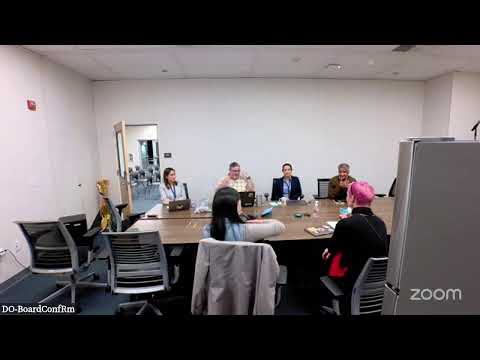
The Mountain View Whisman School District Budget Advisory Committee on an interim agenda reviewed a draft district travel policy and agreed to recommend it to the school board after minor edits and a co-chairs’ transmittal letter.
The committee’s chief business officer, Rebecca Westover, said the draft combines practices from several districts and proposes per diem meal rates tied to the U.S. General Services Administration. “The idea is…we would have a per diem rate,” Westover said, adding the district would use GSA rates so employees would not need to submit meal receipts.
Committee members pressed for clarity on approval timelines and who must sign off on travel. The draft requires prior approval for travel; principals may approve in-county trips, the superintendent must approve out-of-county and out-of-state staff travel, and the board would review superintendent and board member travel when required to appear on a public agenda. Members discussed whether to require submissions a fixed number of days before travel; no firm deadline was set, but the committee emphasized setting expectations that travel requests be submitted in advance where practicable.
Discussion also covered transportation and lodging rules. The draft recommends the “most economical method of travel taking into account time and cost” and proposes economy car rentals and standard baggage allowances; Westover said the draft will add language on rideshare and the district’s practice of carpooling when appropriate. On lodging, the policy would reimburse overnight stays when travel is beyond a set radius or when conferences include evening programming that makes same‑day travel impractical.
Members supported a per diem approach to reduce paperwork. “This is much cleaner because we’re not getting receipts,” Westover said, describing the district’s intent to avoid burdensome reimbursement processes. The committee also suggested adding a worksheet showing estimated and actual costs for any approved travel so approvers and board members can see expected expenditures before travel occurs.
Next steps agreed by the group: Patty (co-chair) will incorporate the committee’s edits into the draft, and the co-chairs will prepare a brief letter to attach to the item when it appears on the board agenda. Westover said staff will include a cost worksheet with superintendent-level travel requests so the board can see estimated expenditures when it considers approvals.
No formal vote was recorded at the meeting; the committee’s direction was procedural — to finalize edits and forward a recommendation for board review.
The committee also asked staff to clarify how travel-related exceptions (for example, international data charges or hotel Wi‑Fi) would be handled on the same worksheet so approvers could preauthorize incidental items when warranted.
Members signaled they favor a policy that encourages professional development while keeping clear guardrails to limit unexpectedly high costs.