Get Full Government Meeting Transcripts, Videos, & Alerts Forever!
Get email alerts on the School Bullying Prevention topic
No spam. Unsubscribe anytime.
Pacific Grove workshop urges parents to spot and prevent bias-based bullying
Summary
Pacific Grove Middle School hosted a parent workshop featuring presenters from Harmony at Home, Rainbow Connections and Monterey County Behavioral Health who defined bias-based bullying, described how it affects students and urged parents to take specific actions to prevent and respond to incidents.
Pacific Grove Middle School hosted a parent workshop featuring presenters from Harmony at Home, Rainbow Connections and Monterey County Behavioral Health who defined bias-based bullying, described how it affects students and urged parents to take specific actions to prevent and respond to incidents.
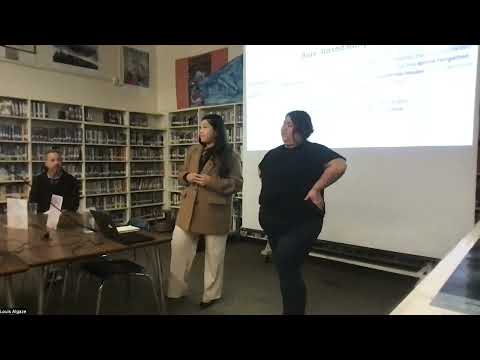
At the session, school Principal Sean Roche introduced the program and said Pacific Grove Middle School is partnering with outside agencies to expand anti-bullying work on campus. Julie Mendaro of Harmony at Home and Denise Adeza of Rainbow Connections led the presentation, and Casey Rodenbush of Monterey County Behavioral Health participated remotely.
Organizers said bias-based bullying targets individuals or groups because of characteristics such as race, gender, disability, religion, socioeconomic status, language or appearance. “Bias based bullying … targets an individual or a group … because of their gender, or their race,” Denise Adeza said, adding it differs from one-off mean moments or ordinary conflict because it targets a characteristic and often involves an imbalance of power.
The presenters stressed potential harms for targeted students, including anxiety, depression, lower attendance and falling grades. Mendaro cited prevalence figures discussed in the session: she said speakers were told that one in four students in the United States experience bullying and that, by the presenters’ account, about 1,500,000 students in California are affected. She also cited Centers for Disease Control findings referenced in the workshop that reported reported student anxiety rising from about 10 percent before the COVID-19 pandemic to roughly 20 percent afterward.
Presenters outlined actions parents can take: model respect for diversity at home, teach empathy and appropriate online behavior, monitor children’s internet use, encourage reporting rather than “snitching,” and practice calm, clear documentation when incidents occur. “Parents hold the power to break the cycle of bullying. By leading with empathy, they shape a future where every child feels safe, valued, and empowered,” Mendaro said.
Practical steps emphasized during the workshop included keeping notes of incidents (screenshots for cyberbullying), asking neutral questions to avoid shutting down a child who reports a problem, and creating predictable daily check-ins. The group described four anti-bullying rules used with younger students: do not bully, include anyone left out, model upstander behavior, and communicate with school and home when bullying occurs.
Presenters encouraged upstander behaviors — calling out unacceptable remarks or intervening safely — and described alternatives when intervening directly may be unsafe: approach the situation privately, seek assistance from a trusted adult, or address the speaker after the event. During interactive role-play exercises, attendees discussed scenarios (for example, overhearing a parent comment that a boy “needs a father figure”) and debated whether to intervene publicly, speak privately, ignore, or seek help; facilitators said there is no single correct response but that the matter should be addressed.
The workshop also promoted campus and community programming: Pacific Grove Middle’s Kindness Crew and Prism Club, a planned expressive arts exhibit to be showcased on Pink Shirt Day (scheduled for Feb. 28), and a multi-site Pink Shirt Day event organized with partners including Rainbow Connections, SunStreet Centers and Partners For Peace. Organizers said Harmony at Home works across 26 school sites and that Rainbow Connections provides bullying-prevention coaching on some campuses (Denise Adeza attends PG Middle on Wednesdays). Artist partners named for the Pink Shirt Day exhibit included Paul Richmond, Keith Scott and Nick Follier, working under a project described as Project We Will Rise.
Presenters described a longer-term educator training called the Welcoming Schools series: a six-module program the school intends to deliver over about three years to staff to support inclusive practices.
Parents and staff asked logistics questions and shared practical tips. The organizers said the second workshop in this four-part parent series will focus on cyberbullying and internet safety at 6 p.m. on Feb. 11 (virtual and in-person). A recording and supporting materials will be distributed afterward, the presenters said.
The session did not include any school-board votes or formal policy changes; presenters framed the event as outreach and training intended to shift school and home culture over time.