Get Full Government Meeting Transcripts, Videos, & Alerts Forever!
Get email alerts on the Opioid Settlements topic
No spam. Unsubscribe anytime.
County attorney says opioid litigation continues; $315,151 in restricted settlement funds available for programs
Summary
Christian County's opioid settlement attorney updated commissioners on ongoing litigation against Purdue and pharmacy benefit managers, explained restrictions on settlement dollars and outlined allowable uses including treatment, jail intake specialists and education.
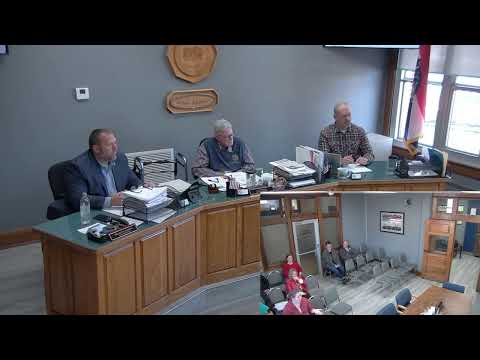
The Christian County Commission heard an update Thursday from the county's opioid settlement attorney, Jack Garvey, who said litigation is ongoing and that the county has received settlement proceeds that are mostly restricted for opioid-related programming.
Garvey told the commission the litigation remains active against Purdue Pharma and pharmacy benefit managers (PBMs) such as Optum and Express Scripts, and that additional settlement tranches are possible. He said the county's restricted opioid fund currently holds $315,151.71 and the county has $33,000 in an unrestricted account.
The update matters because most settlement dollars carry spending restrictions that limit the ways counties can use the money. Garvey said many settlements allow only 85% of funds to be spent on opioid programming (some newer settlements have 95% opioid-only restrictions), and that a three-member settlement committee set up by the court will monitor compliance through an annual self-reporting questionnaire.
Garvey described the remaining defendants and sources of potential further funds. "This litigation is not over yet," he said. He identified Purdue Pharma and the Sackler family as the long-running locus of the litigation and said a renewed bankruptcy-related settlement announcement may be coming. He also said discovery exposed commercial arrangements between Purdue and PBMs that plaintiffs allege increased opioid distribution and that PBMs remain vigorously defended in the litigation.
On allowable uses and local planning, Garvey described examples other counties have adopted: funding public education (billboards, pamphlets, school programming), buying ambulances in some states, underwriting medically assisted treatment, and contracting addiction-treatment specialists to work at jail intake. "You station them in your intake in your jail, they do the interview and then that person will set up a program for them, if they are released on bond," Garvey said.
The attorney explained the monitoring mechanism: each settlement produces a short annual questionnaire asking whether funds were spent on non-opioid programming and, if so, the dollar amount. If non-opioid spending exceeds the permitted percentage, the settlement committee can flag the county and reduce future distributions. He called the process a self-reporting system rather than an active auditing regime.
Commissioners raised operational questions: whether counties may pool funds regionally (Garvey said pooling with neighboring counties is allowed), whether interest earned on invested settlement proceeds counts as restricted (Garvey said interest could plausibly be used for non-opioid spending while principal remains subject to the restriction), and how soon the county must report spending (the commission's first report was noted as due January 31).
Local officials said they plan to convene stakeholders this year'including the sheriff, judge and prosecuting attorney'to develop program proposals. Garvey recommended coordinating with existing drug court programs and suggested the Missouri Drug Court Treatment Court Conference in Branson (third week of March) as a venue for further information and networking.
Commission discussion closed with a request that Garvey and county staff provide the settlement-use guidance materials he referenced, and that commissioners take ideas from neighboring counties into account when planning local programs.