Get Full Government Meeting Transcripts, Videos, & Alerts Forever!
Get email alerts on the Constitutional Law topic
No spam. Unsubscribe anytime.
Debate in committee over proposal to raise constitutional amendment threshold to 60%
Summary
House Concurrent Resolution 3003 would amend the state constitution to require a 60% vote to approve constitutional amendments (excluding initiative procedures); supporters called for greater stability, opponents and witnesses urged addressing out-of-state money or procedural safeguards instead of raising the threshold.
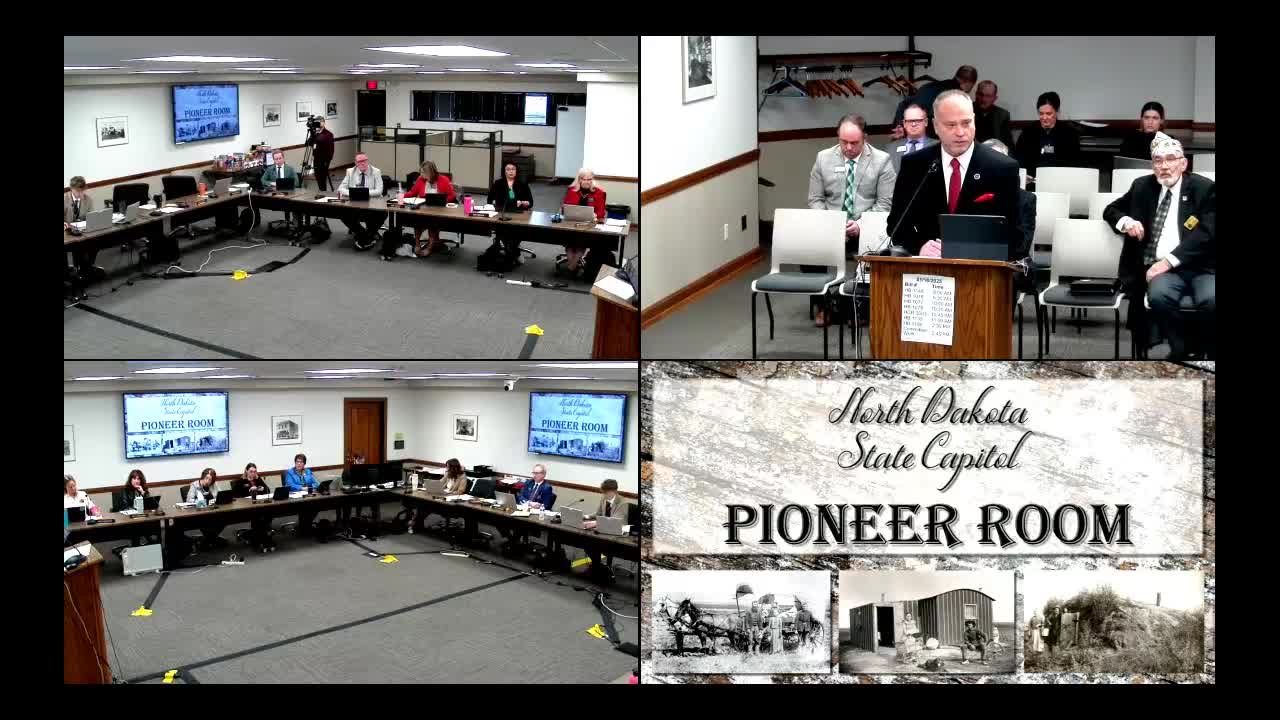
Representative Robin Wise introduced House Concurrent Resolution 3003, which would amend the North Dakota Constitution to require a 60% vote to approve constitutional amendments proposed by the legislature. Wise told the House Government and Veterans Affairs Committee the change would not affect citizen-initiated measures and argued the state constitution deserves a supermajority threshold.
Supporters who testified — including the Greater North Dakota Chamber’s president Eric Spencer and Representative Vetter — argued a higher threshold protects minority rights and prevents frequent or externally funded changes to the constitution. "Our state constitution is a sacred document ... it should be difficult to change it," Wise said.
Opponents and public commenters raised procedural and democratic concerns. Kevin Herman testified in opposition saying the resolution undermines Article 3 (powers reserved to the people) and is an attempt to constrain citizen-initiated constitutional changes. Dustin Gervlow of the North Dakota Watchdog Network urged a two-step approach: first ask voters whether they want the legislative threshold for changing initiative rules increased, and only then apply a higher threshold to the constitution itself; he also proposed statutory limits on out-of-state funding for ballot campaigns as an alternative.
Public testimony also included a Bismarck resident who described using the initiative petition process to preserve local public transportation and urged the committee not to raise the bar on citizen-driven measures.
The committee heard both sides and closed the hearing; no committee vote on HCR 3003 was recorded in the transcript.
Why it matters: The resolution would make it harder for the legislature to place constitutional changes before voters and has prompted discussion about the balance between protecting constitutional stability and preserving citizen initiative rights.
What’s next: The committee closed the hearing; any future action would appear on the committee calendar.