Get Full Government Meeting Transcripts, Videos, & Alerts Forever!
Get email alerts on the Agriculture topic
No spam. Unsubscribe anytime.
Oilseed Council Seeks Minimum Penalty for Late Assessment Filings; House Ag Hears Bill
Summary
Representatives and industry witnesses told the committee House Bill 1136 would add a fixed minimum penalty ($500) for late or unsubmitted oilseed assessment reports to ease enforcement, while representatives of first purchasers urged caution about unintended consequences for small elevators and roving buyers.
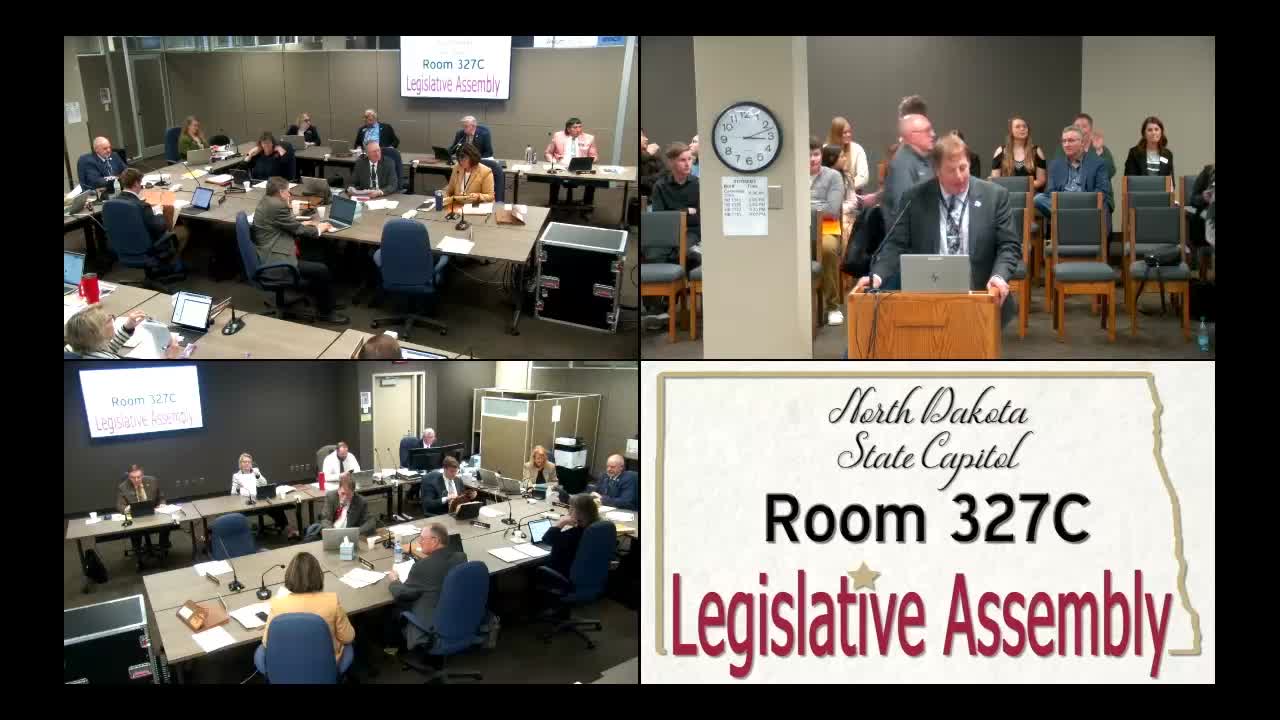
Representative Sam Kemenick introduced House Bill 1136 to the House Agriculture Committee, saying the measure responds to difficulties the North Dakota Oilseed Council faces collecting statutorily required assessment reports from first purchasers.
John Wirt, chairman of the North Dakota Oilseed Council, said the council must currently rely on a statutory penalty of 10% of the assessment but that the council cannot impose a percentage penalty when the underlying assessment amount is unknown. "The penalty is, in the statute, is 10% of the assessment. The problem is you can't impose 10% when you don't know what the assessment is," Wirt testified. He said the council asked Representative Kemenick to add a fixed minimum penalty of $500 to ensure late filers are brought into compliance and to reduce staff time spent chasing late reports.
Wirt described late filings as most often a problem with smaller elevators and roving buyers; he said larger processors typically comply. He said the measure would leave the 10% penalty in place while adding a floor so enforcement is practicable.
Representatives of the North Dakota Grain Dealers Association and other first purchasers testified neutral or raised concerns. Stu Letcher, representing the grain dealers, said first purchasers receive no dedicated compensation for collecting and filing assessments and noted that some small elevators and roving grain buyers handle small transaction volumes; a fixed $500 penalty could be punitive for low‑volume handlers. "If you put a $500 minimum, I'd consider that probably punitive, depending upon ... it might be the margin they're making," Letcher said.
Committee members asked clarifying questions about timing and refund procedures. The hearing record includes these operational points from testimony: assessment reports are due quarterly; the grower has 90 days to request a check‑off refund; and the statutory penalty rate previously cited includes a 6% per annum interest rate on unpaid amounts (one committee member noted the statutory interest language may be older and should be reviewed).
No formal committee action or vote appears in the hearing transcript. Representatives urged the sponsors to consider outreach, notices and possible alternatives (including compensation or administrative changes) for small operators if the committee advances the bill.
Ending: Testimony closed with an invitation for additional conversation; the committee moved on to the next bill without a vote recorded in the transcript.