Get Full Government Meeting Transcripts, Videos, & Alerts Forever!
Get email alerts on the Agriculture Barley topic
No spam. Unsubscribe anytime.
Barley council asks lawmakers to raise checkoff to 3 cents to fund research and markets
Summary
Nathan Ball, chairman of the North Dakota Barley Council, told a joint House–Senate Agriculture session that the council is seeking approval of Bill 2161 to raise the barley checkoff from $0.02 to $0.03 to sustain research, market development and risk‑management programs.
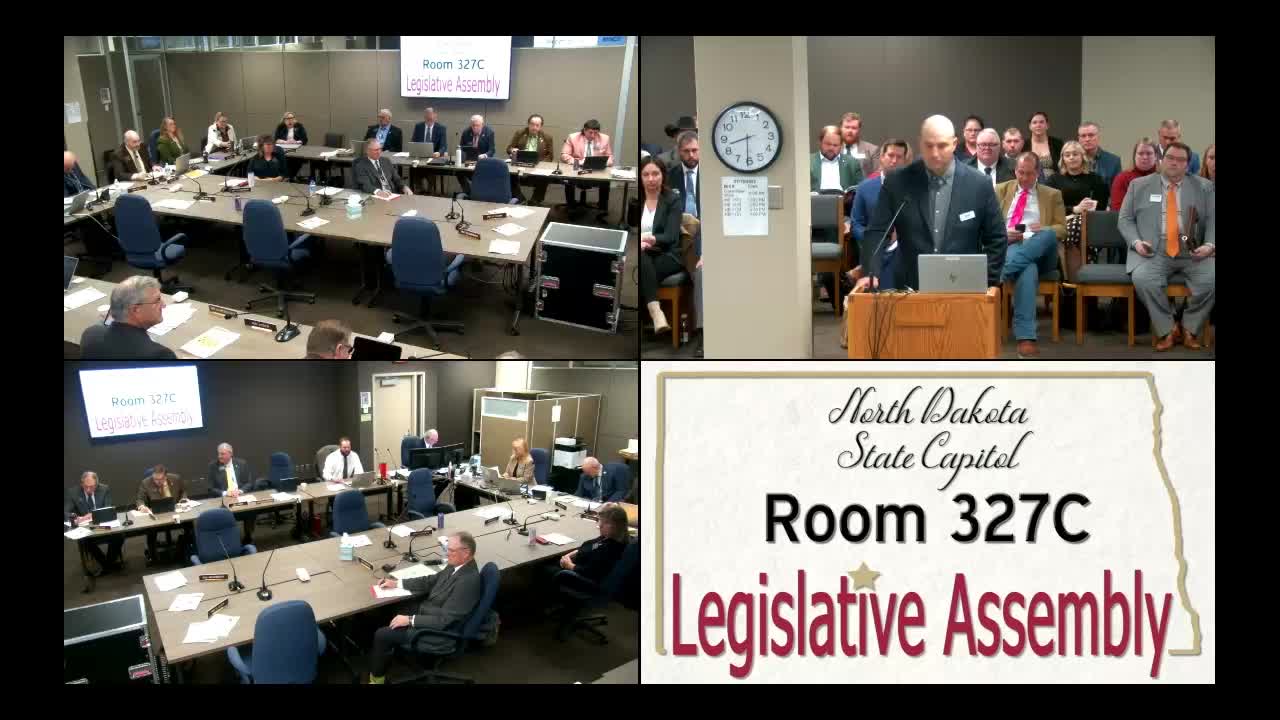
Nathan Ball, chairman of the North Dakota Barley Council, told a joint session of the North Dakota House and Senate Agriculture and Veterans Affairs Committees that the council is asking lawmakers to approve Bill 2161 to increase the barley checkoff from $0.02 to $0.03.
Ball said the increase would provide operating funds for research with North Dakota State University, market development work with domestic maltsters and international buyers and risk‑management programs such as crop‑insurance efforts with Wassa and Associates. “We’re asking for an increase from a $0.02 check off to a $0.03 check off,” Ball said during the presentation.
The council described barley in North Dakota as largely a contract crop tied to malting and brewing demand, and said acreage and production fluctuate with domestic beer consumption and malster procurement needs. Ball said North Dakota’s six‑year average barley acres is “somewhere around 350,000 to 500,000” and that the council estimates barley contributes about $659,000,000 to the state economy. He described research priorities (breeding, plant pathology) and market work with the U.S. Grains Council and direct outreach to buyers in Mexico and China.
Senator Weber asked whether Minnesota had simply folded its barley checkoff into wheat administration; Ball replied that Minnesota’s barley program now operates through Minnesota Wheat, which he said reduced barley’s separate identity there. Ball noted the last checkoff increase for barley in North Dakota was in 2009 and said rising program costs and a shift of acres to corn and soybeans are driving the request.
No committee vote on Bill 2161 was recorded during the session. Ball’s presentation framed the measure as a modest increase to maintain research, market development and risk‑management activities if acreage and producer receipts continue to decline.
The session included questions from committee members but no formal action on the bill was taken at that meeting.