Get Full Government Meeting Transcripts, Videos, & Alerts Forever!
Get email alerts on the Aging In Place topic
No spam. Unsubscribe anytime.
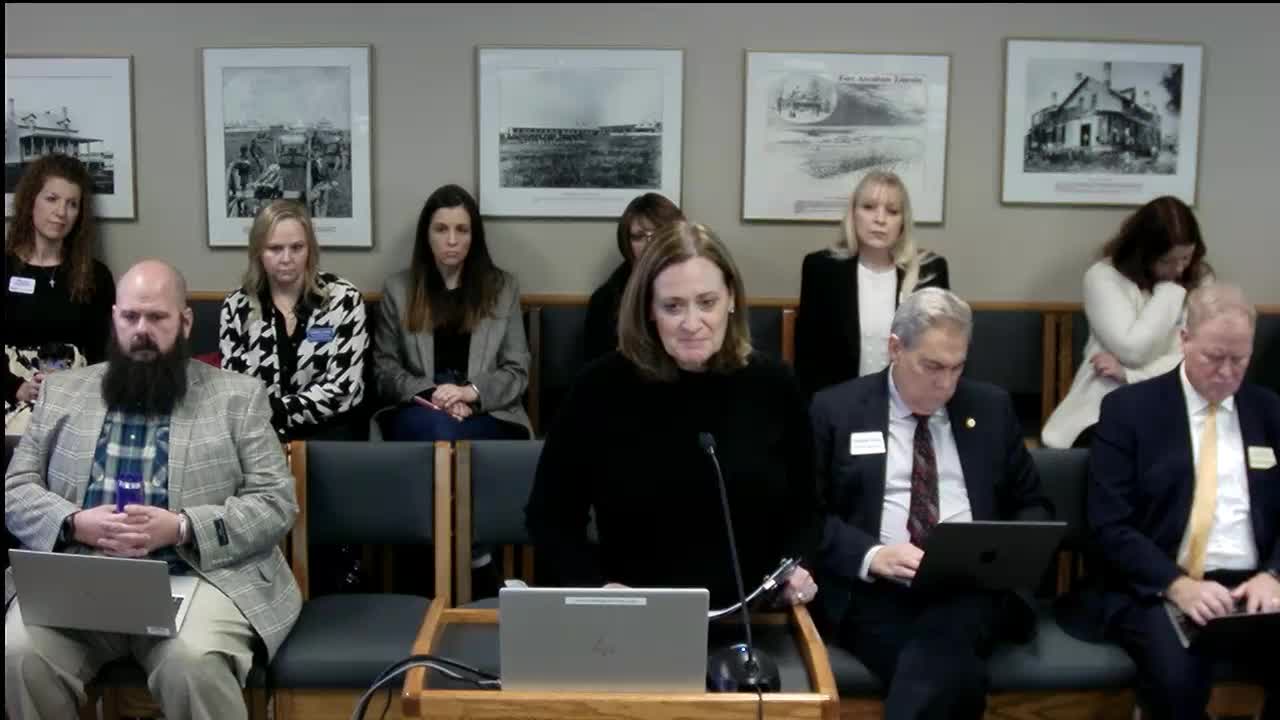
Senate hears request to boost Community of Care funding to help rural older residents age in place
Summary
Community of Care, a Cass County nonprofit, asked the Senate Human Services Committee for an increase in state funding to expand a volunteer‑led program that provides rides, faith‑community nurses, Medicare Part D assistance and other services to help older adults remain in their rural homes.
Senator Mark Weber and Myrna Hanson, executive director of Community of Care, told the Senate Human Services Committee that additional state funding would expand a program that helps older adults in rural Cass County remain in their homes rather than move to long‑term care.
The request and program model
Senator Weber said Community of Care was established in the early 2000s and has received state support since 2009. The bill (SB 2138) requests raising the appropriation to $250,000 per biennium (from the roughly $120,000 biennial funding the group has received) to allow the program to serve more residents and expand nurse coverage.
Myrna Hanson described Community of Care as a “four‑legged stool” of services: a one‑stop service center with a care coordinator who provides information, referrals and care coordination; a faith‑community nurse program with part‑time RNs who make outreach visits and preventive checks; an extensive volunteer network that provides transportation and other supports; and education and outreach (newsletters, presentations and local events). Hanson said the program served about 680 individuals in 2024, ran bone‑builder exercise classes across multiple towns, and that volunteers drove 10,721 miles to bring clients to medical appointments. She said Community of Care employs seven people (3.83 FTE) across full‑ and part‑time roles and that 62% of funding in 2024 came from local fundraisers, donations and grants.
Cost rationale and replication
Hanson and Weber argued the program reduces long‑term costs by preventing or delaying institutional placements. Hanson cited a 2024 average long‑term care cost figure the department provided — $147,164 per year — and said staff identified 15 clients in 2024 who likely would have required long‑term care without the program’s services. Hanson said Community of Care has shared its model with other local pilots; North Dakota State University Extension is using a philanthropic grant to pilot similar programs in Lisbon and western Morton County.
Committee reaction and next steps
Committee members praised the volunteer model and the potential state savings from keeping older adults in home‑based settings. Senators asked about program replication and partnerships with extension offices; Hanson said Community of Care is willing to share materials and that the extension pilots are already underway. No committee vote on the appropriation occurred in the hearing.
Ending
Witnesses asked the committee to increase state support so the model could expand nurse coverage and services across a wider portion of Cass County and serve as a model for replication in other rural counties.