Get Full Government Meeting Transcripts, Videos, & Alerts Forever!
Get email alerts on the Emergency Medical Services topic
No spam. Unsubscribe anytime.
Senate bill would require ambulance services to ensure coverage while doing non‑emergency transports
Summary
Senate Bill 2101 would require each ambulance service to establish processes (for example, mutual‑aid or cooperative agreements) to maintain continuity of response to 911 and emergent inter‑facility transports even while performing non‑emergency duties, proponents told the Human Services Committee.
Senate Bill 2101 drew testimony from emergency medical services leaders who said the measure is intended to require ambulance services to plan for continuity of 911 coverage when they undertake non‑emergency assignments such as inter‑facility transfers or event standby.
Sponsor and proponents
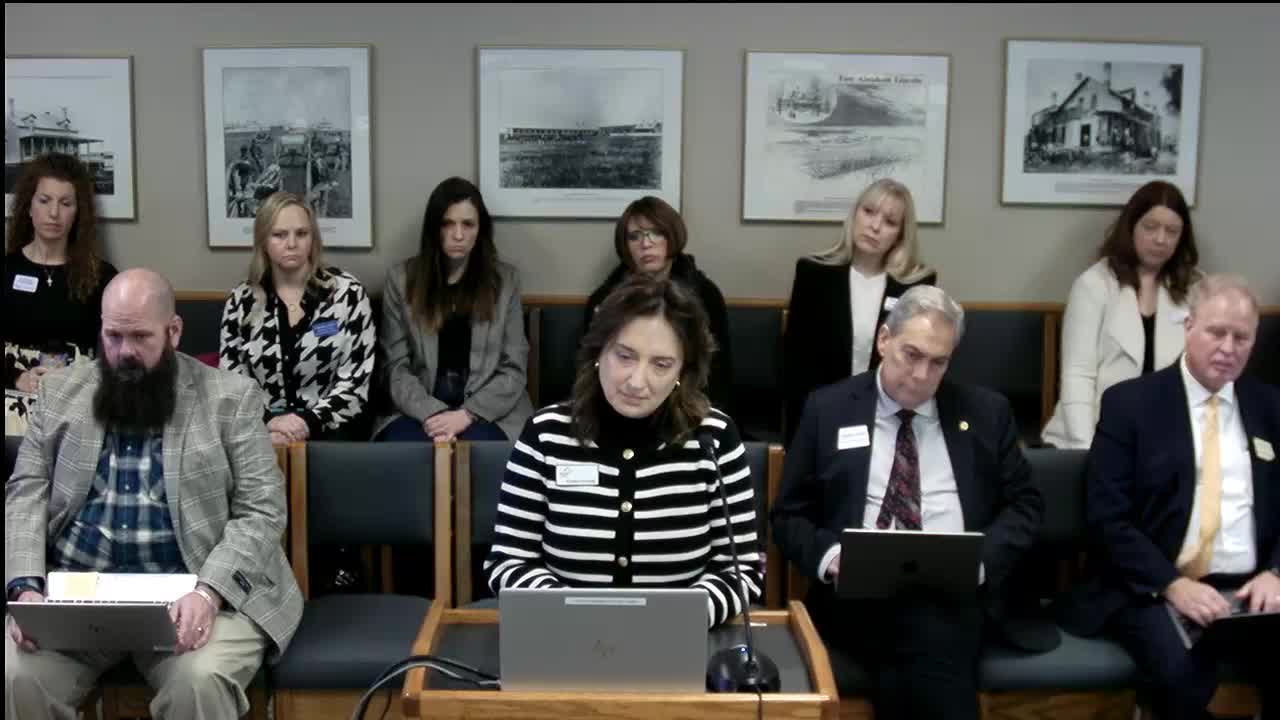
Senator Todd Beard, who introduced the bill, said the statutory change would add a standard to chapter 23‑27 to ensure an ambulance service remains available for 911 calls when it provides non‑emergent transports. Assistant Chief and paramedic Corey Johnson of Williston told the committee, “What is your expectation from your local ambulance service if you, a friend, a family member, or constituent calls 911 after suffering a medical emergency or traumatic event. My basic expectation is that an ambulance will be dispatched and will respond in a timely manner.”
Johnson and others described common situations that create coverage gaps: ambulance units staged as standby at public events or committed to hospital‑to‑hospital transfers can leave a community without immediate response capability. Johnson said the bill is not meant to stop services such as inter‑facility transfers, but to require ambulance services to have processes in place — mutual aid, cooperative agreements or scheduling — to ensure someone will respond to 911 calls.
Association and department response
Bill Kolanick, representing the North Dakota EMS Association, said the association supports the bill and submitted an amendment clarifying that the required processes should ensure both reliable 911 response and emergent inter‑facility transfers while non‑emergency services occur. Tim Weidrick of the NDHHS EMS unit said the department was present to answer committee questions and described the proposal as “a reasonable idea to explore.”
Committee concerns and fiscal issues
Committee members discussed whether the bill would create an unfunded mandate and whether it would simply codify expected conduct. Proponents said the measure is intended to force earlier conversations and written agreements so neighboring services know expectations and can negotiate cost or reimbursement where needed. The bill does not itself appropriate funding; proponents said the statute would prompt local arrangements and, where needed, negotiations about funding for mutual‑aid coverage.
Next steps
Committee members indicated the bill fit with ongoing work on EMS stabilization and that clarifying language proposed by proponents (to explicitly include emergent inter‑facility transport in covered responses) would be appropriate. The hearing concluded with no committee vote recorded in the transcript.