Get Full Government Meeting Transcripts, Videos, & Alerts Forever!
Get email alerts on the State Treasury Budget topic
No spam. Unsubscribe anytime.
State treasurer seeks pay equity, IT funds and authority for cash‑management changes; bill would transfer unclaimed property program
Summary
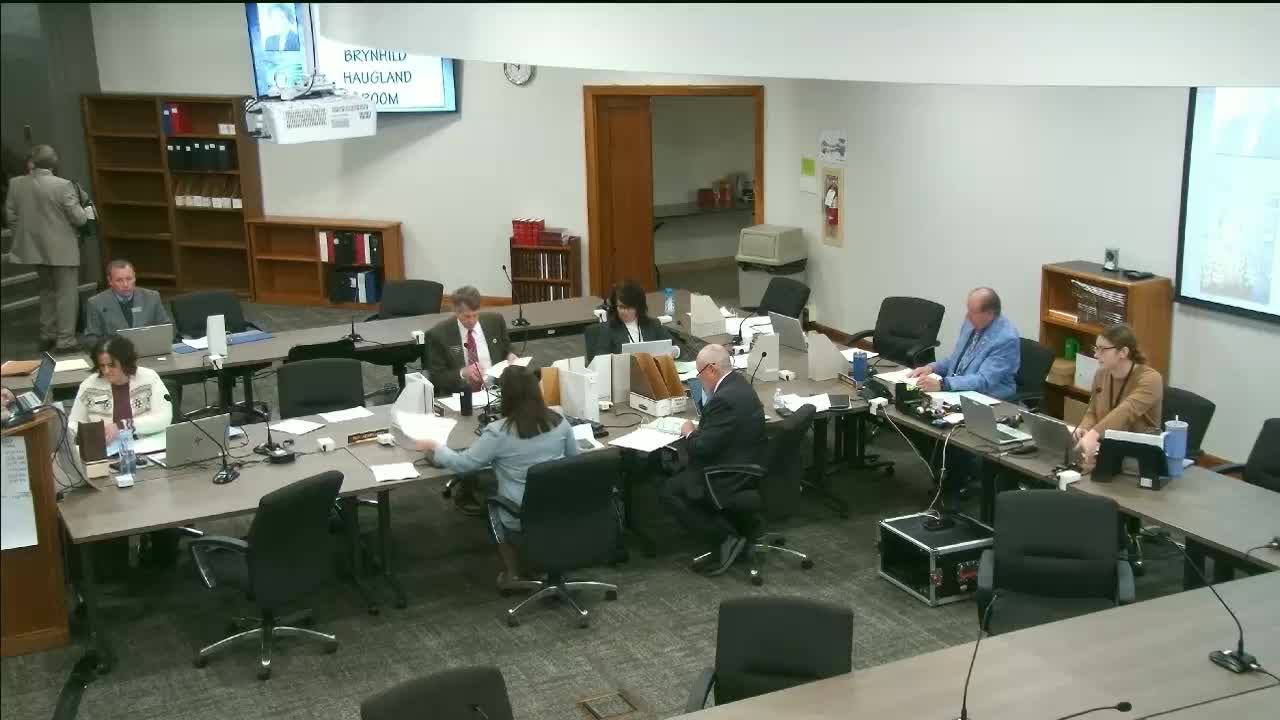
House Bill 1005: State Treasurer Thomas Beadle testified to the House Appropriations Government Operations Division on the treasurer’s budget and several administrative proposals in the executive recommendation, including a requested $250,000 salary‑equity package and a proposal to transfer the unclaimed‑property program to the Treasurer's Office.
House Bill 1005: State Treasurer Thomas Beadle testified before the House Appropriations Government Operations Division on the treasurer’s budget contained in HB1005 and discussed the office’s requests and several administrative proposals that appear in the executive recommendation.
What the treasurer requested: Beadle said his office had asked for $250,000 in salary equity funding to improve retention and bring staff pay closer to market; he said the Burgum administration’s executive recommendation (green sheets) included $100,000. He requested $110,000 for Information Technology Division (ITD) contracted programming hours in 2025–27 and a $7,000 adjustment tied to ITD rate changes. He also outlined support included in the governor’s budget for a cash management study implementation — $1.1 million in general funds that would provide two FTEs and about $400,000 in one‑time costs for software and setup — to advance statewide treasury and cash forecasting work.
Unclaimed property transfer: The executive recommendation included transferring the unclaimed property program from the Department of Trust Lands (Land Department) to the State Treasurer. Beadle said the transfer would carry existing staff and appropriation levels from the Land Department, plus one‑time funds in the executive package for minor office remodels to accommodate the additional personnel; he said the change was proposed as a red‑tape reduction item in the governor’s package and would not add net recurring FTEs beyond those moved.
CO2 payment in lieu of taxes and coal severance shortfall payments: Beadle described statutory duties the treasurer performs to make payments certified by the Tax Department. He said the treasurer must make CO2 pipeline payments in lieu of taxes and coal severance shortfall payments as certified, noted that payments are determined by tax‑department certification and must be paid (no discretionary authority), and summarized a December certification process that is the trigger for payments. The treasurer requested an appropriation estimate of $2 million for CO2 PILOT payments; he said the amount is an estimate and actual certified payments will determine the outlay.
Financial literacy and other functions: Beadle described the treasurer’s role in financial‑literacy initiatives, including the Smart with My Money platform and a financial literacy task force co‑chaired by the treasurer and Bank of North Dakota. He told members the office distributes more than $1.4 billion annually to political subdivisions, manages the state’s checking and investment processes and serves on boards including the State Investment Board and Teachers Fund for Retirement.
Staffing, vacancies and audit: Beadle said the office has seven FTEs and reported no vacancies at the hearing; he described recent turnover, maternity leaves and one difficult recruitment where the candidate accepted double the state pay at a county position. He said the State Auditor reported no internal control weaknesses in the latest audit covering fiscal year 2023.
FTE flexibility language in HB1005: Committee members raised concern about Section 4 language in HB1005 that would permit the treasurer to increase or decrease authorized FTE positions subject to availability of funds. Some members told Beadle they prefer to preserve committee control over FTE authorizations; others noted the provision has been proposed for other agencies and is intended to allow administrative flexibility. Beadle said he did not initiate that provision and had not been given advance notice that it would appear in the executive draft.
Next steps and follow up: Members asked for more detail on IT costs and the list of IT projects, the statutory basis and mechanics for settlement and special‑fund handling (as discussed earlier in the securities hearing), and more precise CO2 payment certifications from the Tax Department. Beadle said the Land Department’s unclaimed property director (if the transfer proceeds) would remain responsible for the program’s operations and that his office would support a smooth transition. The treasurer said he would provide requested documents and figures to the committee.
Ending: The committee did not take final action on HB1005 during the session and scheduled follow-up work as the budget process continues; members said they expect to compare the Burgum executive recommendation with the Armstrong administration budget once it is available.