
Appropriations hearing covers MRCC temporary man‑camp, 88‑bed request and planning for a 600‑bed facility
Get AI-powered insights, summaries, and transcripts
Sign Up Free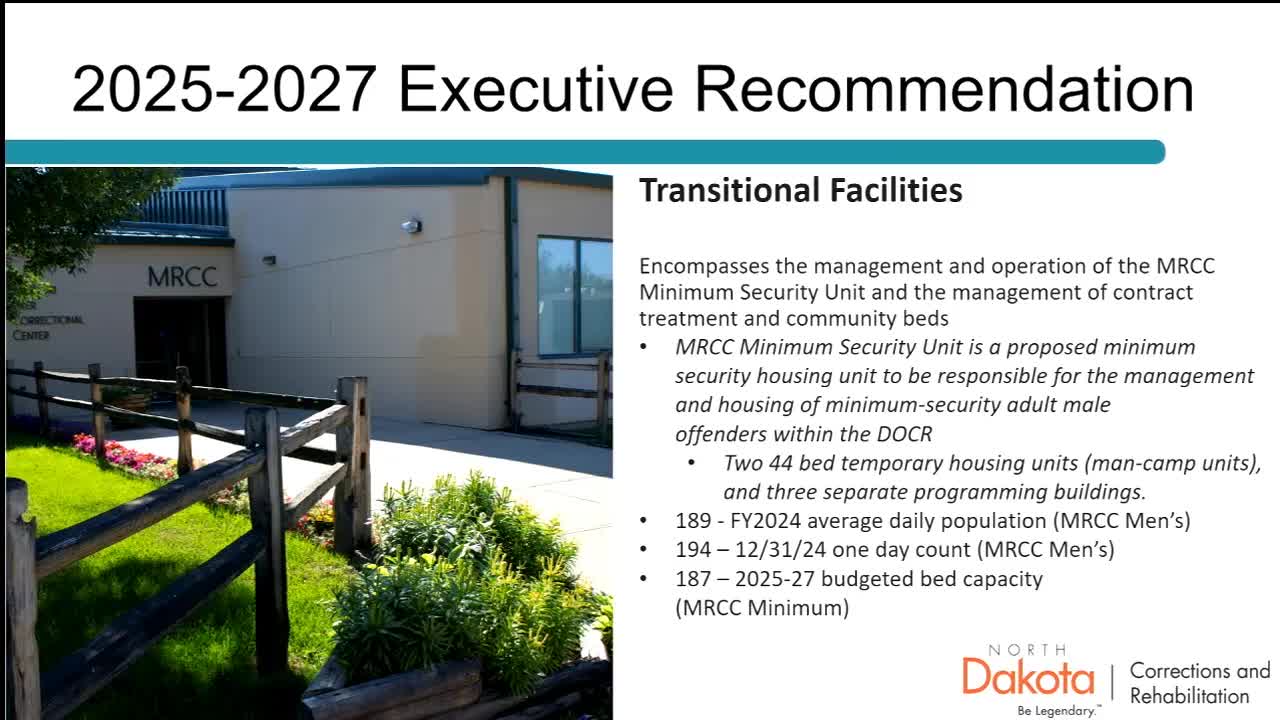
Summary
Department of Corrections officials described temporary 88‑bed 'man camp' requests, operations at the Missouri River Correctional Center (MRCC), and an initial $23 million planning ask for a proposed 600‑bed men's facility; committee members pressed on supervision, escapes and classification.
The Department of Corrections told the Senate Appropriations Committee that it is requesting funding for transitional facilities, including a temporary 88‑bed “man camp” at MRCC and planning funds for a 600‑bed facility.
Presenters said MRCC is a minimum‑security unit with a current average daily population near 189 and that on Dec. 31 the one‑day count was 194. Michelle (Staff member, Department of Corrections) described MRCC housing, programming buildings and man‑camp units; the department said the 88‑bed request is temporary and that a separate request for a new 600‑bed MRCC was included as a new start.
Security and classification: Senators and the warden raised classification and escape history. Lance Anderson, Warden of Transitional Facilities, said escapes from MRCC are rare; he estimated about four escapes from a facility like MRCC over the past decade and said the last walk‑away was a little over a year ago. The committee discussed that MRCC’s minimum‑custody length changed from 36 months to 42 months in 2015 after a study.
Work release and supervision: Senators asked whether MRCC residents are free to come and go. Anderson and presenters clarified that most residents require escorts when leaving, unless they are approved for work‑release programs; transportation and supervision are provided by security staff for work release.
Planning and costs: the department said the transitional facilities request would increase FTEs from a base level and that part of the executive recommendation restores base funding and applies salary increases. The department included a $23 million request in the 2025‑27 biennium for planning and design of the proposed 600‑bed men's facility, and $9.3 million earlier for the 88‑bed man camp and associated start‑up costs.