
Seaman High students describe horticulture program, subscriptions and greenhouse growth
Get AI-powered insights, summaries, and transcripts
Subscribe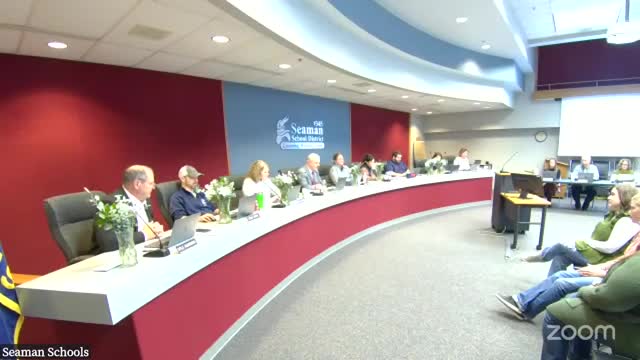
Summary
Students and their agriculture teacher told the Seaman USD 345 board the high school horticulture program has expanded from a storage closet greenhouse to a student-run greenhouse, a plant subscription service and a spring plant sale that generated modest profits.
Students from the Seaman High School horticulture program presented to the Seaman USD 345 Board of Education about the growth of their program, the greenhouse and a new subscription service for floral arrangements.
Madison Keenan, one of the high school agriculture teachers, introduced students who described class pathways in horticulture, floriculture and greenhouse production. She said the greenhouse was once a storage closet and has been rebuilt into an instructional facility the students use for hands-on learning.
Bella White, the chapter president, and Malia Dowd, the chapter treasurer, explained a subscription program the class launched this year. The subscription provides a monthly floral arrangement to participating staff and began as a way for students to work with fresh, high-quality floral materials rather than the limited or donated materials the program formerly used. Students said the subscription costs $120 per semester and that individual arrangements generally cost about $25–$30 each (students’ phrasing in the presentation mixed year/semester language on the fee). The program also uses a wholesaler identified in the presentation as Patient Skinner to source fresh material, which is stored in an industrial floral cooler for class use.
Students and teachers also described greenhouse-based activities: propagation, floral design, a subscription-of-the-month program and a spring plant sale. They reported the plant sale produced roughly $1,000 profit the first year and about $2,000 the second year; students said they used donations and greenhouse-grown product to grow the sale between years.
Presenters said the program now runs two classroom sections where it began as one and that students lead ordering, propagation choices and pricing decisions. The program recently added subscription deliveries to the middle school (SMS) and is considering expanding to elementary schools and the community.
Board members thanked the students and teachers. Several members complimented the program’s student leadership, community engagement and hands-on learning. The students also described event work including community banquets and a first wedding order the students were completing as part of experiential learning.
No formal board action was taken on the presentation; it was received as an informational report.