
Lakewood Middle highlights 'visible learning' gains after semester-long focus on teacher clarity
Get AI-powered insights, summaries, and transcripts
Subscribe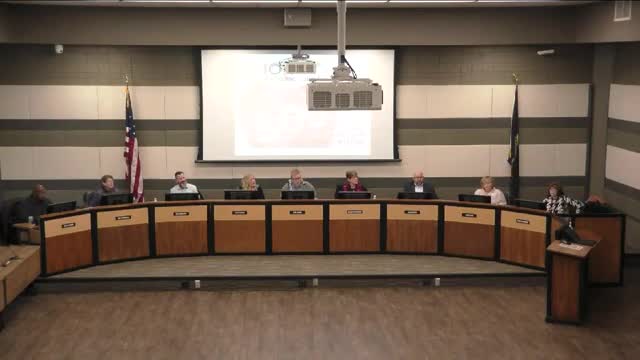
Summary
At the Jan. 14 USD 305 board meeting, Lakewood Middle School staff described week-by-week gains from a visible learning initiative centered on teacher clarity and student self-management, while noting small sample sizes and built-in data-tool limits.
At the Jan. 14, 2025 regular meeting of the USD 305 Board of Education in Salina, Lakewood Middle School staff presented results from a semester of the district's "visible learning" work, reporting measurable gains in teacher clarity and early evidence of student learning growth.
Scott Chrisman, a Lakewood Middle School staff member who led the presentation, told the board the building focused its professional development on teacher clarity — a high-impact strategy drawn from John Hattie's research — and measured three simple classroom practices: whether learning intentions and success criteria were posted, whether students could say what they were learning, and whether students could explain how they would know they were successful.
Chrisman said the building tracked classroom evidence across the semester and shared that the first snapshot, taken about two weeks into the year (Aug. 20), showed roughly 67% of classrooms had both learning intentions and success criteria posted. The presenter said subsequent samples taken Sept. 27, Nov. 8 and Dec. 20 showed steady increases in the measures. "I'm a big believer of what gets measured gets improved," Chrisman told the board.
The presentation included classroom examples and video projects created by student council and civics students. Tina Bow, identified as Lakewood's instructional coach, described how teachers used posted success criteria and classroom routines to encourage students to self-assess and referred to district SEL rubrics when shaping lessons. Student-facing work included interviews and advisory videos, and Chrisman said the building's next semester focus will be "embracing challenges."
Staff also shared quantitative evidence from teacher-collected pre/post assessments. One math classroom's progress-and-achievement tool showed an effect size of about 1.21 on a pre/post measure; presenters and subsequent discussion noted that a 0.4 effect size is commonly equated to about one year's growth in Hattie's framework. A Lakewood intervention teacher said the first cycle of intervention showed limited gains but that later cycles produced stronger results.
Board member Mr. Gurner asked about the standard deviation and reliability of the reported measures. Presenters responded that the district used a provided tool with built-in formulas and that many samples were small. "If we combine all of the classes together, that would be much more reliable," Chrisman said, acknowledging limitations in the current data set.
Presenters emphasized that the data are building-level snapshots rather than final, district-wide evaluations. Chrisman and Bow said teachers reported positive reactions to the process because it focused classroom conversations on student impact and gave students language and criteria to guide their learning.
The work session portion of the meeting closed with the presenters thanking the board for supporting the professional development investment and noting next steps: continuing to monitor learning intentions and success criteria, sharing results with families at parent-teacher conferences, and shifting the visible-learning emphasis for second semester to students "embracing challenges."