Get Full Government Meeting Transcripts, Videos, & Alerts Forever!
Get email alerts on the Environment Water Quality topic
No spam. Unsubscribe anytime.
Board of Health hears new PFAS groundwater and well results; town outlines testing, treatment and funding steps
Summary
NANTUCKET, Mass. — Town staff updated the Nantucket Board of Health on Jan. 16 about ongoing investigations into PFAS contamination near the Fairgrounds and in parts of the island’s shallow aquifer, and described steps the town is taking to test private wells, treat an impacted municipal well and set aside funds for further response.
NANTUCKET, Mass. — Town staff updated the Nantucket Board of Health on Jan. 16 about ongoing investigations into PFAS contamination near the Fairgrounds and in parts of the island’s shallow aquifer, and described steps the town is taking to test private wells, treat an impacted municipal well and set aside funds for further response.
Greg Timman, assistant town manager, summarized municipal work that began after a 2019 notice tied to firefighter-foam releases at the airport and said the town has since spent millions on studies, contracts and targeted infrastructure. “Since 2020 the town has appropriated about $15,000,000 … to allocate amongst different departments to better understand” PFAS sources and receptors, Timman said.
The nut graf: Town and state testing has detected PFAS in several shallow groundwater monitoring wells at the Fairgrounds site and at Wannacomet Water Company’s Well 15, officials said. Staff described work now under way — monthly sampling, proposed treatment for Well 15, a possible pilot to remove PFAS from wastewater influent and improved public notification of private-well results — and said funding and permitting steps are being pursued to keep treatment and replacement options available.
Mark Willett, the town’s water department manager, described the discovery at a Wannacomet well. “Through our routine sampling, we had a hit in Well 15… that well was over the 20 part limit. So it is off,” Willett said, adding that Well 15 and nearby Well 16 sit in a shallow, upper aquifer that is hydrologically separate from deeper drinking-water sources used year-round. He said the town and Wannacomet have taken the precaution of turning Well 15 offline and are designing a treatment system so the well can be returned to service before the summer season.
Willett said the treatment system design is under way and that the town expects to change carbon/resin canisters about once a year; spent media would be handled by a hazardous-waste contractor and shipped off-island under manifest. He estimated construction of a treatment system for Well 15 would likely be “a couple $1,000,000.” He also described a larger, new deep well at the North Pasture site that is under MassDEP review and could add high-capacity, deeper-source supply if approved.
Chuck Larson, senior project manager, reviewed MassDEP’s recently completed monitoring-well installation and sampling at the Fairgrounds campus. Larson said a 12-well network installed for MassDEP produced mostly low detections but included a monitoring well “just over 20 nanograms per liter” (the MassDEP groundwater screening level referenced at the meeting) near a police station geothermal supply well; three monitoring wells were non-detect. He cautioned the results are preliminary and that MassDEP and the town’s consultant TRC will analyze the full laboratory suite (method 1633), which includes many PFAS analytes beyond the six typically reported.
Larson also raised a potential concern about groundwater pumping and geothermal reinjection: some geothermal systems at similar depths elsewhere on the island have the potential to move PFAS into deeper aquifers if reinjection is not carefully managed.
Town staff described a set of parallel projects already funded or in progress: the Fairgrounds MassDEP site investigation (Verdantas, contractor), landfill groundwater sampling that includes MassDEP participation, wastewater-treatment influent monitoring (third year) that is leading toward a $2.5 million pilot to test foam-fractionation PFAS removal and a voluntary water-main expansion west of the airport funded in part with an $8.3 million zero-interest State Revolving Fund (SRF) loan.
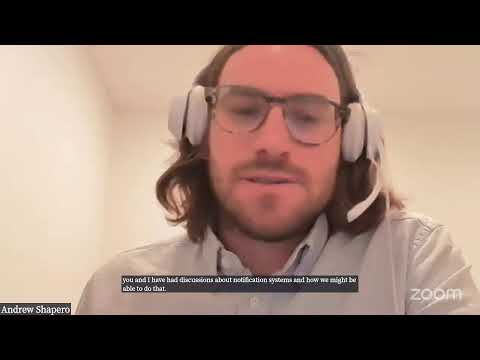
On private wells, Andrew Shapiro, the town’s new environmental contaminant administrator, said a private-well testing regulation that took effect Jan. 1, 2024 requires testing ahead of property transfers and that the health department will promote compliance. “I am currently thinking through ways to make that data available through some sort of de-identified map,” Shapiro said, adding that MassDEP recommends private-well testing in a one-mile radius around detected sources.
Public commenters and board members pressed for faster, clearer public notification and broader disclosure of private-well results. Several residents who live near Toms Way and the Fairgrounds said they did not learn of nearby testing or the detection in Well 15 until they were already exposed. Board member Meredith said public disclosure is a health priority and urged staff to publish street-level information; Andrew Shapiro said he is exploring a de-identified one-mile-radius mapping approach that would follow MassDEP guidance while protecting property-level privacy.
Board members and staff also discussed the cost of system-wide treatment if PFAS standards are tightened by federal or state regulators. Willett said treating Well 15 is a high near-term priority and estimated “a couple $1,000,000” to build a system for that shallow well; he said treating every town well in the worst-case scenario could reach tens of millions of dollars. Timman noted the town still has roughly $2 million unencumbered in existing PFAS funds and proposed an additional $1,000,000 article before the town to keep funds available for MassDEP-related needs.
Next steps
- Town and Wannacomet will continue monthly sampling of wells in the affected area (wells 12, 15 and 16) and are designing a treatment system for Well 15, with the aim to have it operating before summer. - MassDEP will finalize its report on the Fairgrounds monitoring-well round; town consultants (TRC, CDM Smith) will analyze the broader method-1633 results. - Town staff will publish testing results and explore a public, de-identified map showing areas within one mile of confirmed detections; private-well test kits remain available through the health department.
Why this matters: PFAS (per- and polyfluoroalkyl substances) are persistent compounds linked in studies to health risks at high exposures. Nantucket officials said recent sampling indicates detectable PFAS across several monitoring wells and one municipal well in the upper aquifer; staff framed the response around limiting human exposure, pinpointing sources where possible and pursuing treatment pilots and infrastructure to protect the municipal water supply.
The board asked staff to provide regular updates; staff proposed quarterly briefings and said they will continue public outreach and enforcement of the private-well sampling regulation that took effect Jan. 1, 2024.
Ending: The Board of Health scheduled continued PFAS reporting and said it will revisit public-notification proposals and capital funding requests as technical results from MassDEP and town consultants arrive.