
DEI subcommittee urges MA 250 to boost access and resources ahead of 2026 anniversary
Get AI-powered insights, summaries, and transcripts
Subscribe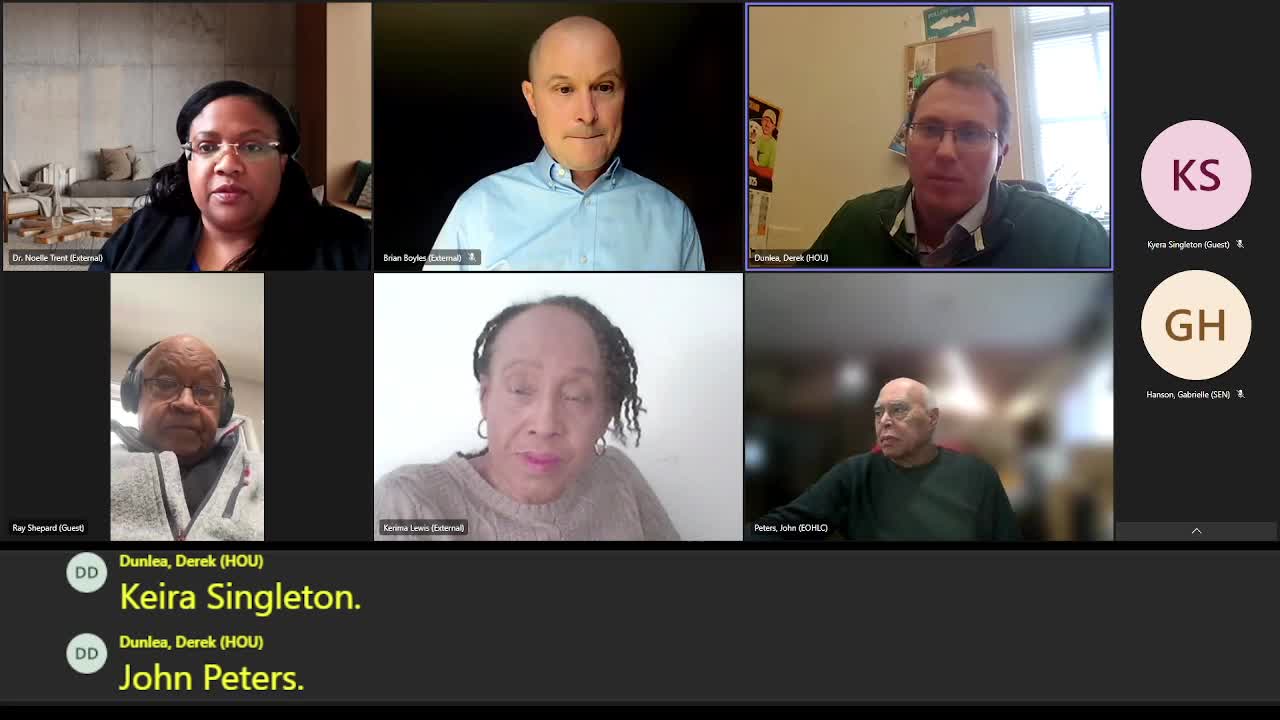
Summary
The DEI subcommittee of the Special Commission on the 250th discussed gaps in outreach, funding and transportation and agreed to draft recommendations for the full commission focused on access, partnerships and nonfinancial supports.
Dr. Shenton, co-chair of the DEI subcommittee of the Special Commission on the 250th Anniversary of the American Revolution, said the group was “tasked as the DEI subcommittee, to think about the opportunities for inclusion and diversity within the 250th” and opened a discussion on what the committee should recommend to the full commission.
The subcommittee focused on three recurring problems: limited funding reaching local and historically underserved groups, barriers to participation beyond cash (such as expertise and promotional support), and transportation access to key anniversary events. The group agreed to prepare a set of recommendations for the full commission, aiming for a preliminary report by the March full commission meeting.
Why it matters: Massachusetts’ statewide commemoration of the 250th anniversary relies heavily on local events and civic organizations; the subcommittee said those local groups frequently lack money, staff time and promotional channels. Ray Shepherd, a commission member, described local exhibits that highlight enslaved and Indigenous participants in Revolutionary-era events and said those efforts need concentrated resources to research and present local histories.
Subcommittee members repeatedly returned to the idea of “access” as a core value. Brian Boyles, co-chair, said the subcommittee could avoid “reinventing the wheel” by recommending existing agency standards and supports rather than building entirely new programs. “In the spirit of revolution and equality, we think that access should be one of the primary values that we apply when it comes to the commemorations,” Boyles said.
Key discussion points and examples - Funding gap: Members reported that earlier MA 250 grants totaled “a little over $1,000,000” while requests exceeded $8,000,000, leaving many local proposals unfunded. The subcommittee did not receive a breakdown of grant recipients by organization type during the meeting. - Nonfinancial resources and expertise: Multiple members urged the commission to recommend state agencies and partners provide in-kind support (for example, promotional space with the MBTA or assistance from cultural agencies and higher-education institutions) and to encourage grantees to partner with local organizations. David Wheaton and others suggested partnering with colleges for research and staffing support. - Local initiatives and Indigenous participation: Shepherd and other members said tribes and small historical organizations have material and oral histories ready to share but lack staff time to compile exhibits and supporting materials. Shepherd noted resource and capacity limits when trying to identify Revolutionary-era Indigenous soldiers and families. - Outreach and partnership list: Members proposed creating a living list or database of community organizations, cultural centers and potential partners that MA 250 could connect with to broaden participation without necessarily increasing grant awards. - Transportation: Members flagged transportation as a likely barrier for many communities, especially to centralized events such as those planned in Lexington and Concord; MBTA funding was described as limited. The subcommittee agreed transportation should be part of any access-related recommendations. - Timing and publicity: The co-chairs raised the prospect of coordinating one unifying statewide event (one idea suggested was a statewide ‘‘food day’’ to highlight cultural diversity) and noted timing opportunities around July 4, 2026 — a Saturday — and the FIFA World Cup window (June 13–July 9, 2026). Members asked the subcommittee to consider how visitors and local residents could be engaged during that timeframe.
Requested next steps and deliverables The subcommittee agreed to develop a set of actionable recommendations for the full commission that emphasize: (1) specific tools MA 250 and state agencies can use to increase nonfinancial supports (promotional access, venue space, technical assistance), (2) standards or models (for example, the Mass Cultural Council’s accessibility work) the commission could endorse, (3) a list of local organizations and examples of partnerships to illustrate needs on the ground, and (4) raising transportation and scheduling as access issues. The co-chairs said they intend to present a preliminary report to the full commission at the March meeting.
Process and compliance Derek, a commission staff member, advised the subcommittee on how to collect member input without creating an inadvertent collective deliberation outside public meetings: chairs may collect individual suggestions and compile a working document to present publicly at the next meeting.
Closing and procedural action At the meeting’s end, members moved and seconded a motion to adjourn; the meeting closed after the motion was seconded. No roll-call tally was recorded in the transcript.
Ending note The subcommittee did not finalize language for its formal recommendations at the meeting; members asked colleagues to submit suggested organizations, themes and barriers so the co-chairs can draft a report for the March commission meeting.