Get Full Government Meeting Transcripts, Videos, & Alerts Forever!
Get email alerts on the Pensions Public Employees topic
No spam. Unsubscribe anytime.
Montana public-pension administrator reports stronger returns but PERS funded under 80%
Summary
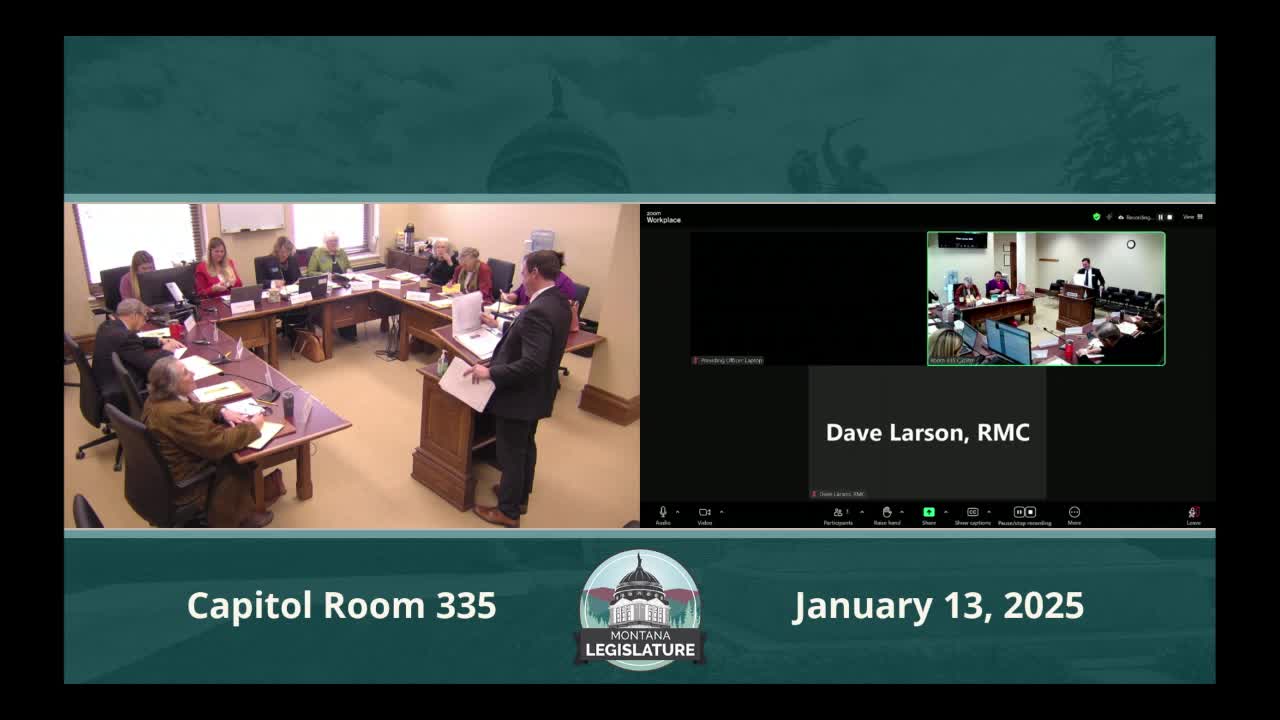
Bill Holahan, executive director of the Montana Public Employee Retirement Administration, told the Senate State Administration Committee on Jan. 14 that the agency oversees more than $10.5 billion in combined assets and that the largest public-employee plan, PERS, is about 75.72% funded.
Bill Holahan, executive director of the Montana Public Employee Retirement Administration, told the Senate State Administration Committee on Jan. 14 that the agency oversees more than $10.5 billion in combined assets and pays retirement, disability and survivor benefits to more than 33,000 recipients.
Holahan said the agency’s largest plan, the Public Employees’ Retirement System (PERS), held roughly $7.3 billion in defined benefit assets as of the June 30, 2024, valuation and had a funded ratio of about 75.72%. That system currently amortizes its unfunded liability over 27 years, Holahan said.
The PERS funding picture matters to local governments and school districts because contributions are set by statute and supplementing state appropriations. Holahan told senators that contributions for fiscal year 2024 were collected from a 7.9% employee contribution rate and a 9.17% employer contribution rate; the state also provides a statutory supplemental appropriation of $33.9 million a year for PERS, which increases by 1% each year under Montana Code Section 19.332.
Holahan described the agency’s governance: a seven-member fiduciary board appointed by the governor and confirmed by the Senate, charged under Montana constitutional provisions and Title 19 statutes with administering eight defined-benefit plans and two defined-contribution plans. He said the agency employs about 51 staff members and serves more than 53,000 active members across plans.
Committee members pressed Holahan for details. Senator Greg Phelan (Senator Phelan) asked whether the $10.5 billion figure covers all plans; Holahan responded that it covers defined‑benefit systems plus assets in the DC and 457 plans and that about $1 billion is held in DC/457 plans and roughly $7.5 billion in PERS. Senator Phelan also asked whether the systems were “in arrears;” Holahan said it depends on the specific plan but noted that, as of the current valuation cycle, “this year is the first year since 2008 that all of our systems amortize their unfunded liabilities in under 30 years,” referencing the 30-year actuarial soundness standard cited in statute (cited by Holahan as a statutory standard).
Holahan gave other membership metrics: average active-member salary in PERS of about $50,733, an average active-member age of 47 with average service of eight years; for retirees the average annual benefit he reported was $21,975 (roughly $1,800 per month) and the average retiree age was about 73. Holahan said the agency paid more than $600 million in benefits in fiscal year 2024 and that roughly 89 percent of benefit dollars remain in Montana while about 11 percent go to beneficiaries living in other states.
Holahan closed by noting the retirement board is submitting a routine “housekeeping” bill this session intended to preserve the plans’ qualified tax status and create administrative efficiencies. He then took committee questions on investment management and plan design.
Holahan’s presentation included references to the Montana Constitution and statutes in Title 19 as controlling authorities for board duties and plan provisions; he also cited the board’s annual actuarial valuation and an audit of the valuation for FY2023 that produced a clean opinion.
Questions from committee members and Holahan’s answers provided clarifications but did not produce a formal committee vote during this session.
The committee will consider the board’s housekeeping measure in the course of the legislative session; Holahan said he would be available to answer follow-up questions.