Get Full Government Meeting Transcripts, Videos, & Alerts Forever!
Get email alerts on the Water Quality Testing topic
No spam. Unsubscribe anytime.
Sierra Madre warns some residents not to use tap water while VOC testing proceeds after Eaton Fire
Summary
Sierra Madre City Manager Jose Reynoso said at a Jan. 14 meeting that the city’s water system did not lose pressure or sustain damage during the Eaton Fire, but the State Water Resources Control Board has required additional testing for volatile organic compounds including benzene and the city has issued a precautionary advisory for some neighborhoods.
Sierra Madre City Manager Jose Reynoso said at a Jan. 14 meeting that the city’s water system did not lose pressure or sustain damage during the Eaton Fire, but the State Water Resources Control Board has required additional testing for volatile organic compounds including benzene and the city has issued a precautionary advisory for some neighborhoods.
The advisory affects residents on and north of Grand View in zones 1 through 16 and zone 19, including canyon areas; those residents are advised not to use tap water for drinking or cooking until testing is complete and officials lift the advisory. The city is coordinating testing with the State Water Resources Control Board and the Los Angeles County Department of Public Health and said it will post updates on the city website and social media.
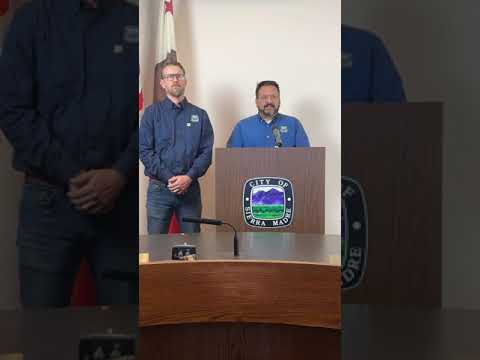
"First and foremost, I want to assure you that the city of Sierra Madre's water system has proven resilient in the face of the wildfire," Jose Reynoso said. "The city never lost system pressure in any water zone. Our critical water infrastructure sustained no damage during the event." Reynoso said the city conducted two rounds of routine bacteriological sampling analyzed by a third‑party certified laboratory; "no coliform bacteria were detected in any of the samples," he said.
Reynoso told residents that, despite the intact system, the State Water Resources Control Board contacted Water Superintendent Stephen McGee and required additional testing for volatile organic compounds (VOCs) such as benzene in water systems within the Eaton Fire impact zone. The city characterized the requirement as a precautionary step: VOCs typically enter water systems when damage or pressure loss occurs, neither of which the city reported.
"We understand the concern this may cause, but this advisory is issued as an abundance of caution to prioritize your health and safety," Reynoso said. "VOCs testing will be underway soon, and we are working diligently with certified labs to obtain results as quickly as possible. Updates will be provided regularly through our city's official website, social media platforms, and community bulletins."
"I wanted to reassure you that we are doing everything to keep our community and our water system safe," Water Superintendent Stephen McGee said.
The city did not report any formal vote or ordinance tied to the advisory at the meeting; officials described the action as an operational, interagency precaution. The testing requirement was described as coming from the State Water Resources Control Board; the Los Angeles County Department of Public Health is also participating in the response.
Officials did not provide a timetable for when VOC testing results will be available or when the advisory will be lifted; those timeframes were described as "soon" and "until further notice."