Get Full Government Meeting Transcripts, Videos, & Alerts Forever!
Get email alerts on the Juvenile Justice topic
No spam. Unsubscribe anytime.
Lycoming commissioners approve ARC grant application for juvenile-justice feasibility study after debate over county match
Summary
The Lycoming County commissioners voted to submit a grant application to the Appalachian Regional Commission for a feasibility study on a juvenile detention and training center, approving county participation despite concerns about a roughly $36,000 local match and debate over short-term versus long-term needs.
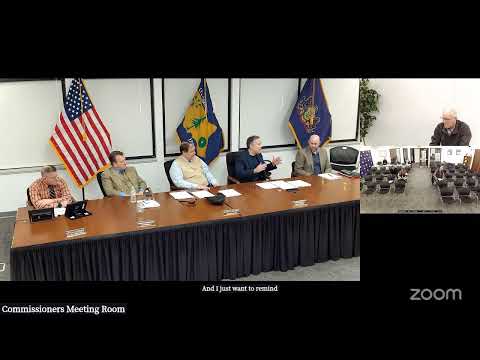
Lycoming County commissioners voted on Jan. 16 to approve submission of a grant application to the Appalachian Regional Commission (ARC) to fund a feasibility study for a juvenile-justice and training center.
The board’s vote followed a lengthy discussion about whether the county should spend limited local funds on a study that some county officials and consultants say largely confirms needs already identified by courts and probation staff. County staff and outside speakers framed the ARC proposal as a study that can evaluate a range of options — from rehabbing an existing county facility for short-term detention needs to building a larger regional center that would serve multiple counties.
The commissioners were told the ARC application was time sensitive and needed to be submitted by the end of the week; staff said the ARC timetable would likely lead to contract awards by about April 1 if the project were funded. Staff and consultants told the board the feasibility work could include market analysis, preliminary design, construction cost estimates and scenarios for operating the facility either locally or regionally.
Board members and several staff described two competing priorities: (1) address the immediate, court-identified need for locally available juvenile detention capacity — discussed as a 12-to-24-bed option that could be created by rehabbing part of an existing pre‑release facility and then operated under an RFP/contract model; and (2) pursue a longer-term regional center that would require larger capital investment and broader participation from other jurisdictions.
Several commissioners questioned whether the county should pay for an outside study to document conclusions that local stakeholders said are already supported by prior research and court input. County staff responded that a formal feasibility study creates a single, shareable document that is often necessary to unlock state and federal construction funding later and that the consultant indicated the scope could be adjusted to include both short- and long-term options within the proposed budget.
On the question of local match, staff described the county’s share as “about $36,000,” but the exact figure was discussed as approximate in the meeting. Commissioners asked how and when the county would be required to provide any match and whether alternative pass-through or matching sources could be used in order to reduce the county’s direct obligation. Staff said that if the county were awarded funds it could still decline the award, but doing so could harm future competitiveness for similar funding.
After discussion the commissioners moved and seconded the motion to submit the application; the board recorded an affirmative vote to proceed. County staff said the application packet was “99% done” and that some forms would need finalization before the submission deadline.
Why it matters: county officials said a formal study may be required to access larger state or federal construction funds and to produce a single design/cost document for grant applications. Opponents during the discussion cautioned against spending scarce local funds for study work that some stakeholders believe restates known needs.
Next steps: staff will finalize and submit the ARC application on the stated federal timeline. If awarded, staff said a contract award and consultant work could begin around April, with subsequent design and cost work to follow.