Get Full Government Meeting Transcripts, Videos, & Alerts Forever!
Get email alerts on the Wastewater topic
No spam. Unsubscribe anytime.
Merrimack budgets for wastewater bond payment, plans 5% sewer rate increase as energy and composting costs climb
Summary
Councilors and public works staff reviewed the wastewater enterprise budget and supporting data Jan. 15; the proposed fiscal 2025–26 plan includes a first-year bond payment of about $1.3 million, a 5% user-fee rate increase and contingency for higher electricity, natural gas and composting costs tied to new compost facility ventilation.
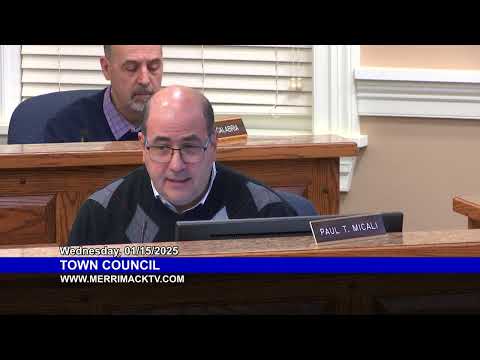
MERRIMACK, N.H. — At a Jan. 15 budget meeting, Merrimack Town Councilors and public works staff reviewed the wastewater enterprise fund plan for fiscal 2025–26, which includes an estimated $1.3 million first-year debt service payment on a recent $30 million plant upgrade and a proposed 5% increase in sewer user fees.
The discussion focused on rising energy costs tied to new compost facility ventilation, falling plant flows from a major industrial customer and the town’s use of composting and sludge tipping to offset plant operating costs. Public works staff told the council the sewer fund is supported entirely by user fees and does not affect property taxes.
Town staff said the plant handled large volume and compliance obligations last year. "Last year, we processed 612,000,000 gallons of wastewater," said Leo Gee, public works staff. He added the plant achieved a roughly 95% removal efficiency for biochemical oxygen demand and 97% removal for suspended solids, well above the 85% required by the town’s NPDES permit. "Average daily flow to the plant was 1,672,000 gallons," Gee said, noting that historic flows had been higher when a major brewery’s discharges were larger.
Why it matters: the enterprise fund will face a substantial one-time increase in debt service tied to the plant upgrade and ongoing operating increases driven by electricity, natural gas and composting inputs. Staff said their rate study, finalized Oct. 26, 2023, supports a 5% increase for the coming year but that the council may need to revisit rates in future years if flows and industrial contributions do not recover.
Key budget details and drivers - Bond payment: Staff reported the first-year payment for the recent plant project is included in the draft budget as about $1,300,000. That payment is described as a significant hit to the sewer budget but was expected and planned for during project approvals. Councilor Paul noted the amount during the discussion. - Rate change: Staff said the town will implement a 5% sewer user fee increase in the coming fiscal year based on the 2023 rate study. "Next this year, we're looking at a 5% raise in rates," Leo Gee said. - User-fee fund model: The wastewater fund is an enterprise (user-fee) fund; staff emphasized changes in the sewer budget do not change the property tax rate. - Falling flows: Public works staff described a multi-year decline in flows from a large industrial customer. "Their flows reduced to about 25% last year, and they've indicated that they may go be another 25% this coming year," staff said, referencing Anheuser‑Busch. That decline reduces user-fee revenue tied to consumption. - Energy and permit costs: Staff said electricity and natural gas budgets rose because of the new compost facility ventilation (six air changes per hour) and makeup-air heating for compost mixing areas. Gee told the council the new compost blowers now consume a large share of the plant’s electrical load and drove a substantive electricity cost increase. - Permitting workload: Staff reported they are in active permit processes including the facility’s NPDES renewal, a multi-sector stormwater general permit and an air-permit renewal that could affect future costs.
Composting, tipping and offsets Staff described the compost operation as an important offset to sludge-disposal costs and a source of revenue from outside sludges and compost sales. Councilors were given aggregated revenue figures for compost-related activity: about 14,000 cubic yards of compost sold last year and roughly $600,000 in combined revenue from compost sales and tipping fees. Staff said the town also receives about $450,000 from outside sludge tipping in the current estimate. Those revenues help offset plant operating costs but do not cover the entire operation.
Staff described several cost pressures tied to compost production: - Bulking agent/sawdust: Because the town stores sawdust outdoors while awaiting a permanent shed, staff budgeted for additional sawdust to compensate for wetter material and higher usage. - Electricity: New compost blowers roughly doubled the ventilation load for that building; staff estimated the compost blowers now consume an amount of electricity comparable to the rest of the plant combined. - Natural gas: Makeup-air heating for the compost mixing area increased natural gas use; staff budgeted for about 6,000 therms as a winter baseline and noted natural-gas contract pricing will be renegotiated in late 2025.
Replacement and maintenance plans Staff said the plant has a multi-year program to replace compost blowers (15 units per year), and the upcoming budget includes the last set of planned purchases for that schedule. They also highlighted reduced maintenance needs on newly upgraded infrastructure but warned warranty periods and future wear will require continued monitoring.
Possible future actions Councilors asked for cost-detail follow-ups. One councilor asked for a stand-alone business case for the compost operation to compare revenue and full operating costs over multiple years; staff agreed to prepare additional analysis. Staff also said they monitor user-fee revenues and the enterprise fund balance annually and will recommend rate adjustments if revenues remain depressed.
What did not change at the meeting There was no council vote on new sewer rates at the Jan. 15 discussion — staff presented the draft budget and answered questions. The meeting concluded with a procedural adjournment vote.
Ending Staff told the council they will continue to monitor flows, energy costs and compost economics and will bring more detailed revenue/cost breakdowns and any recommended rate adjustments back to the council during the formal budget and public hearing process.