Get Full Government Meeting Transcripts, Videos, & Alerts Forever!
Get email alerts on the 3d Printed Construction topic
No spam. Unsubscribe anytime.
Building Code Council committee reviews bill to adopt Appendix BM for 3‑D printed residential construction
Summary
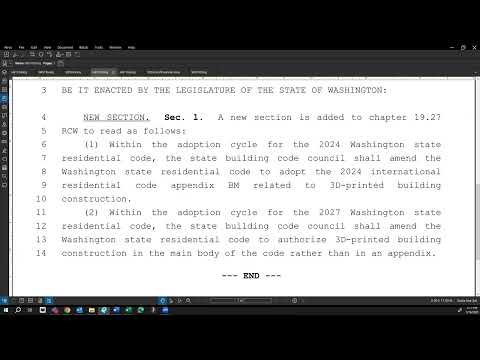
House Bill 1029 would ask the State Building Code Council to adopt Appendix BM of the International Residential Code for 3‑D printed residential building construction in the 2024 code cycle and bring those provisions into the main code by the 2027 cycle, committee members heard.
House Bill 1029 would ask the State Building Code Council to adopt Appendix BM of the International Residential Code for 3‑D printed residential building construction in the 2024 code cycle and bring those provisions into the main code by the 2027 cycle, committee members heard.
The bill "is asking the SBCC for the 2024 code cycle to adopt a appendix BM in the residential building code for a 3 d printed building construction," Roger Haringa, BFRW committee chair, said during the council's legislative update. He added that the appendix would make the technology easier for local jurisdictions to permit and that the bill also asked that the provisions move from an appendix into the main code in 2027 so jurisdictions can rely on an established standard.
Why it matters: The conversation centers on how to integrate an emerging construction method into Washington’s code framework while preserving local permitting discretion and ensuring adequate inspection and testing. Appendix adoption would create an optional pathway for jurisdictions to permit 3‑D printed houses; moving provisions into the body of the code later could change how those technologies are regulated.
Committee members discussed whether an appendix adoption would make the technology mandatory and whether the 2027 step would extend the technology into the building code for nonresidential construction. "It's essentially optional, for the jurisdictions," Haringa said when asked whether local jurisdictions would be required to apply the appendix. Several members said the residential code is prescriptive and therefore an easier place to pilot the technology, while others warned the work could expand into building‑code issues that require different testing, listing and inspection frameworks.
Kjell Anderson, council member, asked whether adopting an appendix would make it required; Haringa responded that "it makes the appendix usable for the local jurisdiction without having to come for that specialized approval," meaning jurisdictions would be able to opt in. Todd Bayruther suggested the council should not assume the technology belongs only in the residential code: "Maybe the council can determine which code is best placed in. Maybe it's both the residential and the building code."
Several technical concerns were raised: the appendix includes requirements for special inspection, material approval and allowable inspection reductions for repeat prototypes or the same equipment/crew printing multiple units. Haringa summarized that the appendix permits special inspection protocols and that the material approvals and standards are referenced within the appendix. Paul (surname not specified on the record) emphasized the role of standard development and third‑party acceptance processes for proprietary systems and assemblies.
The committee discussed positions to bring to the full council. Haringa said the committee intends to "monitor" but noted the residential tag and related working groups should be prepared to adopt or amend the appendix during code‑cycle work. Later in the meeting the committee agreed to present a neutral position on HB 1029 to the council unless members raise objections at the committee’s next report to the council.
Ending: Committee members agreed to keep monitoring HB 1029 and to prepare coordination with the residential code tag to handle any rulemaking or amendments that become necessary during the 2024 and 2027 cycles. The council will report the committee’s neutral position to the full council at its next meeting unless members ask for a change.