Get Full Government Meeting Transcripts, Videos, & Alerts Forever!
Get email alerts on the Uw Extension topic
No spam. Unsubscribe anytime.
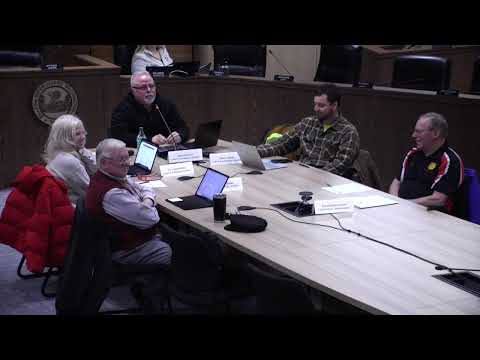
Washington County committee reviews UW Extension MOU template, hears 4‑H quarterly update
Summary
The committee discussed a Memorandum of Understanding (MOU) template from the Wisconsin Counties Association steering committee clarifying the county’s relationship with UW Extension, and heard a quarterly report on 4‑H enrollment and programming, including a potential office relocation discussion with Moraine Park Technical College.
Jamie Ludovic, the county’s Chief Community Development Officer, told the Washington County Executive Committee that the memorandum of understanding is a WCA (Wisconsin Counties Association) steering-committee template intended to clarify the relationship between UW Extension and counties. "What you have before you is an MOU, which was a template work product from the WCA steering committee on the relationship between UW Extension and counties," Ludovic said.
The committee was asked to weigh in on several operational changes Washington County staff have proposed for the county-specific version of the MOU. Ludovic said the county’s draft emphasizes county options on hiring and supervising county-funded Extension employees, shifts some reporting to monthly meetings with the county’s designated representative (currently Ludovic), and keeps quarterly reports to the committee.
The draft also delays the next full visioning or needs-assessment cycle until 2027, rather than requiring an immediate repeat of the task force work the county recently completed. Ludovic described that schedule as a county decision: counties may request an annual or biennial cycle. "So if you're not comfortable with 2 years, you should say that because we certainly could do it annually," Ludovic said.
Cindy (the area Extension director) told the committee that the monthly and quarterly reporting cadence will remain in place: "You'll get monthly reports just like you always have, and then the quarterly is when we actually come here. We'll do that quarterly." She said the biennial visioning session would be a deeper, facilitated review with county partners and that Washington County had recently completed a similar task force, so the county is not planning an immediate repeat.
Committee members praised the working relationship with the local Extension team and said a two‑year visioning cycle aligns with program development and the county’s budgeting timetable. Supervisor Mary said such a cycle lets new programs run long enough to evaluate results: "Many times if you're gonna start initiating a new program, it can take a year and a half to 2 years before you know if it's even really working."
The committee then received a quarterly Extension report. Ron Jacobison, a 4‑H educator, said 4‑H in Washington County reports 530 enrolled youth to date compared with 546 at closing last year. Jacobison said there are 16 clubs and about 20 countywide projects, and that shooting sports remains the largest project with more than 200 youth. He also reported an increase in camp participation from 74 campers last year to 104 this year and said teen volunteer staffing and training are under way for the county’s June 11 camp start.
Area staff also said they are discussing a potential letter of intent with Moraine Park Technical College about relocating some UW Extension 4‑H offices; staff asked supervisors to raise concerns with county staff if they have them.
The committee took no formal action on the MOU at this meeting; staff said the draft would be the county’s first take and the committee could request changes to operational procedures before execution.
Less-critical details: Kelly (the newly hired 4‑H educator) started Jan. 2 and is already conducting needs-assessment work with local schools and partners, with early gaps identified in manufacturing and health-care workforce pathways; staff said programming will begin as assessments conclude.