Get Full Government Meeting Transcripts, Videos, & Alerts Forever!
Get email alerts on the Energy Permitting topic
No spam. Unsubscribe anytime.
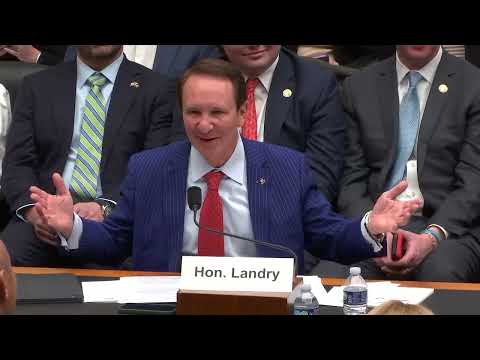
Landry tells House committee easing federal permitting would boost energy delivery
Summary
At a House Transportation and Infrastructure Committee hearing, Governor Landry said reducing federal permitting and bureaucracy would increase power output and "unleash the innovation" needed to grow the economy; specific statutes or repeal proposals were not identified.
A member of the House Transportation and Infrastructure Committee asked Governor Landry what Congress should do to "maximize energy delivery," and Landry urged reducing federal permitting and bureaucracy to boost state power output and economic growth.
Landry said energy is essential to wages and standards of living and argued the nation's prior direction on delivering power would not meet economic needs. "If you could give me back my gas stove, that would be great. My tankless gas water heater, it'd be nice," Landry said, adding that lowering permitting burdens would "unleash the innovation" pent up in the country.
The committee member framed the question in regional terms, naming Texas and Louisiana as leading energy-producing states and asking what Congress should repeal or coordinate with states to make Louisiana "one of the most energy dominant" states. The exchange did not identify specific federal statutes, regulations or permitting rules to be repealed.
Landry emphasized permitting and the "level of bureaucracy" as the primary federal constraints on increasing energy output. He framed the issue as necessary for expanding power supply to meet economic demand rather than offering a detailed legislative plan during this portion of the hearing.
The remarks combined policy argument and illustrative remarks about household appliances; the transcript excerpted here contains no formal motions, votes or committee directives tied to the statements.
The hearing continued on other topics after this exchange; no formal action on permitting or specific legislation is recorded in this excerpt.