Witness and committee member warn EPA heavy-duty truck rule could raise costs, strain infrastructure
Get AI-powered insights, summaries, and transcripts
SubscribeSummary
At a House Transportation and Infrastructure Committee hearing, a witness and a committee member discussed the EPA's finalized heavy-duty truck emissions rule, saying it would require 40% of heavy-duty trucks to be electric by 2032 and could impose large infrastructure and equipment costs, particularly for rural communities.
At a House Transportation and Infrastructure Committee hearing, witnesses and a committee member discussed the Environmental Protection Agency's finalized heavy-duty truck emissions rule and its potential economic and infrastructure impacts.
A committee member opened the exchange by saying that the rule "would essentially require 40% of heavy duty trucks to be electric by 2,032," and warned it would affect "tractors, buses, semis, and even school buses." The member added that, "every 1 of us will see an increase in grocery prices and utility costs," and described the rule as coming "from bureaucrats in Washington." The committee member also said they were "looking forward to working with the Trump administration to get rid of this mandate." (Transcript: committee member, public questioning.)
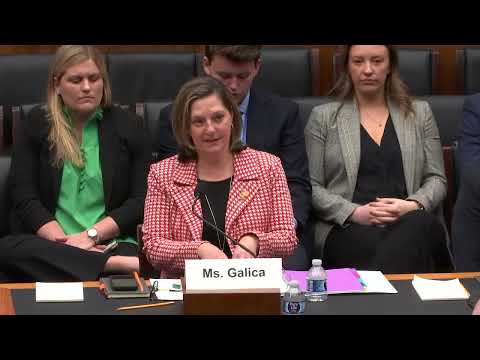
Miss Galicia, a witness testifying before the committee, said the rule and its implementation would carry heavy infrastructure and vehicle costs. She referenced an estimate that "it would cost nearly $1,000,000,000,000 in infrastructure investment alone to fully electrify the US commercial fleet," and noted that the figure "does not include the cost of the trucks." She told the committee that a standard diesel tractor is "about $150,000" while "a battery electric tractor, it's over $400,000."
Miss Galicia also raised operational concerns tied to battery weight, saying "the weight of a battery electric tractor is about 75% more than of a diesel tractor," which, she explained, "leaves less room for cargo to put in those trucks, which means actually more trucks on the road." She urged the committee to "work closely with the private community, both trucking industry and some trade associations to really come up with good solid solutions that are diesel alternatives that are both cost effective and feasible to implement." (Transcript: Miss Galicia, witness testimony.)
The exchange focused on three specific areas: the compliance timeline embedded in the rule (40% electric by 2032 as described by the committee member), the infrastructure costs needed to install charging stations and upgrade the electric grid, and vehicle price and payload impacts for operators. The transcript does not record detailed responses from agency staff, specific cost breakdowns beyond the figures cited above, or any formal committee action such as a vote.
Discussion-only items recorded in the transcript included concerns about increased consumer prices, the scale of public- and private-sector investment needed for charging infrastructure, and the operational effect of heavier battery-electric trucks on cargo capacity. No directions to staff or formal motions were recorded in the provided excerpt.
The hearing record in this excerpt does not specify any next steps by the committee, votes, or formal written estimates from federal agencies. More detailed cost estimates, grid studies, and manufacturer analyses were not provided in the excerpt and remain not specified in the transcript.