Get Full Government Meeting Transcripts, Videos, & Alerts Forever!
Get email alerts on the Infrastructure Funding topic
No spam. Unsubscribe anytime.
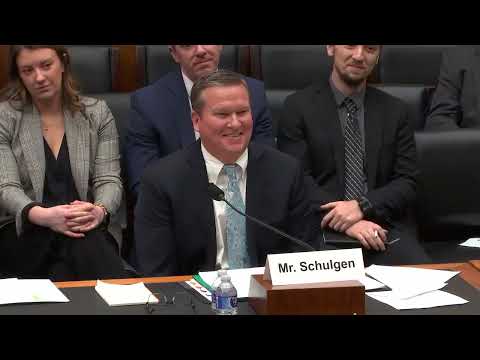
Witness tells House committee regulatory delays are eroding IIJA funds; urges faster, flexible use
Summary
A witness told the House Transportation and Infrastructure Committee that regulatory delays are increasing costs for projects funded by the Infrastructure Investment and Jobs Act and recommended streamlining processes, using formula funding for predictability and giving state DOTs more flexibility.
A witness told the House Transportation and Infrastructure Committee that regulatory delays are reducing the purchasing power of funds from the Infrastructure Investment and Jobs Act and urged faster, more flexible use of federal money.
The comment came during a committee question-and-answer on funding mechanisms and project delivery. The witness said delayed projects cost more and urged officials to "streamline any and all processes" so states can "put the money to work as quickly as possible." The witness also argued that formula funding provides predictability for long-term needs.
A committee member asked, "You agree that overregulation is partially responsible for the reduced purchasing power of the funds allocated by the Infrastructure Investment and Jobs Act?" The witness replied, "I would say that if the regulations are impacting projects and delaying those projects, then by all means, it is costing more. Delayed projects" and later said simply, "Streamline any and all processes that we possibly can." The witness added, "Put the money to work as quickly as possible."
On funding structure the committee member asked whether more funding flexibility would lead to greater efficiency. The witness replied, "Absolutely. Let's take, Texas, for example. We've got 1200 people a day moving to Texas. Our state DOT needs the flexibility to be able to use those funds to meet the demands of his state." A following exchange referenced Tennessee's similar growth pressures.
The committee member then asked whether formula funding is better for long-term projects than discretionary grants. The witness answered, "Absolutely. It's predictable." When asked about improving the discretionary grant program, the witness reiterated support for formula funding: "I would say that I'm in full support of the formula funding program. And I'll leave it at that."
There were no formal votes or committee actions recorded on these remarks during the exchange; the discussion consisted of questions and a witness response about project delivery, funding structure and state flexibility.
Ending: The exchange focused on policy preferences and operational concerns rather than any immediate committee action. Committee members pressed for clearer options on streamlining and grant design; the witness emphasized predictability and expedited project delivery as remedies.