Get Full Government Meeting Transcripts, Videos, & Alerts Forever!
House Rules Committee adopts rules for 119th Congress after fights over 72‑hour waivers and deficit language
Summary
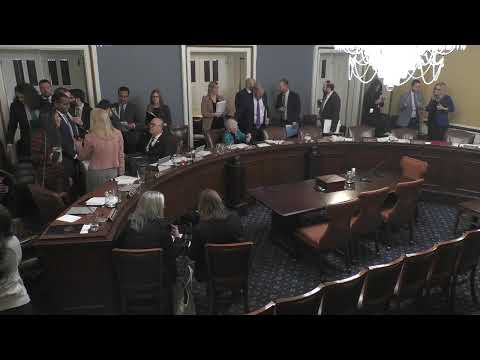
The House Rules Committee voted to adopt its committee rules for the 119th Congress on a voice vote after rejecting Democratic amendments that would have tightened the 72‑hour rule and barred reconciliation measures that increase the deficit.
The House Rules Committee voted to adopt its committee rules for the 119th Congress on a voice vote after nearly two hours of debate and three recorded roll calls on amendments.
The committee, led by Chairwoman Fox, approved the package that included changing the committee meeting time from 5:00 p.m. to 4:00 p.m., adjustments to notice timelines, conforming changes related to truth‑in‑testimony disclosures, and a modification to committee journal requirements. Chairwoman Fox then designated Representative Morgan Griffith (R‑Va.) as vice chair and the panel set subcommittee composition at five majority members and two minority members.
Why it matters: The Rules Committee sets the terms under which most House legislation reaches the floor. Changes to how the committee applies the "72‑hour rule," how reconciliation measures are reviewed for deficit impact, and who controls subcommittee membership can materially affect which amendments and bills reach the House floor and with how much notice for members and the public.
Debated amendments
Ranking Member Jim McGovern (D‑Mass.) offered an amendment that he summarized this way: "My amendment would prevent this committee from reporting a rule for a bill, that screws over my constituents by giving massive corporate giveaways and tax breaks to the rich and powerful." McGovern said he introduced the change to block rules that would enable bills he described as delivering "massive corporate giveaways."
The committee initially disposed of the McGovern amendment by voice vote, and after a recorded roll call the clerk reported 4 yeas and 9 nays. The roll call, as read into the record, showed votes in favor from Representative Jim McGovern, Representative Mary Gay Scanlon, Representative Joe Neguse and Representative Teresa Leger Fernandez; the remaining members present voted no.
Representative Mary Gay Scanlon (D‑Pa.) offered an amendment to require a two‑thirds vote of the committee, rather than a simple majority, to waive the House"s 72‑hour rule that gives members time to review bills before floor consideration. Scanlon framed the change as a bipartisan, good‑government measure: "This amendment would simply require a 2 thirds vote instead of a simple majority to report any rule that waives the 72 hour rule," she said, adding the intent is to ensure members and the public have adequate time to read measures.
Rep. Chip Roy (R‑Tex.) and others said they supported the spirit of enforcing the 72‑hour rule but opposed Scanlon's two‑thirds threshold for procedural or practical reasons. After debate the committee held a recorded vote; the clerk reported 4 yeas and 9 nays, and the amendment failed. The same four Democrats (McGovern, Scanlon, Neguse and Leger Fernandez) recorded yes votes on that roll call.
Representative Teresa Leger Fernandez (D‑N.M.) proposed an amendment that would prevent the committee from reporting a rule to consider a budget reconciliation measure that "will result in a net increase to the deficit." Members debated whether such a test should rely solely on a Congressional Budget Office (CBO) determination. Rep. Leger Fernandez revised her amendment on the floor to strike a specific reliance on a CBO determination and leave the measure to a broader interpretation; she described the change as responsive to concerns from members who worried about exclusive dependence on the CBO.
That amended proposal drew support from both sides, including Representative Chip Roy, but several members said the change was too consequential to adopt at the organizational meeting without more deliberation. The committee recorded a roll call on the amendment; the clerk reported 5 yeas and 8 nays and the amendment was not agreed to. The yes votes on that roll call included Representatives Chip Roy, Jim McGovern, Mary Gay Scanlon, Joe Neguse and Teresa Leger Fernandez.
Final actions and housekeeping
After debate and the failed amendments, the committee approved the Chairwoman's proposed rules by voice vote. The chair announced: "In the opinion of the chair, the ayes have it. The motion is agreed to." The motion to reconsider was laid on the table without objection.
Chairwoman Fox then designated Representative Morgan Griffith (R‑Va.) as vice chair pursuant to clause 2(d) of Rule 11. The committee also…
Already have an account? Log in
Subscribe to keep reading
Unlock the rest of this article — and every article on Citizen Portal.
- Unlimited articles
- AI-powered breakdowns of topics, speakers, decisions, and budgets
- Instant alerts when your location has a new meeting
- Follow topics and more locations
- 1,000 AI Insights / month, plus AI Chat