Get Full Government Meeting Transcripts, Videos, & Alerts Forever!
Get email alerts on the Land Use And Zoning topic
No spam. Unsubscribe anytime.
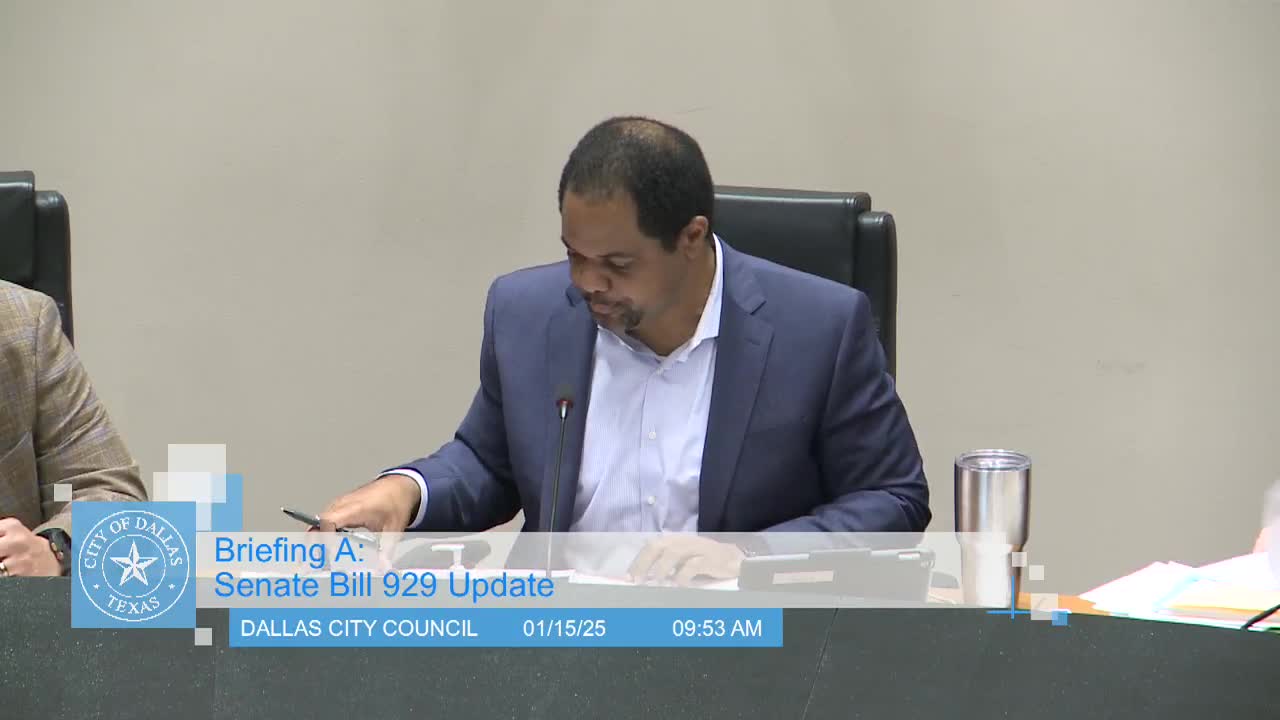
Dallas staff brief council on code changes to comply with Texas Senate Bill 929
Summary
City planning staff briefed the Dallas City Council on proposed amendments to the Dallas Development Code to implement Texas Senate Bill 929, which changes how municipalities handle legal nonconforming land uses and adds notice and compensation rules.
City planning staff on Wednesday described proposed changes to the Dallas Development Code meant to bring the city into compliance with Texas Senate Bill 929 and warned the council the law limits municipalities’ ability to terminate certain nonconforming land uses without paying owners.
The briefing focused on SB 929’s new process for “compliance” determinations for legal nonconforming uses and related notice requirements for rezoning and code amendments. The presentation also outlined a draft code amendment and staff’s plan to place the proposal before council in February.
Andrea Woodra, deputy director for zoning in the Planning and Development Department, told the council that SB 929 narrows the board of adjustment process for terminating nonconforming uses. “If [the board] determines continued operation will have an adverse effect on nearby properties, there is no second hearing,” Woodra said. “The owner or the lessee of the nonconforming use has an option to either receive a payment from the city or continue to operate the nonconforming use until the owner receives the payment amount calculated … Costs directly attributable to ceasing the operation of the nonconforming use, including expenses related to demolition, relocation of the lease … and loss in the market value of the property.”
Woodra said the bill also prescribes detailed notice language for rezoning hearings, requiring a prominent statement that the hearing “will determine whether you may lose the right to continue using your property for its current use.” She told council staff is proposing code changes to add the required notice language and to modify board-of-adjustment procedures so the city complies with the statute.
Emily Liu, director of planning and development, told council the city plan commission and advisory committees have reviewed drafts and that staff expects to return with a formal ordinance; staff discussed a possible February 12 docket date. Liu emphasized that SB 929 took effect in 2023 and that the change reduces the city’s authority to end nonconforming uses without potential fiscal exposure. “If a nonconforming use chooses the payout option, the amount can be significant and the city would be obligated to pay,” Woodra said.
No formal action was taken; staff said they would brief council further after an executive session and would circulate the draft ordinance material in advance of any vote.
What’s next: staff plans to place a proposed code amendment on a future agenda (staff mentioned a tentative February 12 date) and provided an appendix of technical details to answer council questions after the executive session.