Get Full Government Meeting Transcripts, Videos, & Alerts Forever!
Get email alerts on the Hb2540 Hazelwood topic
No spam. Unsubscribe anytime.
Laredo veterans committee backs city advocacy for House Bill 2540 to extend Hazelwood Act benefits to siblings
Summary
The committee voted to ask city officials to include support for House Bill 2540 on the Austin advocacy agenda; the bill—an amendment tied to the Hazelwood Act—would allow siblings of service members killed in action to inherit state tuition benefits currently limited to spouses and children, committee members said.
Members of the Laredo Veterans Affairs Committee voted Jan. 14 to ask the City of Laredo to include advocacy for House Bill 2540 on the agenda for a scheduled delegation trip to Austin. The motion carried by voice vote after discussion of the bill’s proposed change to the Hazelwood Act, which provides tuition benefits at public Texas institutions for eligible service members and dependents.
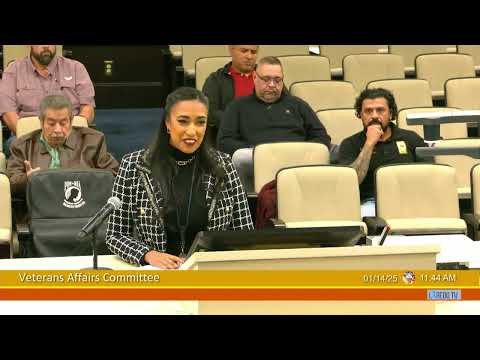
Ricardo Quijano, a Texas Military Department soldier and family readiness specialist, described the bill as a technical change to add siblings as eligible beneficiaries in cases where a service member dies in the line of duty. “This bill is gonna help all Texas residents,” Quijano said, and he outlined that the bill’s draft language is being created in Austin and will be filed by a state senator once finalized.
Committee members and presenters explained the current operation of the Hazelwood Act and the proposed change. Albert Hernandez, representing Laredo College (for the record), summarized how Hazelwood works and who currently benefits: unused entitlement may be transferred to dependents under certain conditions, and the benefit applies only at public institutions. Hernandez said the bill would add siblings to the list of eligible dependents when a service member dies in service, extending benefits that otherwise could go unused.
Committee members raised logistical questions about advocacy: who would represent the city, how many delegates the city will sponsor, and whether representatives should carry local veteran-population data and a state cost analysis. Albert Hernandez and others recommended that any representative include factual veteran-population counts and, if available, an analysis of the fiscal impact of expanding the benefit to siblings. Quijano said legislative staff in Austin are preparing language and that William Montemayor will forward final draft text when available.
A committee member moved that the city sponsor delegates to go to Austin and asked that someone from the veterans committee be among the representatives because of the committee’s subject-matter knowledge. The motion received a voice vote with “aye” and the chair declared the motion carried.
The committee did not record a roll-call vote or individual tallies in the meeting record; the motion included a request that the city place the bill (or the future corresponding Senate bill number) on the city council’s advocacy list before the delegation’s travel. Several members volunteered or said they could seek city sponsorship; county representation was discussed as well.
The committee directed staff to distribute any finalized bill text received from legislative contacts to committee members for follow-up and to request any available cost analysis from Austin staff to support the advocacy effort.