Get Full Government Meeting Transcripts, Videos, & Alerts Forever!
Get email alerts on the Accessibility Interpreters topic
No spam. Unsubscribe anytime.
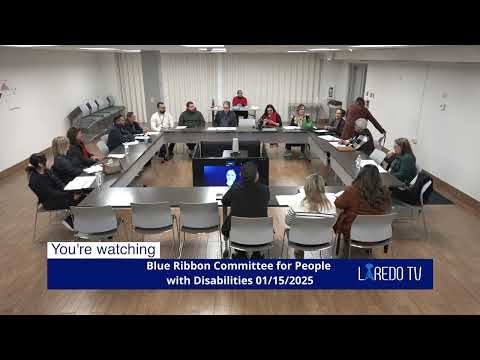
Laredo disability committee moves to press mayor on sign-language interpreters after missed access in emergencies
Summary
Members of Laredo’s Board on Disabilities urged city officials to ensure sign-language interpreters are available for emergency communications and council meetings and moved to draft a letter to the mayor; committee members later noted a formal vote on the letter needed clarification.
Members of the City of Laredo’s Board/Advisory Committee on Disabilities heard public comment that emergency and other official meetings have proceeded without sign-language interpretation and moved to draft a letter to the mayor asking the city to adopt a regular protocol for interpreters.
The advocacy began when a member of the deaf community, identified in the meeting as Mr. Coronado, said emergency briefings held while the city was under a public-order directive did not include interpreters. “There were not any deaf interpreters in those sessions,” Coronado said.
Committee staff and members discussed next steps. Erica, staff supporting the committee, said the committee has already arranged for a standing interpreter for its meetings when needed and has shared service-contact details with the city’s public information office. “We will have a standing, interpreter if if needed, for this particular committee,” Erica said, adding the committee would share best-practice recommendations for emergency communications.
Several committee members recommended sending a formal recommendation to the mayor. One member moved that the BRC write and send a letter to the mayor asking that interpreters be routinely available for city council and emergency communications. Committee members debated whether that motion had been formally voted on later in the meeting; a member pointed out the committee had moved and seconded but had not completed a recorded vote. The meeting record shows the motion was made but includes a clarification that a subsequent formal vote was required before the letter could be transmitted.
Why it matters: Access to sign-language interpretation in emergency briefings affects the BRC’s constituency directly and bears on public-safety communications. Committee members said establishing a standing protocol for interpreters would reduce barriers and recommended that the mayor and city communications offices be given specific operational guidance and contact information.
The committee did not record a final, roll-call vote on sending the letter in the transcripted discussion; staff were directed to draft language and to clarify voting status at a later meeting so the letter can be formally approved if the committee chooses to proceed.