
Denton officials direct staff to pursue midyear airport fees increase to curb multi‑year deficit
Get AI-powered insights, summaries, and transcripts
Subscribe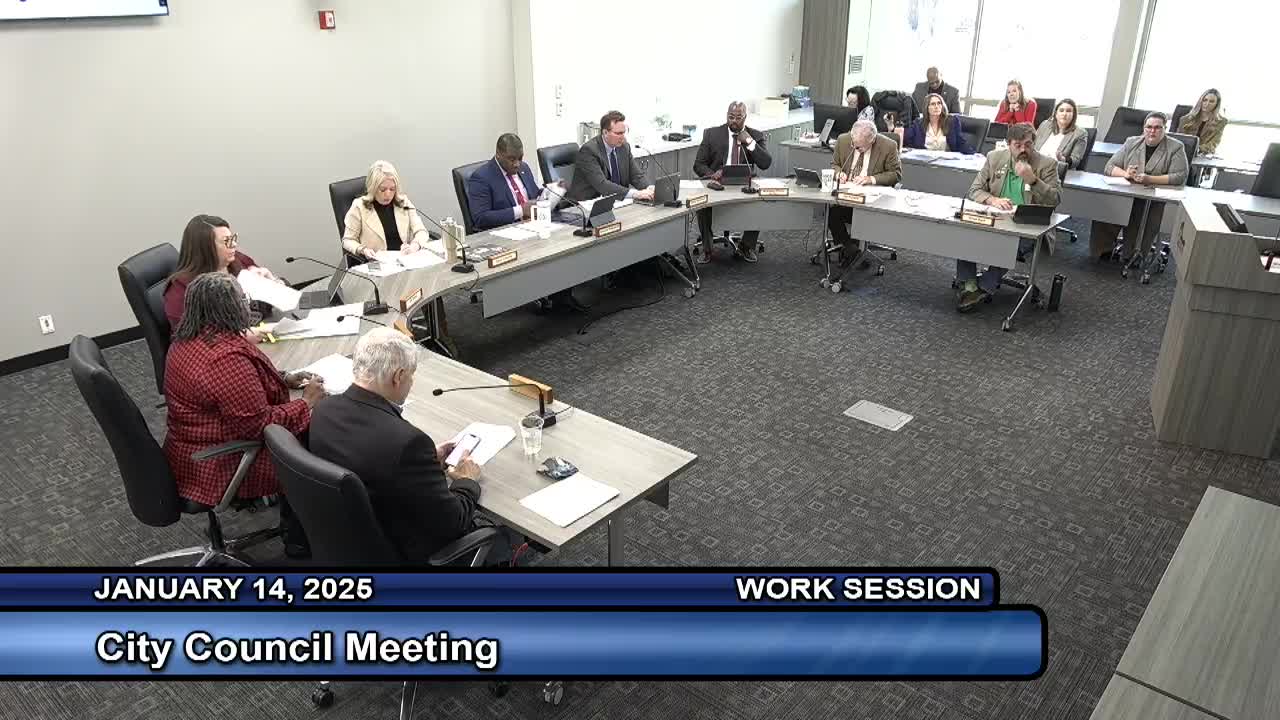
Summary
Denton City staff recommended raising several airport fees, including a 5‑cent increase in the fuel flowage fee, to reduce projected year‑over‑year deficits at Denton Enterprise Airport, and councilmembers asked staff to bring an ordinance back on Feb. 11 for midyear implementation.
Denton City staff recommended raising several airport fees, including a 5‑cent increase in the fuel flowage fee, to reduce projected year‑over‑year deficits at Denton Enterprise Airport, and councilmembers asked staff to bring an ordinance back on Feb. 11 for midyear implementation.
The airport presented long‑term projections showing an average deficit of about $225,000 per year over the next five years, driven mainly by declining gas‑lease revenue and rising debt‑service obligations tied to recent infrastructure projects. "We have experienced a budget deficit in the last two out of our previous five years," Airport Director Ryan Adams told the council, underscoring the fund‑balance risk if changes are not made.
Adams and outside consultant Airport Management Consulting Group (AMCG) recommended several changes after a summer fee study and public outreach. Key staff and Airport Advisory Board recommendations were: increase the fuel flowage fee from $0.17 to $0.22 per gallon (and to $0.25 per gallon for operators with their own fuel tanks), add a commercial aeronautical permit fee, adopt an airside access fee, establish a hangar wait‑list fee and raise city‑owned hangar rents by roughly 25 percent. Adams said the city’s city‑owned T‑hangar rents are currently well below market — roughly 40 percent of private rates — and that comparable private T‑hangars in the market rent for $600–$800 per month versus the city’s current rate (staff reported the city rate as approximately $350 per month for comparable units).
AMCG advised against a landing fee at this time; landing fees drew mixed feedback from flight schools and businesses that feared they could discourage larger visiting aircraft that contribute higher fuel sales. "There was concern that the landing fee could . . . be extended to small aircraft, which would really impact our flight schools," Adams said, summarizing public comment collected at two town halls and one‑on‑one meetings with major tenants including flight schools and the fixed‑base operator, Sheltair.
Staff showed financial scenarios indicating that if the council took no action, the airport’s projected fund‑balance change in fiscal year 2029 would be a loss of about $238,000; adopting the proposed fee changes would increase the projected ending fund balance from roughly $1.9 million to about $2.8 million over the planning horizon, staff said. Adams noted other potential near‑term revenue opportunities — easement/right‑of‑way payments tied to the Loop 288 frontage project (about $923,000), new land leases already producing almost $200,000 a year, and property reversions that could increase rental income when older leased buildings return to the city.
Council discussion focused on the pace and scale of increases. Several councilmembers urged a moderate, stepwise approach rather than large, immediate hikes. Mayor Pro Tem and others said they favored the staff recommendation as a measured step that could be revisited through the annual budget and future fee studies. Councilmember Jester said staff had done thorough outreach and recommended accepting the direction; another councilmember said the city could have raised rates further but chose a cautious approach to avoid becoming uncompetitive with nearby airports.
Adams said staff would implement many of the new fees quickly if council directs it, though some access/permitting functions may require phased implementation for operational reasons. He suggested the changes would go into effect April 1 if council approves an ordinance on Feb. 11. "Our intent is that we deploy these as quickly as we can to recoup the benefits as quickly as we can," Adams said.
The council did not take a formal vote during the work session on Jan. 14; by the end of discussion multiple councilmembers expressed support and directed staff to bring the ordinance back on Feb. 11 with the described fee changes and implementation plan. Staff and the Airport Advisory Board recommended all AMCG proposals except a landing fee; the ordinance would, if approved, adjust fuel flowage charges, create permit/access/wait‑list fees and raise city hangar rents as described.
If adopted, staff said the changes would not fully eliminate the long‑term deficit but would substantially reduce the projected fund‑balance erosion while the city pursues additional development revenue and other measures. The Airport Director emphasized that the airport’s obligation under FAA grant assurances — that airport revenues be used to support airport operations and be as self‑sustaining as possible — informs fee‑setting and the need to align revenues with increasing costs.
Next steps: staff will draft an ordinance for council consideration on Feb. 11 proposing the fee changes to take effect April 1 (mid‑fiscal year). Staff also intends to do a fee study every 3–5 years to keep rates in line with costs and market conditions.