
Vermont state auditor outlines office role, flags burdens of TIF oversight
Get AI-powered insights, summaries, and transcripts
Sign Up Free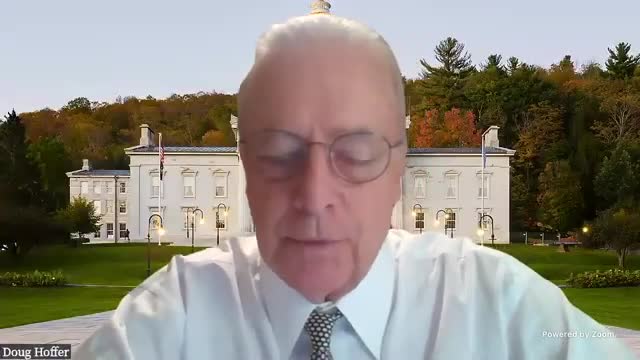
Summary
State Auditor Doug Hoffer told the Government Operations & Military Affairs Committee on Jan. 16 that his 16-person office focuses on performance audits, oversees financial and federal single audits, and is shouldering a substantial, ongoing workload auditing tax increment financing districts.
State Auditor Doug Hoffer told the Government Operations & Military Affairs Committee on Jan. 16 that his 16-person office focuses its limited resources on performance audits while overseeing the state’s financial and federal single audits, and that mandated oversight of tax increment financing districts consumes a large share of staff time.
Hoffer said the Auditor’s Office has 16 positions with several vacancies and about 11 professional auditors, and an annual budget of “under $4,000,000.” He described performance auditing as the office’s primary public-facing work: “we get to look into every corner of state government and ask hard questions,” he said, adding that performance audits assess whether taxpayer dollars are used “effectively and efficiently.”
The nut of Hoffer’s remarks was a warning about the resource demands tied to the legislature’s directive that the Auditor’s Office audit TIF districts multiple times across their life cycle. “It’s 15 to 20% of my entire staff all the time,” Hoffer said of the work on tax increment financing oversight, and he estimated a typical TIF life cycle at “20 to 25” years.
Why it matters: TIF programs divert future property tax revenue that otherwise would flow to municipal and education budgets; Hoffer said some of the money that repays TIF debt is taken from the education fund. He described the program’s legal requirement that municipalities show a “but for” analysis — that without the TIF investment there would be no new property tax revenue in the designated district — and questioned how consistently that assumption matches local growth patterns.
Hoffer told the committee the Joint Fiscal Office has produced substantial reports on TIF in the past and that his office will follow up with a memo summarizing what auditors have learned and the resource implications for future TIF work. He said staff would send committee members the prior JFO reports and that his chief auditor will draft the memo “within a few weeks.”
Hoffer also described the office’s quality controls and standards. Performance audits follow Generally Accepted Government Auditing Standards (the “Yellow Book”), and the Auditor’s Office undergoes an external peer review every three years. “The quality control that is part of [the Yellow Book] means that ... the reports are as reliable as they can be,” he said.
Committee members asked clarifying questions about how TIF revenue affects the education fund and about possible expansions of the program; Hoffer cautioned the committee to be careful if the administration proposes changes and encouraged staff-level briefings. He said some municipalities benefit from TIFs, others do not, and that the Joint Fiscal Office analysis showed mixed results where sufficient data exist.
Hoffer also described practical matters about his office: it was physically displaced by a 2023 flood and staff have adopted remote work; the office contracts out some work it does not perform in-house, for example sheriff audits; and the auditors hire outside firms for some compliance and financial audits. He said the office measures success by reductions in repeat audit findings and the integrity of financial and compliance audits overseen by the office.
The presentation closed with Hoffer saying he would return with follow-up items, including the recommendation follow-up results his office compiles annually to check whether agencies have implemented auditors’ recommendations.