Get Full Government Meeting Transcripts, Videos, & Alerts Forever!
Get email alerts on the Public Safety topic
No spam. Unsubscribe anytime.
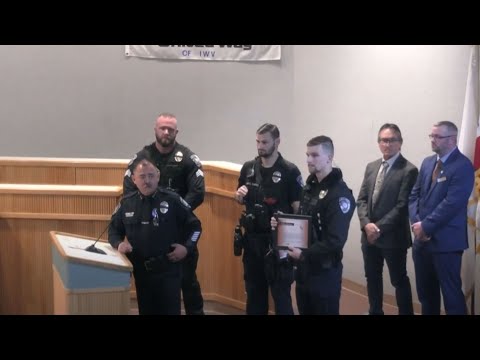
Ridgecrest OKs 33rd police officer position and five‑year body‑camera contract
Summary
Council voted 5–0 to add one police officer slot to help offset steady attrition and to authorize a five‑year contract with LensLock for body‑worn cameras, in‑car video and related services; staff said the program will be deployed in phases and initial hardware/Verizon connectivity costs will be covered in the current budget year.
The Ridgecrest City Council on Jan. 15 approved two public‑safety items: an increase in the authorized police officer count from 32 to 33, and a five‑year contract with technology vendor LensLock for body‑worn cameras, in‑car video, cloud storage and CJIS‑compliant redaction services.
Chief (name not specified in the record) told the council that the department has averaged about 4.5 officers of attrition per year over the past decade and currently had officers in training, officers in the academy pipeline and several officers on injury leave. He said the additional position gives the department flexibility to recruit and place a trainee in the academy so the department can maintain full operational staffing over time. The council approved the personnel increase by unanimous vote, with staff estimating an ongoing cost of roughly $83,525 annually if the position remains in the baseline budget; salary‑savings for the 2024–25 fiscal year cover initial costs.
On body‑worn cameras: The council also approved (5–0) a five‑year services and equipment agreement with LensLock, which staff selected after vendor comparisons and community meetings. Chief told council members and members of the public that LensLock was chosen in part because it offers in‑person FBI CJIS‑compliant redaction services, an important consideration for privacy and public‑records requests. Staff said the company will ship equipment and a phased deployment will place body cameras on officers within weeks and outfit patrol vehicles over the following months.
Costs and budget treatment: Staff provided a multi‑year cost summary. The presentation showed an estimated first‑year program cost of roughly $129,500 (largely equipment and initial installation), followed by annual service costs of about $83,600 for the remaining contract years, with an approximately $14,000‑per‑year estimate for Verizon connectivity in marked patrol cars. Staff said the total five‑year implementation figure discussed with LensLock was about $547,190. Staff also noted that LensLock agreed to a deployment schedule that avoids a significant immediate fiscal year impact by staging vendor charges to align with the city’s July 1 budget year; however the city will need a one‑time appropriation in FY 2024–25 of roughly $72,100 to cover Verizon cards for marked patrol vehicles.
Privacy and policy: Chief said the department drafted a camera policy that governs when cameras are activated, retention schedules and redaction procedures. He said the policy generally requires officers to activate cameras during enforcement or other designated interactions, but allows limited discretion for certain privacy‑sensitive locations (for example, medical treatment areas) where no law‑enforcement purpose exists. The department and LensLock representative said redaction capabilities and limited public release are part of the vendor service.
What council approved: The council voted unanimously to add the 33rd officer slot and to enter the five‑year agreement with LensLock, and authorized the budget adjustments necessary for the FY 2024–25 partial‑year costs. Staff will include ongoing contract costs in the FY 2025–26 budget cycle and said it would return with implementation details and training plans.
Council members who spoke supported the measures as a way to stabilize staffing and to increase transparency and training opportunities. The chief said officers and the local officers’ association supported the camera deployment.