Get Full Government Meeting Transcripts, Videos, & Alerts Forever!
Get email alerts on the Infrastructure Sewer topic
No spam. Unsubscribe anytime.
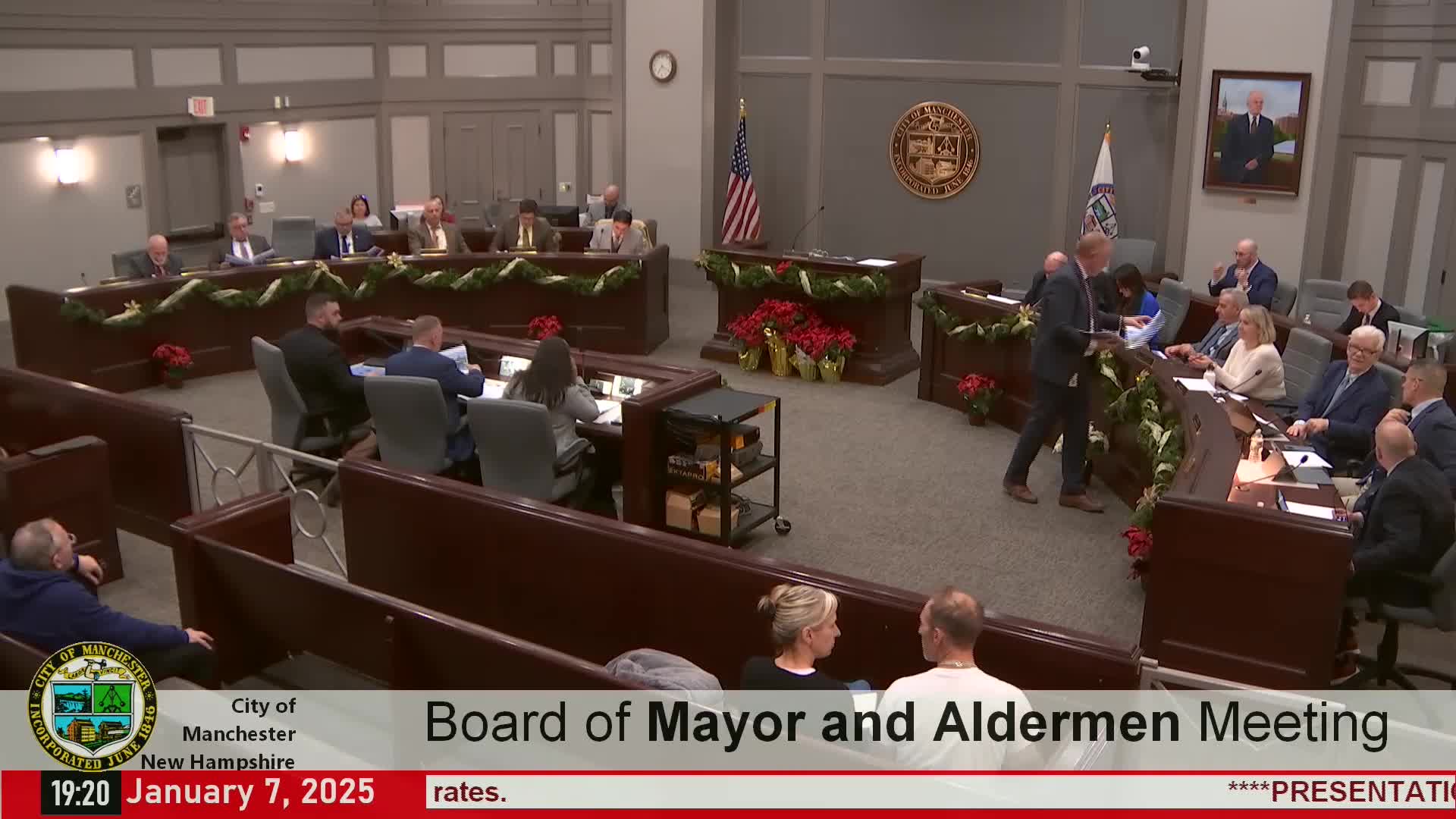
Board approves tunnel contract and higher sewer rates to meet federal consent decree
Summary
After months of review and questions from aldermen, the Board of Mayor and Aldermen authorized Public Works to execute a tunneling contract, approved a proposed rate-structure change for sewer users and authorized future bond issuance to fund the city's combined-sewer-overflow (CSO) compliance work under a federal consent decree.
Tim Clardy, the City of Manchester public works director, told the Board of Mayor and Aldermen that the city must move forward with a 2.25-mile, 14-foot-diameter tunnel and related sewer-separation work to meet deadlines in a negotiated federal consent decree addressing combined-sewer overflows.
Clardy said the Environmental Protection Division (EPD) is funded through user fees and that the proposed capital plan requires a change to the existing rate structure. "We have little choice of moving forward as we have entered into a negotiated consent decree with the federal government," Clardy said, explaining the city faces direct deadlines and potential fines under the consent decree.
The nut graf: The board debated whether to authorize the Department of Public Works to execute a tunneling contract, approve a shifted rate schedule to support the work and allow finance to issue revenue bonds. Supporters stressed the legal and environmental imperative of the consent decree; opponents and several aldermen warned of the financial burden on residents and businesses.
Most important facts: Public Works said the CSO tunnel is the largest element of the city's compliance program and is required to reduce untreated discharges to the Merrimack River and to lower basement backups and neighborhood flooding. The city treats about 23,000,000 gallons of wastewater per day; the tunnel will travel through six separation areas to Mammoth Road. Clardy said the project is in phase two and that tunnel construction was expected to begin once a contract is executed.
On financing, EPD staff proposed moving from a previously modeled 9% annual increase pattern to a one-time 19% increase in 2025 (to take effect in April, per staff), followed by additional increases over the near term and a modeled 15% increase in 2029. Staff said the modeled changes would keep EPD finances solvent under the capital plan and bond structure; Clardy and finance staff noted even after the proposed increases, projected sewer rates would remain below the state average by roughly 11.5 percent.
Alderwoman Harda and Alderman Benson pressed for more specificity about totals, bond sizing and whether the 2029 percentage would be final. Benson asked whether the 15% in 2029 was fixed; staff said the number is based on current projections and would be revisited in later years. Finance staff explained the issuance being contemplated is a revenue bond, backed by enterprise revenues, and that rating considerations influenced that choice. "They're revenue bonds," Sharon (Finance Department official) said during the discussion.
Aldermen noted the scale of the overall program and cost estimates have grown since earlier projections. City staff said total program costs across phases now are estimated "closer to $700,000,000," up from earlier figures of roughly $365,000,000 for parts of the program; staff also said the city has already completed approximately $75,000,000 of work (Chestnut Street, Christian Brook projects and treatment-plant components) that are part of the broader consent-decree program.
Board members repeatedly asked about alternatives. Alderman Glasser proposed seeking federal relief or congressional help and suggested exploring legal avenues; staff noted the city had pursued congressional directed requests in the past without success and that the consent decree contains firm deadlines and penalty provisions. Clardy said the consent decree imposes schedules and that fines for violations are written into the document, beginning at $1,000 per day for specified violations and escalating for continued noncompliance.
Procedure and outcome: The board initially moved to table the item for further discussion during the meeting, but after taking other business and returning from a recess the board approved a motion in the consent agenda to: (1) approve the recommended rate-structure modifications; (2) authorize the Department of Public Works to execute a contract for tunnel construction; and (3) authorize the finance department to issue bonds to support the tunnel and the CSO program. The approving motion was made by Alderman Long and seconded by Alderman O'Neil; the motion carried with the ayes prevailing.
What remains: Staff said they had received two bids for the tunneling work and were negotiating with bidders; they expected to interview contractors later in the month and asked the board for authorization to execute a contract to meet the consent-decree schedule. Staff also said final bond sizing and exact annual rate steps will be subject to further work with bond counsel and the city's financial advisor and could be revisited in future years.
Ending: The board's authorization clears the way for the tunneling contract to be executed and for financing to proceed as staff work with bond counsel and contractors. Aldermen asked that staff return with final bond terms, explicit rates and affordability analyses when those figures are negotiated.