
Legislative analysts present statewide budget decision packet, outline revenue and compensation options
Get AI-powered insights, summaries, and transcripts
Subscribe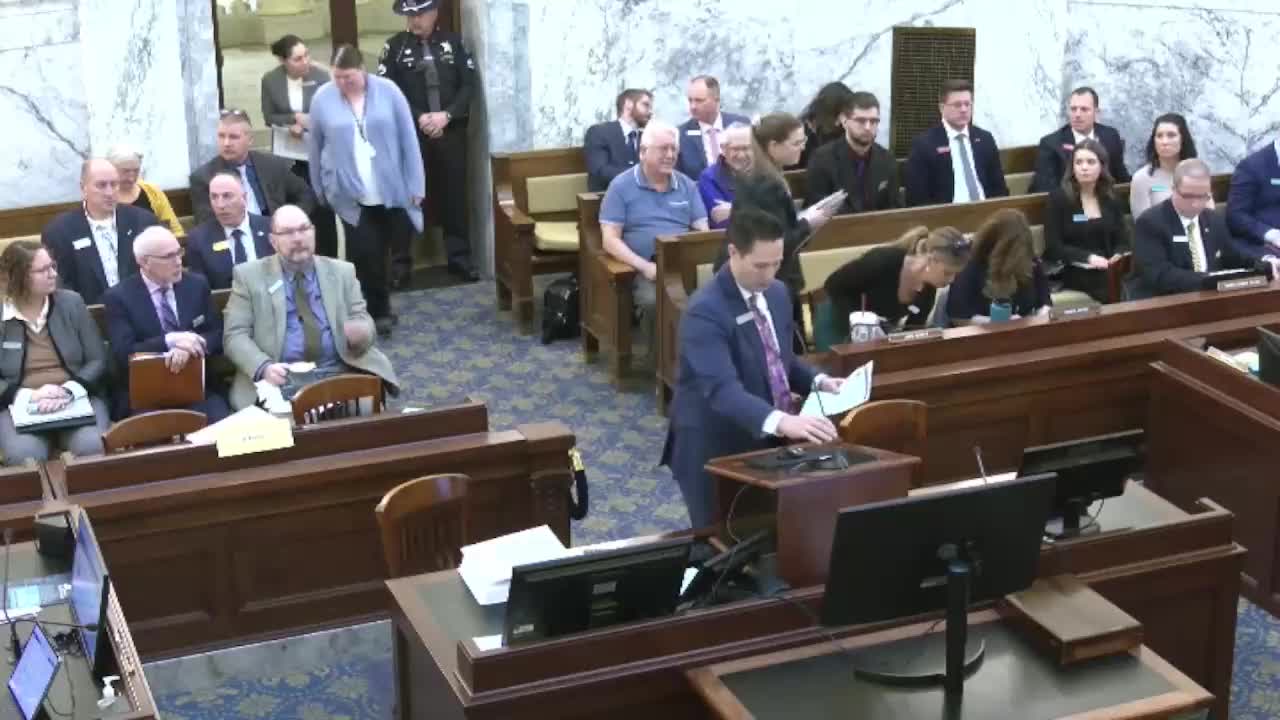
Summary
Legislative Services staff presented the statewide decision packet that frames the FY2026 budget: two revenue forecast options, personnel benefit cost adjustments, contract inflation, statewide cost allocation changes and competing change-in-employee-compensation (CEC) proposals.
Legislative Services Office staff briefed the Joint Finance-Appropriations Committee on the statewide decision packet that will guide FY2026 budget work, outlining revenue forecast choices and competing proposals for change-in-employee-compensation (CEC) and benefit adjustments.
Keith Bybee, division manager for budget policy analysis at the Legislative Services Office, and other analysts told the committee the schedule calls for the committee to set statewide decisions later in the week and to set program maintenance budgets the following day. The packet contained revenue forecast options, personnel benefit cost adjustments, contract inflation, statewide cost allocation and two CEC proposals.
Revenue: the packet presented two options for FY2026 general fund revenues: the governor’s recommendation at $6.26 billion and the Economic Outlook and Revenue Assessment Committee recommendation at $6.40 billion. Staff noted a small technical difference between the governor’s baseline and the governor’s budgeting forecast.
Benefits: the governor’s personnel benefit cost adjustment would fund health insurance increases sufficient to cover a larger increase (staff cited a per-eligible-employee increase that raised eligible employees from about 13,000 to approximately 14,300 in the accounting), while the CEC committee suggested a lower per-employee health-insurance increase ($960 per eligible employee) for a smaller statewide cost.
CEC (change in employee compensation): two options were presented. The governor’s proposal includes a general 5% (or equivalent $1.55/hour) merit across eligible employees and schedule shifts that average +3.2% for regular pay schedules with larger increases for IT/engineering and military schedules; the governor’s package totaled roughly $179.7 million statewide. The CEC committee recommended a slightly smaller overall package, roughly $174.7 million statewide, and the analysts warned some small recalculations on salary-schedule shifts were still being finalized.
Other statewide items: contract inflation was estimated at about $3.3 million all funds and statewide cost allocation adjustments were estimated to increase budgets by about $5.5 million all funds (roughly $3.6 million general fund), with the largest increases attributed to the state controller’s office and the Office of Information Technology Services. Analysts cautioned that a prior miscalculation in state controller rates contributed to a larger-than-typical increase in billing this year.
Why it matters: the packet frames the baseline decisions that determine how much money is available for individual agencies later in the budget process and establishes personnel and statewide cost assumptions used across state government.
Members of the committee asked for more detail on the reserve assumptions used by actuaries for health-insurance funding and asked that analysts prepare agency-level impacts of the CEC options so that lawmakers can evaluate distributional effects (some agencies would see a larger percent change than others under a given dollar-per-hour approach).
Ending: staff said they will provide updated numbers on Thursday and asked the committee to expect final statewide decisions to be set later in the week as part of the legislative schedule.