Get Full Government Meeting Transcripts, Videos, & Alerts Forever!
Get email alerts on the Appropriations topic
No spam. Unsubscribe anytime.
Analysts brief JFAC on deficiency warrants, supplementals and emergency clause
Summary
Kellan McGurkin of LSO described how deficiency warrants let certain agencies spend for urgent purposes before a formal appropriation, the role of the Board of Examiners and Board of Land Commissioners in authorizing expenditures, and how supplementals differ from normal appropriations.
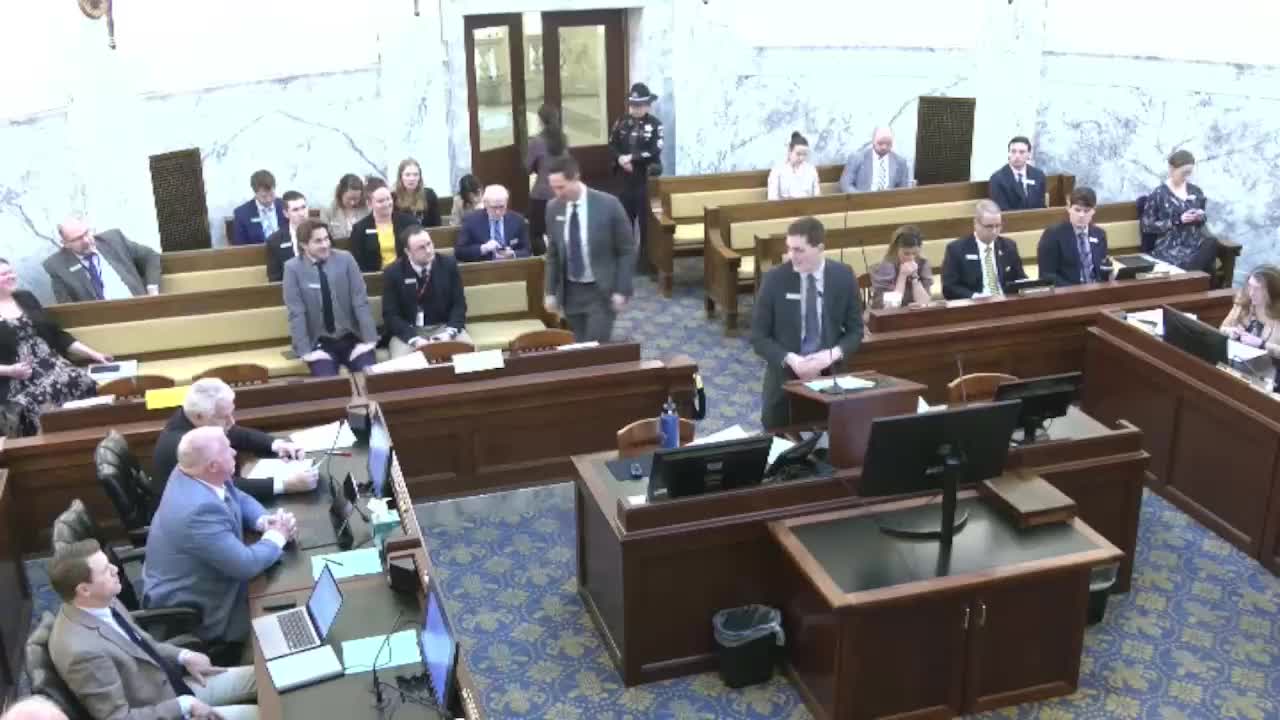
Kellan McGurkin, budget and policy analyst with the Legislative Services Office, told the Joint Finance and Appropriation Committee on Jan. 7 that deficiency warrants, supplementals and rescissions are current‑year adjustments members will see during the session.
McGurkin explained that deficiency warrants permit certain agencies to spend against the general fund for statutorily authorized purposes without a prior appropriation; the agencies then appear before the committee to receive a corresponding appropriation that zeros out the outstanding balance. “In practice, this functions much like the agency using a credit card,” he said.
He said statutory authorization and limits govern which expenditures qualify for deficiency warrants; common authorized uses include dam safety, fire suppression and pest control. The Board of Examiners (governor, secretary of state and attorney general) and the Board of Land Commissioners (which also includes the state controller and superintendent of public instruction) typically authorize the initial expenditures.
McGurkin reviewed trends: deficiency warrant requests have increased in value over the last five years, with pest control representing a significant share of the growth. He also distinguished deficiency warrants from supplementals: supplementals act like ordinary appropriations for the current fiscal year and are considered adjustments to the fiscal‑year 2025 appropriation rather than use‑as‑needed authority.
He highlighted the Idaho Constitution’s emergency clause: absent a declared emergency in a bill’s preamble, action does not take effect until the end of the fiscal year. For requests that must take effect immediately, the committee must decide whether to include an emergency declaration in the authorizing bill.
Committee members asked procedural questions. Senator Cook asked whether a leaky building would qualify as an emergency; McGurkin said the committee ultimately decides and that agencies typically coordinate with the Division of Purchasing to handle procurement timing. Co‑chairs emphasized the legislature intends supplementals to be for genuine new or unforeseen crises and not routine budgetary additions.
McGurkin provided the committee totals the governor proposed for this session’s supplemental requests—approximately $604.8 million total, including $98.8 million from the general fund—and noted the governor’s proposal includes a proposed $60 million transfer from the general fund to the fire deficiency fund. He said a detailed list of deficiency warrant and supplemental requests by agency is available in the legislative budget book for members to review.