Get Full Government Meeting Transcripts, Videos, & Alerts Forever!
Get email alerts on the Appropriations topic
No spam. Unsubscribe anytime.
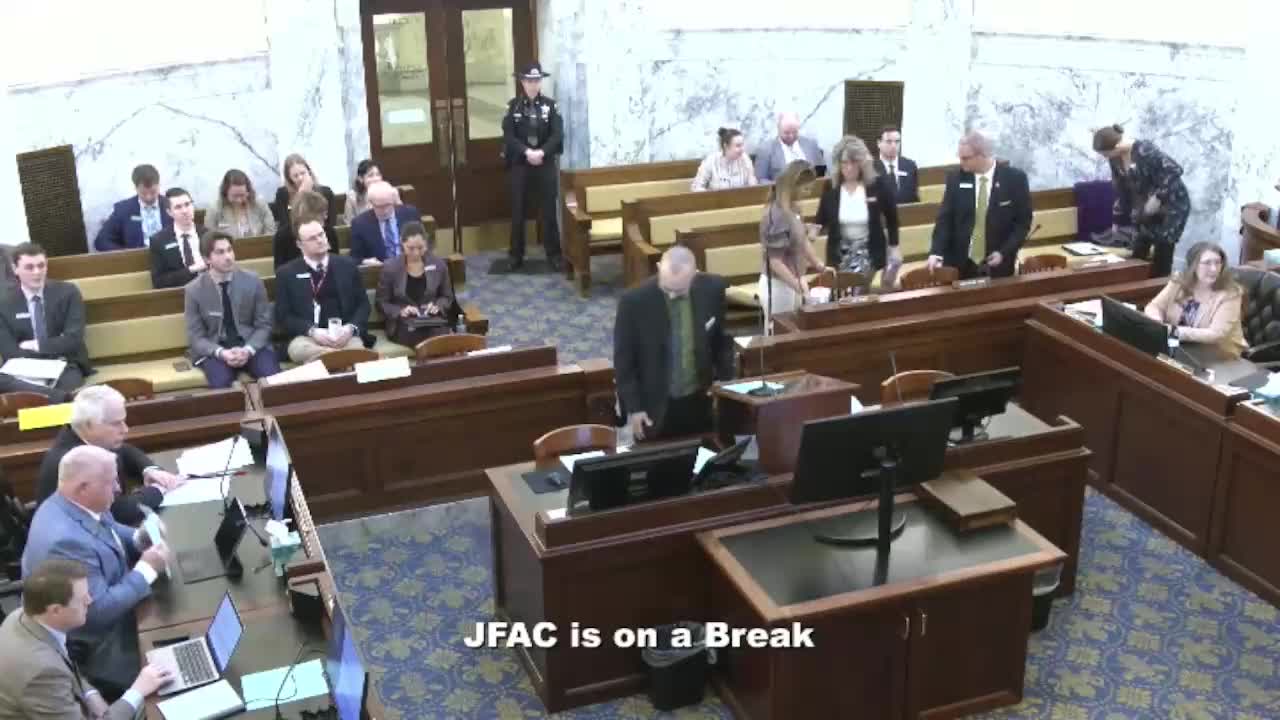
LSO staff explain SWICAP mechanics and budget impact to JFAC
Summary
Jared Tetrault described the statewide cost allocation plan (SWICAP), how central service costs are allocated to agencies and funds, and the typical two‑year lag between costs incurred and budget adjustments recovered through appropriations.
Jared Tetrault, Legislative Services Office staff, briefed the Joint Finance and Appropriation Committee on Jan. 7 about the statewide cost allocation plan, often called SWICAP, which allocates central service costs across eligible state agencies and fund sources.
Tetrault said SWICAP is a document prepared by the Division of Financial Management and reviewed by the federal cognizant agency (for Idaho, Health and Human Services) that details how central service costs—attorney general legal hours, state controller accounting work and treasurer warrant activity—are shared among state entities.
He explained the mechanics the committee will see in budget materials: central service agencies receive appropriations for their work; DFM calculates each eligible agency’s share based on usage metrics (for example, attorney general hours, number of active employees for controller fees, and warrants issued for the treasurer); then two years later the calculated allocations are recovered by billing agencies and deposited into the general fund. “There’s always a two‑year lag,” he said, describing the cycle of appropriation, actual usage, reconciliation and recovery.
Tetrault listed central service agencies that commonly appear in SWICAP adjustments: the Attorney General’s Office (excluding criminal division hours), the Office of the State Controller and the State Treasurer. He also noted direct‑billing agencies that appear in agency budgets, including risk management, building services, Legislative Services audit billings and the Office of Information and Technology Services.
Using recent figures, Tetrault said the program’s total is roughly $78 million; most controller and treasurer costs are fully recovered, while the Attorney General’s recoveries typically cover a smaller share of its appropriation. He said DFM and agencies can propose adjustments before the committee appropriates those amounts, and that some costs are deemed unallowable if they do not benefit statewide services.
Committee members asked for additional detail and Tetrault said staff will provide a more precise report showing the percentage allocations. He also noted that SWICAP adjustments appear as changes in the governor’s budget language for individual agencies; the net impact across central service billings can increase or decrease a given agency’s total appropriation.
Several committee members highlighted the importance of understanding SWICAP because the allocations reallocate costs among fund sources, sometimes shifting expenses from general fund‑backed services to dedicated or federal funds for payment.
The presentation concluded with an offer from staff to provide the committee a clearer breakdown of percentages and the split of recovered funds back to the general fund.